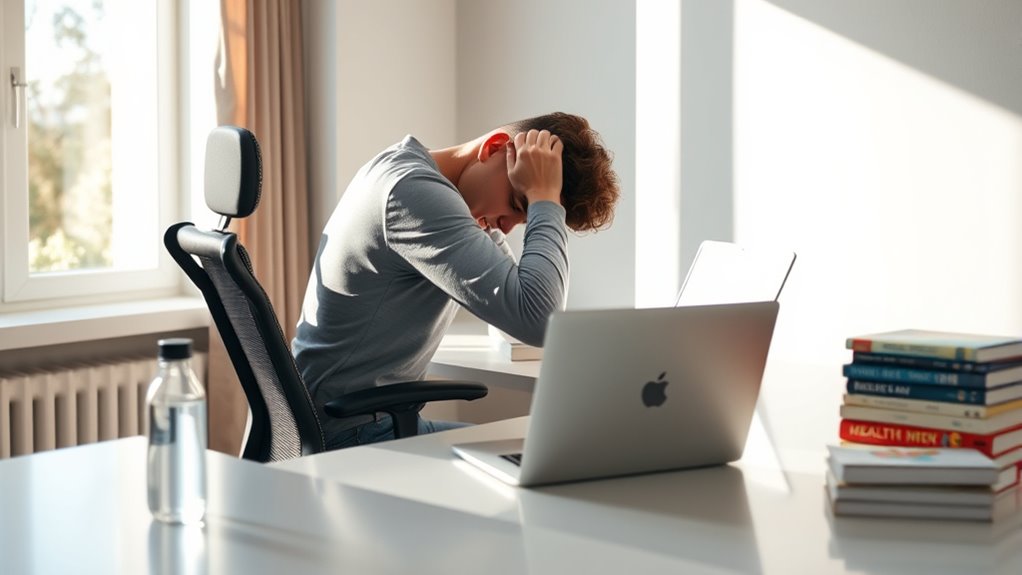

Sitting all day can harm your health by causing muscle strain, poor posture, and increasing your risk of heart disease and metabolic problems. It can lead to chronic pain, stiffness, and long-term health issues if you don’t make changes. To protect yourself, you should incorporate short movement breaks, adjust your workspace ergonomically, and alternate between sitting and standing. Keep going to discover simple ways to stay healthier while working or at home.

Get comfort and recovery gear delivered free — and shop member deals
- Fast, free delivery on millions of items
- Access to Prime Big Deal Days deals on October 6–7
- Prime Video, Amazon Music and more included
Key Takeaways
- Prolonged sitting can cause muscle strain, joint pain, and poor posture, increasing the risk of chronic discomfort.
- Sitting all day raises the risk of cardiovascular disease and metabolic problems.
- Using ergonomic work setups and adjusting chair and monitor height can reduce strain and improve posture.
- Incorporating standing desks or regular movement breaks enhances circulation and reduces health risks.
- Small changes like stretching and standing periodically help prevent long-term health complications from excessive sitting.

Spending long hours sitting each day can have serious consequences for your health. When you sit for extended periods, it puts unnecessary strain on your muscles and joints, especially your back, neck, and hips. Over time, this can lead to chronic pain, poor posture, and even more serious health problems like cardiovascular disease and metabolic issues. Thankfully, you can take steps to mitigate these risks by making ergonomic adjustments to your workspace. Proper ergonomic setup helps align your body correctly, reducing strain and preventing discomfort. Adjusting your chair height so your feet are flat on the ground, keeping your monitor at eye level, and supporting your lower back are essential steps. These small changes can make a big difference in how your body feels after a long day.
Proper ergonomic adjustments can prevent pain and support your health during long sitting hours.
One effective way to combat the negative effects of sitting is by incorporating standing desks into your routine. Standing desks allow you to alternate between sitting and standing, breaking up long periods of inactivity. When you shift to a standing position, you activate different muscle groups and improve circulation, which can help reduce fatigue and stiffness. If a standing desk isn’t an option right now, try standing up and stretching every 30 minutes. Simple movements like shoulder rolls, neck stretches, and leg lifts can boost blood flow and relieve tension. Remember, the key is to keep moving throughout the day, rather than remaining stationary for hours on end.
Using ergonomic adjustments and standing desks together creates a balanced approach to your workspace. It’s not just about standing; it’s about creating a workspace that promotes movement and good posture. For example, you might set your standing desk to a comfortable height, ensuring your elbows are at a 90-degree angle and your monitor is at eye level. This setup minimizes strain on your neck and wrists while encouraging better posture. Incorporating anti-fatigue mats can also make standing more comfortable if you’re on your feet for extended periods. By combining these strategies, you’re actively reducing the health risks associated with prolonged sitting. Additionally, incorporating movement breaks aligns with home improvement principles that encourage creating healthier environments.
Ultimately, taking control of your workspace setup and integrating standing desks into your day isn’t just about comfort; it’s about safeguarding your health. Small ergonomic adjustments can prevent pain and improve your overall well-being. Standing desks provide a practical way to break the cycle of inactivity, fostering movement and better circulation. The more you pay attention to how you sit and stand, the healthier you’ll feel in the long run. So, make these changes today and give your body the support it needs to stay active and pain-free.
Frequently Asked Questions
Can Sitting Too Much Cause Mental Health Issues?
Yes, sitting too much can increase mental health risks and affect your emotional well-being. Prolonged inactivity may lead to feelings of depression, anxiety, and loneliness. When you sit for hours, you miss out on physical activity that boosts mood and reduces stress. To protect your emotional health, take regular breaks, stand up often, and incorporate movement into your day. Staying active helps improve your mental resilience and overall well-being.
How Does Prolonged Sitting Impact Digestion?
Sitting too long can slow down your digestion, making your gut work less efficiently. This leads to digestive slowdown and increases the risk of bowel irregularity. When you stay seated, it hampers the natural movement of food through your digestive system, causing discomfort and bloating. To avoid this, take regular breaks, stand up, and incorporate movement into your daily routine—your gut will thank you for it.
Are There Specific Exercises to Counteract Sitting Effects?
Yes, you can counteract sitting effects with ergonomic stretches and a standing desk. Incorporate stretches like neck, shoulder, and hamstring stretches every hour to relieve tension. Use a standing desk to alternate between sitting and standing, reducing pressure on your spine and improving circulation. Regular movement and stretching help prevent stiffness, boost energy, and improve overall health, making your workday more comfortable and productive.
Does Sitting Affect Sleep Quality?
Sitting all day can negatively impact your sleep quality by causing sleep disruption and increasing fatigue. When you sit too long, your body becomes less active, making it harder to fall asleep and stay asleep. This can lead to feeling more tired during the day. To improve sleep, try taking breaks, standing up regularly, and incorporating movement into your routine. Staying active helps regulate your sleep cycle and reduces fatigue.
How Quickly Do Health Issues Develop From Sitting Too Long?
If you sit for hours daily, health issues can develop in just a few weeks. For example, a person with a sedentary lifestyle might start noticing posture problems and back pain within three to four weeks. Sitting too long strains your muscles and joints, accelerating problems like poor posture and stiffness. The key is to break up your sitting time regularly to prevent these issues from progressing quickly.
Conclusion
Sitting all day can harm your health, but you can take control. Stand up, stretch out, move around—repeat. Break the cycle, boost your energy, improve your posture. Make small changes, see big results. Prioritize movement, prioritize well-being, prioritize yourself. Remember, your health depends on your choices. So, stand tall, stay active, and embrace the power of movement—because your body deserves it and your future benefits from it.
Fall Picks
fall essentials
As an affiliate, we earn on qualifying purchases.