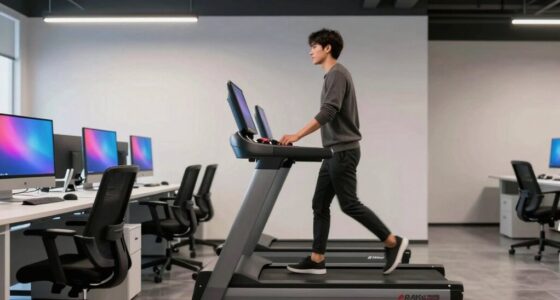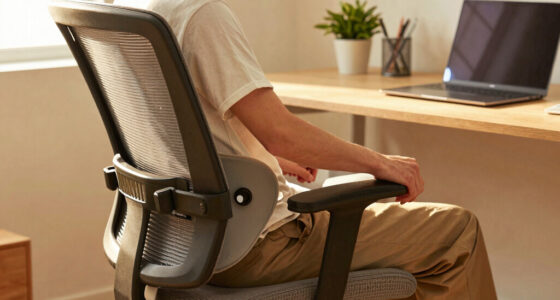

Standing can improve your posture, boost circulation, and help burn more calories, which benefits your musculoskeletal health and energy levels. Sitting for long periods, however, may cause back, neck, and shoulder strain and can lead to poor posture over time. The key is to balance both positions, incorporating movement and ergonomic support. If you want to understand how to optimize your habits and prevent discomfort, keep exploring these health impacts further.
Key Takeaways
- Standing improves posture and reduces neck, shoulder, and back strain caused by prolonged sitting.
- Sitting for long periods increases risks of musculoskeletal issues and poor circulation.
- Alternating between sitting and standing promotes better movement, circulation, and overall health.
- Standing burns more calories and supports weight management compared to sitting.
- Proper ergonomic practices are essential to minimize discomfort during prolonged standing or sitting.
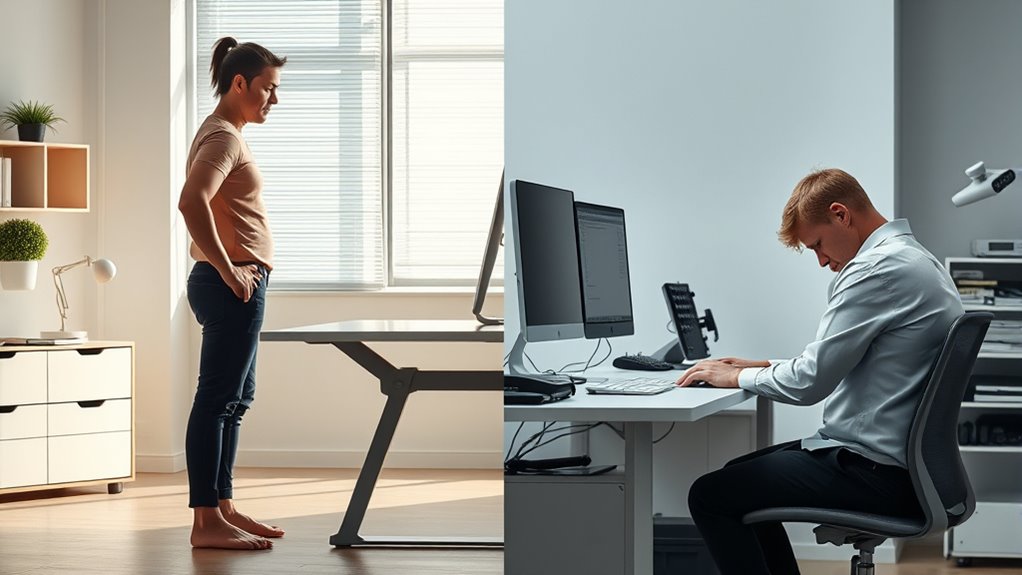
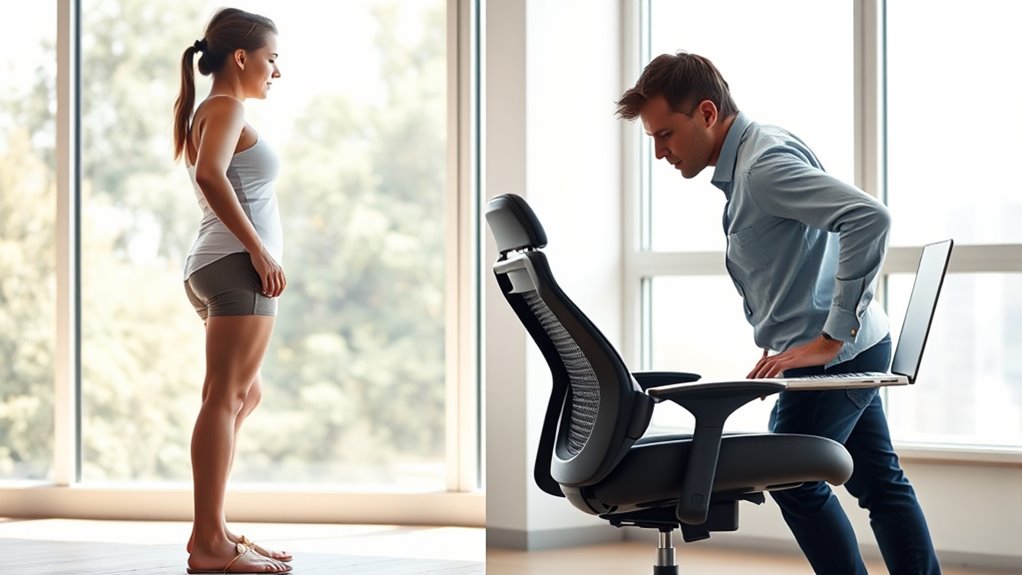
When it comes to workplace ergonomics and daily habits, the choice between standing and sitting can substantially impact your health and productivity. Your posture alignment plays a vital role here. Sitting for long periods often leads to poor posture, which can cause strain on your neck, shoulders, and back. You might find yourself slouching or leaning forward, putting unnecessary stress on your spine. Conversely, standing encourages better posture alignment, helping you keep your head, shoulders, and hips in a more natural and balanced position. When you stand properly, your muscles work to support your frame, reducing the likelihood of developing musculoskeletal issues over time.
Proper posture when standing supports musculoskeletal health and reduces strain.
Energy expenditure is another key factor worth noting. Standing burns more calories than sitting, which can contribute to maintaining a healthier weight. While the difference may seem small on a day-to-day basis, cumulatively, it adds up over weeks and months. If you’re looking to increase your daily activity without setting aside extra time for workouts, standing periodically during your workday can be a simple yet effective strategy. It also boosts circulation, preventing the sluggishness and fatigue that often accompany prolonged sitting. Standing encourages movement, which can help reduce the risk of blood clots and other circulation-related issues that are common with extended sedentary behavior.
However, standing all day isn’t without risks. Prolonged standing can lead to discomfort in your legs, feet, and lower back, especially if your footwear isn’t supportive or your standing posture isn’t ideal. The key is to strike a balance—alternating between sitting and standing throughout your day. Use ergonomic tools like adjustable desks, anti-fatigue mats, and footrests to optimize your posture and comfort. When you stand, keep your knees slightly bent, distribute your weight evenly, and avoid locking your ankles. These small adjustments can make a significant difference in maintaining good posture alignment and reducing strain.
In essence, neither sitting nor standing is inherently better; it’s how you incorporate both into your routine that matters. By paying attention to your posture and managing your energy expenditure wisely, you can enhance your overall well-being and productivity. Regularly shifting between sitting and standing, combined with mindful ergonomic practices, helps prevent discomfort and promotes better health in the long run. Remember, the goal is to move more, sit less, and stay conscious of how your body aligns and expends energy throughout the day. Incorporating smart ergonomic practices can significantly improve your comfort and health during daily activities.

Lumbar Support Pillow for Office Chair, Office Home Essentials,Gifts for Mom,Dad, Back Support Pillow for Car, Chair Cushions,Back Pain Relief Improve Posture,Mesh Cover Double Adjustable Straps
- Extended Adjustable Straps: Fits more chairs securely
- Ergonomic Back Support: Relieves back pain and improves posture
- High-Density Memory Foam: Maintains shape and provides firm support
As an affiliate, we earn on qualifying purchases.
Frequently Asked Questions
How Long Should I Stand or Sit for Optimal Health?
You should aim to stand or sit for about 30 to 60 minutes at a time, then take a break to move around. Using ergonomic accessories can help maintain good posture, reducing strain. Incorporate posture correction techniques during both standing and sitting periods, and switch frequently to prevent discomfort. Listening to your body and adjusting your routine ensures ideal health, minimizing risks associated with prolonged sitting or standing.
Can Alternating Between Standing and Sitting Prevent Health Issues?
Switching between sitting and standing is like giving your body a gentle dance, keeping it energized. It can prevent health issues like back pain and poor circulation when you use ergonomic accessories and improve workplace ergonomics. By alternating, you reduce strain and boost focus. Make it a habit to change positions regularly, ensuring your body stays balanced and healthy, all while enjoying a more comfortable, productive workday.
Are There Specific Exercises Recommended for Standing Desks?
Yes, there are specific exercises recommended for standing desks to improve posture correction. You should incorporate ergonomic accessories like anti-fatigue mats and footrests to reduce strain. Practice simple stretches such as calf raises, hamstring stretches, and shoulder rolls regularly to prevent stiffness. These exercises help maintain proper alignment, reduce fatigue, and promote better circulation, making your standing desk experience healthier and more comfortable.
What Are the Long-Term Effects of Prolonged Standing?
Prolonged standing can lead to long-term issues like musculoskeletal strain, especially in your legs, back, and feet, and circulatory problems, such as varicose veins. You might notice increased discomfort and fatigue over time. To minimize these effects, take regular breaks, shift your weight, and wear supportive shoes. Incorporating movement throughout the day helps protect your health and reduces the risk of these long-term issues.
How Does Posture Influence Health During Standing or Sitting?
Your posture is the compass guiding your health, whether you stand or sit. Good ergonomic adjustments act like a sturdy map, helping you navigate comfortably, reducing muscle fatigue and strain. Poor posture, however, can turn your body into a ship tossed by stormy seas, leading to discomfort and long-term issues. By maintaining proper alignment, you steer clear of health hazards and keep your body resilient on this journey.

Samsonite Lumbar Support Pillow for Office Chair, Lower Back Support for Car, Back Pillow Desk Chair Cushion with Memory Foam, Improved Posture Backrest
- Contoured Memory Foam: Provides all-day lumbar support
- Adjustable Straps: Ensures secure fit on chair and car seats
- Ventilated Mesh Cover: Promotes airflow for cooler sitting
As an affiliate, we earn on qualifying purchases.
Conclusion
So, next time you choose to stand or sit, remember it’s no coincidence that your health depends on your habits. Standing might boost your energy, while sitting too long can slow you down. The key is balance—because just when you think you’re safe sitting, a quick stretch or a stand-up moment might be all you need. Ultimately, your daily choices shape your well-being, so stay mindful—your health could hinge on that small switch.
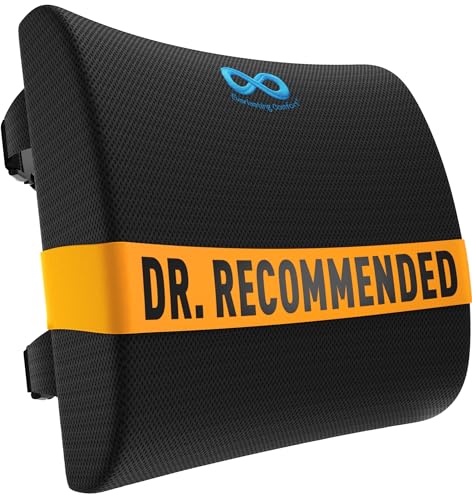
Everlasting Comfort The Original Lumbar Support Pillow for Office Chair - Improves Posture, Promotes Back Pain Relief - Superior Back Support for Gaming and Desk Chairs - Lumbar Pillow for Car, Couch
- High-Density Memory Foam: Provides firm, long-lasting support
- Supports Natural Spine Curve: Encourages better posture and reduces slouching
- Versatile Use: Suitable for office, car, couch, and gaming chairs
As an affiliate, we earn on qualifying purchases.

Nulaxy Ergonomic Adjustable Laptop Stand for Desk, Dual Foldable Computer Riser with Advanced Heat-Vent, Heavy-Duty Portable Notebook Holder for Posture Correction, Compatible with Mac 10-17" Laptops
- Ergonomic Posture Support: Elevates laptop for healthier viewing angle
- Stable Dual-Rod Design: Ensures wobble-free support up to 22 lbs
- Enhanced Heat Dissipation: Geometric vents improve airflow and cooling
As an affiliate, we earn on qualifying purchases.