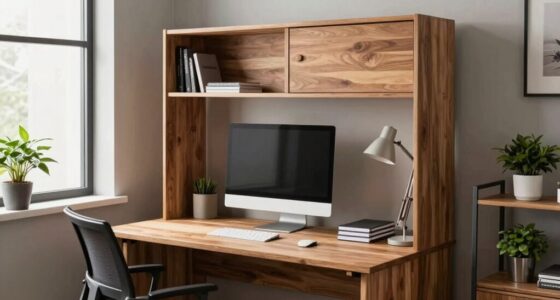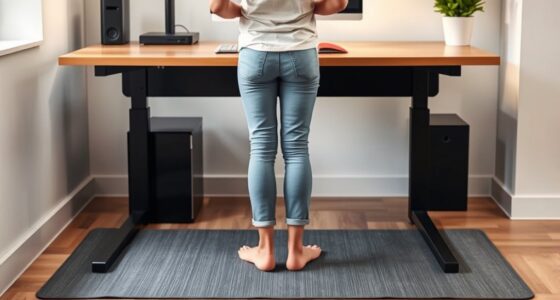
The depth of your desk depends on how many monitors you use. For a single monitor, aim for 24-30 inches to keep everything within easy reach and reduce strain. If you’re working with multiple screens, a deeper desk of 30-36 inches helps prevent clutter and keeps your workspace organized. Choosing the right depth supports ergonomic posture and comfort. Keep exploring, and you’ll discover how to optimize your setup for maximum efficiency and style.

Get comfort and recovery gear delivered free with Prime
- Fast, free delivery on millions of items
- Prime Video, Amazon Music and more included
- Member-only deals all year
Key Takeaways
- For a single monitor at eye level, a desk depth of 24-30 inches is typically sufficient.
- Multiple monitors require a deeper desk, around 30-36 inches, to prevent clutter and ensure comfortable viewing angles.
- Adequate depth supports ergonomic posture, reducing neck and eye strain during prolonged use.
- Smaller desks may need adjustable monitor stands to achieve proper height and distance.
- Consider room size and layout to balance desk depth with overall workspace comfort and aesthetics.

Have you ever wondered how deep your desk should be to maximize comfort and efficiency? The answer isn’t one-size-fits-all, especially as your workspace evolves with multiple monitors and accessories. The depth of your desk plays a vital role in supporting ergonomic posture and maintaining an aesthetic design that keeps your workspace organized and visually appealing. When you choose the right depth, you can sit comfortably without straining your neck or eyes, while also creating a clean, professional look that enhances productivity.
A good starting point is understanding that your desk should allow you to position your monitors at eye level, roughly 20 to 30 inches away from your face. For a single monitor, a depth of about 24 to 30 inches typically works well, giving you enough space to keep your keyboard and mouse close while maintaining proper distance from the screen. If you’re using multiple monitors, you’ll need a deeper desk—around 30 to 36 inches—to avoid clutter and ensure each screen is accessible without crowding your workspace. This extra depth helps you maintain ergonomic posture by allowing you to keep your monitors at the correct height and distance, reducing strain on your neck and eyes. Additionally, considering workspace ergonomics can further enhance your comfort and reduce long-term discomfort.
Beyond ergonomics, aesthetic design influences how deep your desk should be. A deeper desk can provide a sleek, balanced look, especially if it offers enough surface area to neatly arrange your equipment and personal items. This prevents a cluttered appearance and makes your workspace more inviting. However, overly deep desks can sometimes look bulky and may dominate a smaller room, so balance is key. If you prefer a minimalist look, a slightly shallower desk with clever storage solutions can keep your workspace tidy and visually appealing. Incorporating storage options into your desk design can further optimize your workspace and improve overall organization. Moreover, selecting the right material and finish can enhance the overall aesthetic and durability of your desk, ensuring it complements your workspace environment. It’s also beneficial to consider the size and layout of your space to ensure your desk fits comfortably without overwhelming the room.
Remember, the depth also impacts your overall comfort. A desk that’s too shallow might force you to lean forward, causing discomfort over time. Conversely, a deeper desk can help you sit back in your chair with proper support, encouraging good posture. It’s also worth considering adjustable monitor stands or risers, which allow you to fine-tune the height of your screens regardless of desk depth. Additionally, understanding the content formats and how they influence your workspace setup can help you optimize your desk depth for different workflows.
In the end, selecting the right depth involves balancing ergonomic needs with your aesthetic preferences. Your workspace should support your posture, reduce strain, and look good at the same time. Whether you’re working on a single monitor setup or managing multiple screens, taking the time to choose an appropriate desk depth ensures you work comfortably and efficiently, day after day.
As an affiliate, we earn on qualifying purchases.
Frequently Asked Questions
How Does Monitor Size Affect Ideal Desk Depth?
Monitor size considerably impacts your ideal desk depth because larger monitors require more space for proper monitor placement, ensuring you view the screen comfortably without straining. You need enough depth for stable monitor placement, preventing wobbling or accidents. As monitor size increases, you’ll want a deeper desk to maintain good ergonomics and desk stability, allowing you to position your screens at a suitable eye level while keeping your workspace organized and safe.
What Are Ergonomic Considerations for Different Desk Depths?
Think of your desk as a tailored suit—perfect fit matters. For ergonomic comfort, choose a depth that allows your keyboard height to be comfortable without straining your neck or eyes. Guarantee enough foot space to sit naturally, avoiding cramped legs. A deeper desk can improve posture, but too deep might cause overreaching. Adjust monitor placement accordingly, so you maintain good eye level and avoid unnecessary neck twists.
Can Adjustable Desks Optimize Depth for Multiple Monitor Setups?
Yes, adjustable desks can optimize depth for multiple monitor setups. You can easily customize your desk height and depth to suit your workspace organization, ensuring your monitors are at eye level and comfortably spaced. This flexibility helps reduce strain and improves ergonomics, especially when managing multiple screens. By adjusting the desk depth, you create a more efficient, comfortable workspace tailored to your monitor arrangement and ergonomic needs.
How Does Desk Depth Impact Cable Management?
Think of your desk as a riverbed, guiding cable routing smoothly. A deeper desk offers more space for tidy cable management, hiding power outlets and preventing clutter. Shallow desks may cause cables to spill over edges, creating chaos. With sufficient depth, you can neatly route cables, connect power outlets discreetly, and maintain a clean workspace. Proper depth guarantees your cables stay organized and accessible, reducing stress and enhancing productivity.
Is a Deeper Desk Better for Eye Strain Reduction?
A deeper desk can help reduce eye strain by allowing you to position your monitor at an ideal distance, improving lighting ergonomics. It also offers more space to organize your workspace, enhancing aesthetics and comfort. However, guarantee your lighting setup minimizes glare and reflections for the best results. A deeper desk isn’t always necessary but can be beneficial if you prioritize ergonomic lighting and a tidy, visually appealing workspace.
As an affiliate, we earn on qualifying purchases.
Conclusion
Ultimately, striking the right balance in your desk depth isn’t just about measurements—it’s about creating a space that gently nurtures your productivity and comfort. As your setup evolves and your needs shift, be open to subtle adjustments, like a whisper of change rather than a loud overhaul. By paying close attention to how your workspace feels, you guarantee it remains a quiet sanctuary where focus can flourish effortlessly, no matter how many screens you decide to invite in.
As an affiliate, we earn on qualifying purchases.
desk with cable management and storage
As an affiliate, we earn on qualifying purchases.
As an affiliate, we earn on qualifying purchases.
Fall Picks
fall essentials
As an affiliate, we earn on qualifying purchases.