TL;DR

Get comfort and recovery gear delivered free with Prime
- Fast, free delivery on millions of items
- Prime Video, Amazon Music and more included
- Member-only deals all year
A Fit&Well report describes two balance drills suggested by Spartan DEKA co-creator Yancy Culp: walking unusually slowly and performing slow high-knee cycles. Culp recommends practicing regularly and increasing difficulty gradually, but the report does not provide independent trial evidence or a guarantee that everyone will improve on the same schedule.
Fit&Well has reported two simple balance drills suggested by Yancy Culp, a Spartan DEKA co-creator and senior director: walking slowly enough to hold each step longer and raising the knees through controlled, slow cycles. Culp recommends practicing consistently and making the movements more challenging over time; the report presents them as exercise guidance, not as a clinically tested program or a guarantee of results.
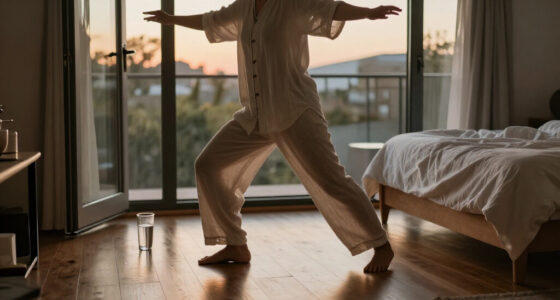
The first drill, which Culp calls “delayed walking,” involves walking at a deliberately slow pace for several minutes each day. The aim is to spend longer balancing on one foot during each step transition than during ordinary walking. Culp advises gradually lengthening that transition time. The report does not specify a starting pace, a target duration for each step, or a standard level of difficulty.
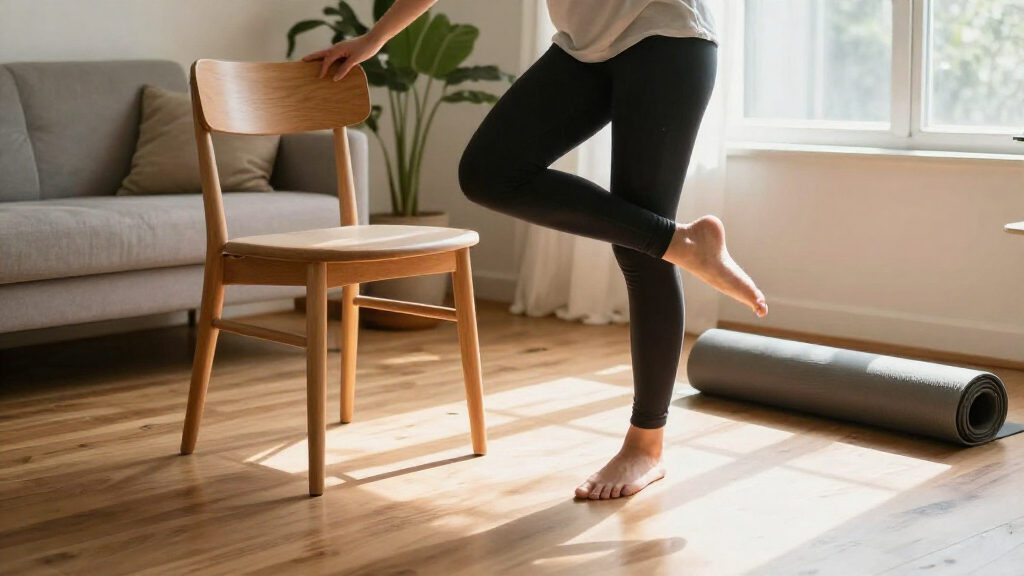
The second drill adapts a high-knee exercise. Culp says to raise one knee slowly, taking three seconds for a leg cycle before returning the foot to the ground, and to continue for two minutes daily. His suggested progression is to add one second to the cycle every fifth day. The report says this would reach a 10-second cycle in 35 days, but does not define precisely how the cycle time is measured.
Culp also describes optional challenges, including briefly closing the eyes or reaching down to touch the foot with both hands during a leg cycle. Those variations make the task harder and are not necessary to perform the basic drills. They also reduce visual or physical support, so readers should not attempt them unless they can do so safely. The source does not give tailored instructions for people with injuries, balance disorders, or other health conditions.
Building Balance Into Daily Movement
Balance contributes to ordinary actions such as walking, dressing, and changing direction. Culp told Fit&Well that it supports confidence in movement and becomes more important with age. The practical value of the suggestions is their low-equipment format: both drills use familiar movements and can be adjusted gradually, making them easier to try than a specialized workout for some people.
That does not mean the exercises are a substitute for a professional assessment or fall-prevention care. A person who feels unsteady, has recently fallen, or notices a sudden change in balance may need advice from a clinician or physical therapist rather than relying on a general fitness article. The report offers guidance from a fitness professional, not evidence that these two drills prevent falls or treat a medical condition.
As an affiliate, we earn on qualifying purchases.
Culp’s One-Leg Fitness Test
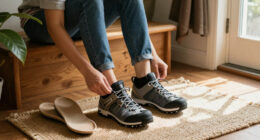
The Fit&Well report places the exercises alongside Culp’s proposed set of five fitness “litmus tests.” It says the first is standing on one leg while doing a task, such as tying a shoe; the other tests address cardio fitness, strength, and mobility. Culp presents difficulty with a task like this as a possible sign that balance and coordination may need attention—not as a diagnosis.
The report’s author also describes practicing standing on one leg while putting on socks and says the change took months. That is a personal account, not a controlled test. It illustrates the article’s broader suggestion to practice balance in manageable ways, while leaving individual results and timelines uncertain.
““For several minutes every day, do what I call delayed walking. Walk very slowly so that you’re forced to balance on one foot for a longer period of time compared to your normal walking pace during your leg transitions.””
— Yancy Culp, Spartan DEKA co-creator and senior director, as quoted by Fit&Well
As an affiliate, we earn on qualifying purchases.
Limits of the Exercise Advice
The supplied report does not cite a study testing these two drills, compare them with other balance programs, or provide data on expected outcomes. Its claims about improvement are attributed to Culp, and readers’ results may vary. The report also does not explain how to assess whether a person is ready for the harder variations, or what to do if the exercises cause pain or dizziness.
There is no publication date in the supplied source material, and no additional guidance from medical or rehabilitation organizations is included. Readers with a history of falls, an existing condition affecting balance, or concerns about safe exercise should seek individualized guidance before trying challenging versions. Practice near a stable support and avoid closing the eyes or reaching down if doing so could lead to a fall.
high knee exercise resistance band
As an affiliate, we earn on qualifying purchases.
As an affiliate, we earn on qualifying purchases.
Gradual Practice, With Safety Checks
Culp’s suggested next step is regular practice: several minutes of delayed walking or two minutes of slow high knees each day, followed by gradual increases in challenge. The report does not announce a formal program, supervised follow-up, or a specific outcome measure. Anyone trying the drills can keep the movements controlled and use a stable nearby support if needed, rather than progressing on a fixed schedule when they do not feel steady.
Readers seeking more than general fitness advice should consult a qualified health professional, particularly if they have fallen or have a condition that affects movement. No additional study results or expert guidance beyond Culp’s recommendations are provided in the source material.
As an affiliate, we earn on qualifying purchases.
Key Questions
What are the two balance drills?
Delayed walking means walking unusually slowly to spend longer balancing during each step. Slow high knees means raising a knee in a controlled cycle, taking three seconds per cycle at the suggested starting point.
How often does Culp recommend doing them?
For delayed walking, Culp suggests several minutes each day. For slow high knees, he suggests two minutes daily. The report does not give a required total program length.
How should the high-knee drill progress?
Culp recommends adding one second to the leg cycle every fifth day. The article’s 35-day example reaches a 10-second cycle, though it does not give a detailed measurement method or say this pace suits everyone.
Should beginners close their eyes during the exercise?
Closing the eyes is presented as an optional challenge, not a basic requirement. It can make balancing harder; use a stable support and skip that variation if it feels unsafe. People with balance concerns should ask a qualified professional for individual advice.
Does the report prove the drills prevent falls?
No. The report gives Culp’s exercise recommendations but does not cite a clinical trial establishing that the drills prevent falls or work equally well for everyone.
Source: rss
Halloween Picks
halloween
As an affiliate, we earn on qualifying purchases.