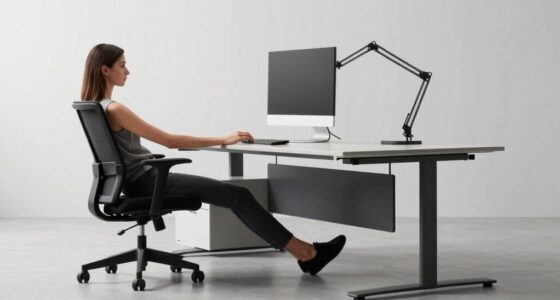
Kneeling chairs promote a natural sitting posture, helping you stay upright and reduce lower back strain, which is a big advantage. However, they also have a catch—prolonged use can cause discomfort or knee pain since weight shifts onto your shins and knees. While they improve circulation and posture, you might need breaks or adjustments for comfort. Curious how to make the most of them without discomfort? Keep exploring for helpful tips.

Get comfort and recovery gear delivered free with Prime
- Fast, free delivery on millions of items
- Prime Video, Amazon Music and more included
- Member-only deals all year
Key Takeaways
- The big advantage is improved posture and reduced lower back strain through natural spinal alignment.
- The big catch is potential discomfort or knee pain from prolonged use due to weight shifting onto the knees.
- Proper adjustment and limited usage are essential to maximize benefits and minimize drawbacks.
- Kneeling chairs promote better circulation but may require regular breaks to prevent muscle fatigue.
- They are best suited for short-term use and ergonomic support, not extended work sessions.

If you’re considering a kneeling chair to improve your workspace, it’s important to understand both its benefits and drawbacks. One of the biggest advantages is the ergonomic benefits it offers. Unlike traditional chairs, a kneeling chair encourages a more natural sitting posture. You’re prompted to sit upright, with your hips tilted forward and your spine aligned, which can reduce strain on your lower back and improve your overall comfort. This position distributes your body weight more evenly between your hips and knees, alleviating pressure points that often cause discomfort after long hours of sitting. Many users find that this promotes better circulation and lessens muscle fatigue, especially if you tend to slouch or hunch over a desk. The ergonomic benefits are significant because they can help prevent common issues like herniated discs, neck pain, and headaches associated with poor posture. Developing awareness of posture and alignment can further enhance the benefits of using a kneeling chair. Additionally, some models incorporate adjustable features to better fit various body types, which can help optimize comfort and support.
Beyond health advantages, a kneeling chair also has an aesthetic appeal that might draw you in. Its modern, minimalist design often complements contemporary office or home setups. Many models feature sleek frames and neutral colors, making them visually appealing and easy to integrate into various décor styles. If aesthetics matter to you, a kneeling chair can add a touch of modernity and sophistication to your workspace, making it look more inviting and thoughtfully curated. Its unique design can also serve as a conversation starter; people often notice it immediately and appreciate its unconventional look compared to traditional office chairs. This visual appeal can enhance your workspace’s overall vibe, making it feel more dynamic and stylish. However, it’s worth noting that some users may find the design less practical if they require frequent mobility or need to switch between different workstations.
However, it’s not all smooth sailing. The big catch with kneeling chairs lies in comfort during extended use. While they promote better posture, they can also place strain on your knees and shins if used for too long without breaks. Sitting in a kneeling position shifts weight onto your knees, which might lead to discomfort, especially if you have existing knee issues. It can take time to get used to, and some users find that it’s not suitable for long work sessions. Additionally, the height adjustments and design might not fit everyone perfectly, making it less versatile than traditional chairs. Proper adjustability can help mitigate some of these issues by allowing you to find a comfortable position, but it’s still important to listen to your body. So, if you’re thinking about adopting a kneeling chair, plan to use it for limited periods and combine it with regular breaks and other ergonomic furniture to prevent discomfort and maximize its benefits. For best results, consider consulting ergonomic guidelines and ergonomic accessories to further support your comfort and health.
ergonomic kneeling chair for back pain
As an affiliate, we earn on qualifying purchases.
As an affiliate, we earn on qualifying purchases.
Frequently Asked Questions
Are Kneeling Chairs Suitable for Long-Term Daily Use?
Kneeling chairs can be suitable for long-term daily use if you enjoy an alternative posture that promotes better spinal alignment. They offer aesthetic appeal and encourage active sitting, which may reduce back pain. However, you should listen to your body, as prolonged use might cause discomfort or strain if not adjusted properly. Incorporate breaks and vary your seating to maximize benefits and avoid potential drawbacks of extended kneeling chair use.
How Do Kneeling Chairs Compare to Traditional Office Chairs?
Like a knight’s armor, kneeling chairs offer a fresh alternative sitting position, contrasting traditional office chairs’ comfort. You’ll find they promote better posture and engage core muscles, but aesthetics and design vary widely. While they encourage active sitting, they might be less cushioned and less adjustable than conventional chairs. Use them for variety and improved posture, but don’t expect all-day comfort. They’re a stylish, ergonomic option—just not a one-size-fits-all solution.
Can Kneeling Chairs Help Alleviate Specific Back Pain Issues?
Yes, kneeling chairs can help alleviate specific back pain issues by promoting better posture correction and reducing strain on your lower back. They encourage you to sit upright, which aligns your spine properly. Additionally, their design can improve circulation by relieving pressure on your hips and thighs. However, they might take time to get used to, and some users find them uncomfortable initially.
What Are the Best Adjustments for Ergonomic Comfort?
Did you know proper adjustments can boost your sitting ergonomics by up to 80%? To achieve ideal comfort, focus on posture correction by ensuring your hips are slightly higher than your knees, keeping your back straight, and your feet flat. Adjust the knee pad height to support your shins comfortably. These tweaks help you maintain good sitting ergonomics, reducing strain and promoting better spinal alignment throughout your day.
Are Kneeling Chairs Safe for People With Knee or Joint Problems?
Kneeling chairs can be risky if you have knee or joint problems, as they put pressure on your knee joints and may worsen discomfort. If your posture alignment is already compromised or you experience knee pain, it’s best to consult a healthcare professional before using one. Always listen to your body—if kneeling causes pain or discomfort, consider alternative ergonomic solutions that support proper posture without stressing your knee joints.
adjustable kneeling office chair
As an affiliate, we earn on qualifying purchases.
As an affiliate, we earn on qualifying purchases.
Conclusion
While kneeling chairs can improve your posture, they’re not a one-size-fits-all solution. For example, imagine someone with knee pain trying to use one daily—discomfort might outweigh benefits. It’s essential to weigh the advantages against the catch. If you’re willing to listen to your body and adjust accordingly, a kneeling chair could be a game-changer. But always remember, comfort and health come first—choose what truly supports your well-being.
knee and shin support cushion for kneeling chair
As an affiliate, we earn on qualifying purchases.
As an affiliate, we earn on qualifying purchases.
As an affiliate, we earn on qualifying purchases.
Halloween Picks
halloween
As an affiliate, we earn on qualifying purchases.