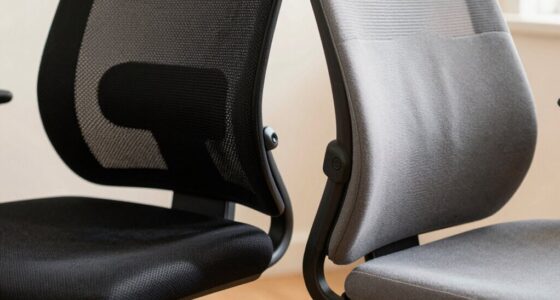
Sitting for long periods affects your body in many ways. It causes muscles to weaken, reduces blood flow, and puts pressure on your spine, leading to back pain. Circulation slows down, increasing swelling and the risk of blood clots. Sedentary behavior is linked to obesity, heart disease, and metabolic issues. Ergonomic setups and regular movement can help. Keep exploring to understand how you can protect yourself and improve your health while sitting.

Get comfort and recovery gear delivered free with Prime
- Fast, free delivery on millions of items
- Prime Video, Amazon Music and more included
- Member-only deals all year
Key Takeaways
- Prolonged sitting decreases blood flow and impairs glucose and lipid regulation, raising health risks over time.
- Sitting compresses the spine and weakens core muscles, leading to back pain and postural issues.
- Extended sedentary periods reduce circulation and lymphatic flow, increasing swelling and blood clot risks.
- Lack of movement decreases muscle activity, contributing to obesity, metabolic disorders, and insulin resistance.
- Ergonomic design and regular breaks help mitigate negative effects by promoting better posture and circulation.

Sitting might seem like a simple, everyday activity, but science reveals it has complex effects on your body. When you sit, especially for extended periods, your muscles, bones, and organs respond in ways that can impact your health over time. One key factor to contemplate is ergonomic design, which influences how comfortable and supportive your seating setup is. An ergonomic chair, for instance, encourages proper posture, reducing strain on your back, neck, and shoulders. When your workspace is tailored with ergonomic principles, you’re less likely to develop musculoskeletal problems caused by poor alignment during prolonged sitting.
Sedentary behavior, characterized by long stretches of inactivity, is a significant concern linked to sitting. It’s not just about the act of sitting itself but how much and how often you sit without breaks. Sedentary behavior has been associated with increased risks of cardiovascular disease, obesity, and metabolic disorders. When you sit for hours without movement, your muscles become less active, blood flow slows, and your body’s ability to regulate glucose and lipids diminishes. This buildup can lead to weight gain and insulin resistance, both precursors to chronic illnesses.
Long periods of inactivity increase risks of heart disease, obesity, and insulin resistance.
Your body isn’t designed to stay stationary for long periods. Sitting compresses your spine and can weaken core muscles, which are essential for maintaining proper posture and supporting your back. Over time, this can contribute to chronic back pain and spinal issues. Additionally, sitting reduces circulation and lymphatic flow, which can cause swelling and increase the risk of blood clots. That’s why incorporating movement into your routine is vital. Even short breaks to stretch or walk can counteract many of the adverse effects associated with sedentary behavior.
Using ergonomic design in your workspace can help mitigate some of these risks. Adjustable desks allow you to alternate between sitting and standing, promoting better posture and increasing activity levels. Proper chair support ensures your hips are at a 90-degree angle, and your feet rest flat on the floor, minimizing strain. Remember, sitting isn’t inherently bad, but the problem arises when you sit excessively without paying attention to ergonomics or taking frequent movement breaks. Your body benefits from variety—changing positions, stretching, and walking around—making sitting a more manageable part of your daily routine.
Moreover, incorporating standing desks or sit-stand options into your workspace can significantly reduce the negative effects of prolonged sitting. In essence, understanding the science behind sitting underscores the importance of mindful habits and ergonomic environments. Recognizing how sedentary behavior affects your health motivates you to make smarter choices—whether that’s adjusting your workspace or taking regular movement breaks—to keep your body functioning at its best.
As an affiliate, we earn on qualifying purchases.
Frequently Asked Questions
How Does Sitting Impact Mental Health Over Time?
Sitting for long periods can negatively impact your mental health, leading to increased feelings of depression and anxiety. Over time, it may also impair your cognitive function, making it harder to concentrate and remember things. When you sit too much, your brain’s mood-regulating chemicals can decrease, affecting your overall well-being. To protect your mental health, try to incorporate movement into your day and take regular breaks from sitting.
Are There Specific Exercises to Counteract Sitting Effects?
You can counteract sitting effects by incorporating stretching routines and taking active breaks regularly. Try simple stretches like neck rolls, shoulder shrugs, and hamstring stretches every hour. Stand up, walk around, or do quick exercises like jumping jacks or squats during breaks. These activities help improve circulation, reduce muscle stiffness, and boost your energy levels, making it easier to stay healthy despite long periods of sitting.
What Are the Best Ergonomic Chairs for Prolonged Sitting?
You should choose ergonomic chairs with a strong ergonomic design that promotes proper posture correction. Look for adjustable features like seat height, lumbar support, and armrests to tailor the chair to your body. An ergonomic chair helps reduce strain on your back and neck during prolonged sitting, encouraging healthy posture habits. Prioritizing these features guarantees comfort and supports your overall well-being while working or sitting for long periods.
How Does Sitting Influence Digestion and Metabolism?
Think of sitting like parking a car for hours—your digestion slows down, making food sit longer in your stomach. Prolonged sitting can reduce your metabolic rate by up to 15%, leading to weight gain and sluggish digestion. When you sit too long, your body’s ability to process nutrients and burn calories drops, so taking breaks to stand or walk helps keep your digestion active and your metabolism running efficiently.
Can Standing Desks Fully Eliminate Sitting-Related Health Risks?
Standing desks can reduce sitting-related health risks, but they don’t eliminate them completely due to standing desk limitations like prolonged standing causing discomfort or circulation issues. Also, don’t fall for sitting risk myths that standing alone is enough; movement and regular breaks matter. To truly minimize risks, alternate between sitting, standing, and walking, and stay active throughout your day.
As an affiliate, we earn on qualifying purchases.
Conclusion
So, while sitting might seem harmless—like a cozy chair or your favorite couch—it’s actually a silent thief stealing your health. Just as a car needs fuel to run smoothly, your body needs movement to stay strong. Remember, sitting may be easy, but your body’s energy depends on breaking that habit. Switch it up, stand more, move often—because a healthier you is worth every step away from the chair.
As an affiliate, we earn on qualifying purchases.
As an affiliate, we earn on qualifying purchases.
Fall Picks
fall essentials
As an affiliate, we earn on qualifying purchases.