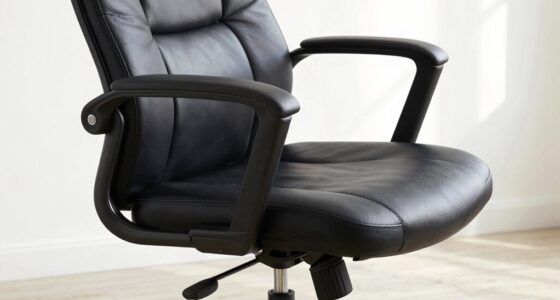
If you have wide hips, choosing a chair isn’t just about seat width. You need an ergonomic design that supports your natural curves and maintains proper posture. Features like adjustable seat depth, tilt, and lumbar support help customize the fit and prevent discomfort. The overall shape and contour of the chair matter just as much as width alone. Keep these factors in mind, and you’ll find a more comfortable, supportive seat. There’s more to know about tailoring your chair for wide hips.

Get comfort and recovery gear delivered free with Prime
- Fast, free delivery on millions of items
- Prime Video, Amazon Music and more included
- Member-only deals all year
Key Takeaways
- Proper ergonomic contouring supports wide hips and promotes correct posture beyond just increasing seat width.
- Adjustable seat depth ensures full hip support without restricting circulation or causing discomfort.
- Personalized tilt and height adjustments help accommodate natural body curves for a better fit.
- Incorporating lumbar support and adjustable armrests enhances comfort for wider hips.
- Overall chair design, including support and shape, is crucial for long-term comfort, not just seat width.
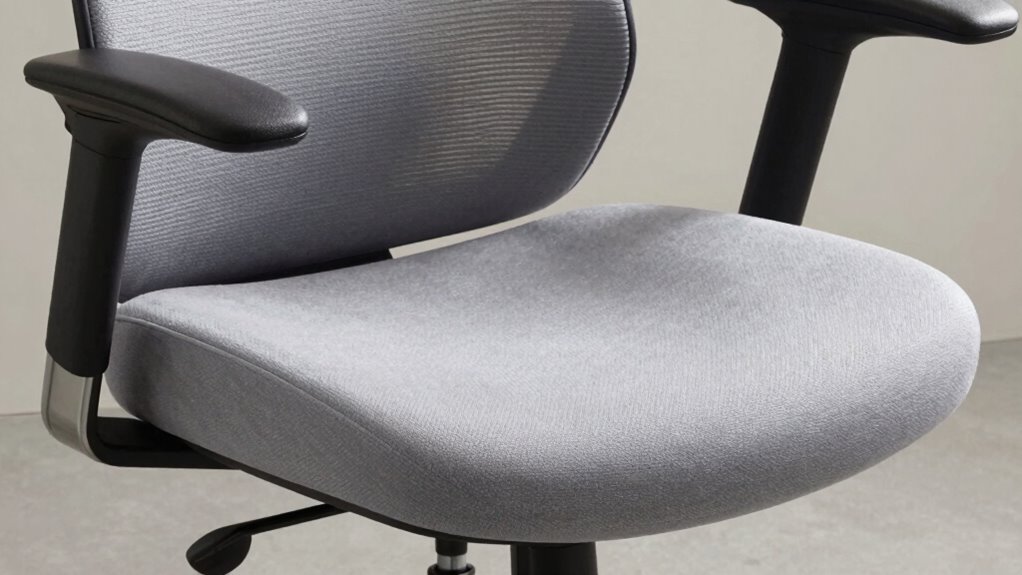
If you have wide hips, finding a chair that fits comfortably can be challenging, but it’s definitely possible with the right choices. When shopping for seating, it’s essential to look beyond just seat width. An ergonomic design is crucial because it’s tailored to support your body’s natural curves, especially around your hips and thighs. A chair with good ergonomic features will help you maintain proper posture support, reducing strain on your lower back and hips over long periods. Remember, a wider seat alone isn’t enough; the overall shape and contour of the chair play a significant role in ensuring comfort and proper alignment.
Choosing an ergonomic chair with proper contours supports wide hips for all-day comfort and better posture.
You should seek chairs that offer adjustable features, such as seat depth and tilt, which allow you to customize the fit. The seat depth is particularly important because if it’s too shallow, your hips won’t be adequately supported, leading to discomfort and poor posture. Conversely, a seat that’s too deep can put pressure on the back of your knees and restrict circulation. The goal is to find a seat that supports your hips fully while allowing your feet to rest flat on the ground. This balance helps maintain posture support and prevents slouching, which can cause long-term back issues. Incorporating ergonomic principles into your chair selection can greatly improve your overall comfort and health. Additionally, choosing a chair with appropriate width ensures that your hips are not squeezed or left unsupported during long sitting sessions. It’s also helpful to consider the overall design of the chair, including lumbar support and armrest adjustability, to further enhance comfort.
ergonomic office chair with adjustable seat depth
As an affiliate, we earn on qualifying purchases.
As an affiliate, we earn on qualifying purchases.
Frequently Asked Questions
How Does Hip Shape Affect Chair Comfort?
Your hip shape influences chair comfort because hip flexibility and pelvic alignment vary widely. If your hips are less flexible, you might find straight-backed chairs uncomfortable, especially if they don’t accommodate your pelvic position. Wide hips can cause pressure points, making it hard to find a seat that fits well. Choosing chairs with adjustable features or contoured designs helps support your pelvic alignment and improves overall comfort.
What’s the Best Way to Measure Hip Width Accurately?
Think of measuring your hips like mapping a treasure island—precise and careful. To get an accurate hip measurement, stand straight with your feet together, wrap a flexible tape measure around the widest part of your hips and buttocks, keeping it snug but not tight. Record the measurement in inches or centimeters. This key step enhances seating ergonomics, ensuring your chair fits comfortably and supports your body’s natural shape.
Do Adjustable Chairs Improve Fit for Wide Hips?
Yes, adjustable chairs can improve fit for wide hips by offering customizable ergonomic support and enhancing aesthetic design. You can modify seat depth, height, and lumbar support to guarantee comfort and proper posture. This flexibility helps accommodate your unique body shape, reducing pressure points and increasing comfort throughout the day. With an adjustable chair, you get a tailored fit that combines ergonomic benefits with sleek, aesthetic design, making your workspace more inviting and supportive.
How Can I Tell if a Chair Is Too Narrow?
You can tell if a chair is too narrow if your hips feel cramped or if your thighs press against the sides, causing discomfort. Look for ergonomic designs that offer adjustable features to accommodate wider hips comfortably. Keep up with fashion trends that emphasize ergonomic support and wider seat options. A well-fitting chair should support your hips naturally, without pinching or restricting movement, ensuring both comfort and style.
Are There Specific Chair Materials Better for Wide Hips?
About 60% of people find standard chairs uncomfortable due to hip width. For wide hips, look for chairs with flexible fabrics like breathable mesh or soft, stretchy upholstery. Ergonomic features such as wider seats, adjustable armrests, and lumbar support help, too. These materials and features accommodate your shape better, offering comfort and support. Don’t settle for stiff fabrics or narrow designs—choose furniture that adapts to your body’s needs.
As an affiliate, we earn on qualifying purchases.
Conclusion
Choosing the right chair for wide hips isn’t just about seat width; it’s about understanding how chair design impacts comfort and posture. Did you know that nearly 40% of people report discomfort due to poorly fitting chairs? That’s a significant number, highlighting the importance of considering more than just size. By paying attention to shape, support, and adjustability, you can find a seat that truly fits your body, making every sitting experience more comfortable and healthier in the long run.
office chair with lumbar support and armrest adjustability
As an affiliate, we earn on qualifying purchases.
As an affiliate, we earn on qualifying purchases.
contoured ergonomic chair for wide hips
As an affiliate, we earn on qualifying purchases.
As an affiliate, we earn on qualifying purchases.
Fall Picks
fall essentials
As an affiliate, we earn on qualifying purchases.