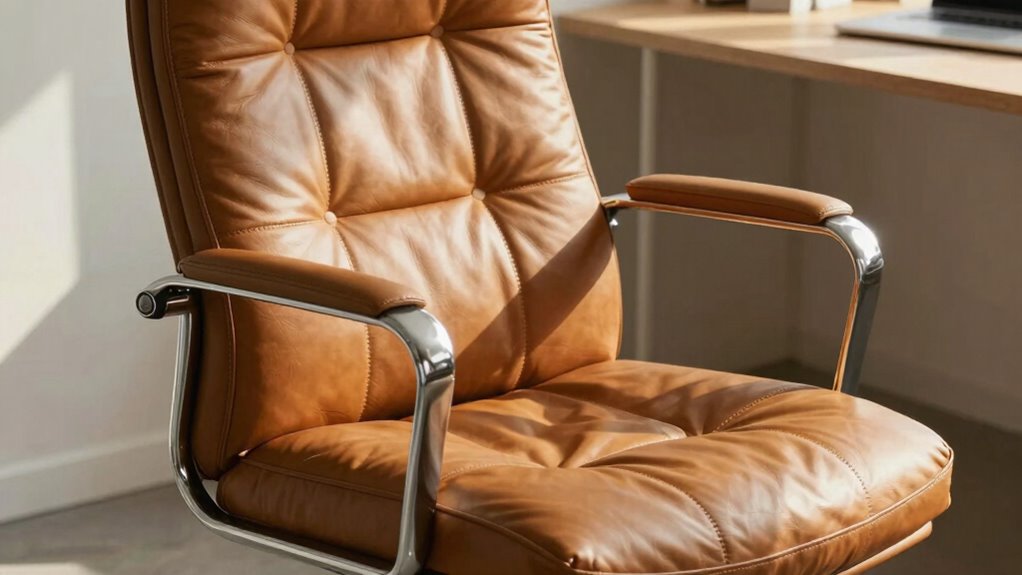
You might find your chair comfortable at first because of its ergonomic design and supportive materials. However, over time, those features often wear out or aren’t adjustable enough for your long work hours. Low-quality materials can sag or flatten, and rigid designs cause you to shift repeatedly, leading to muscle fatigue. If you want to understand why your chair loses support and what you can do about it, there’s more to discover.
Key Takeaways
- Initial ergonomic support may fade as cushioning compresses or materials wear, reducing comfort over time.
- Non-adjustable chairs force constant repositioning, leading to muscle fatigue and discomfort by mid-day.
- Low-quality materials degrade quickly, causing sagging and loss of support during extended use.
- Poor ergonomic design can’t maintain proper posture, resulting in increasing discomfort as hours pass.
- Lack of personalized adjustments prevents sustained comfort, requiring frequent shifts that cause strain.
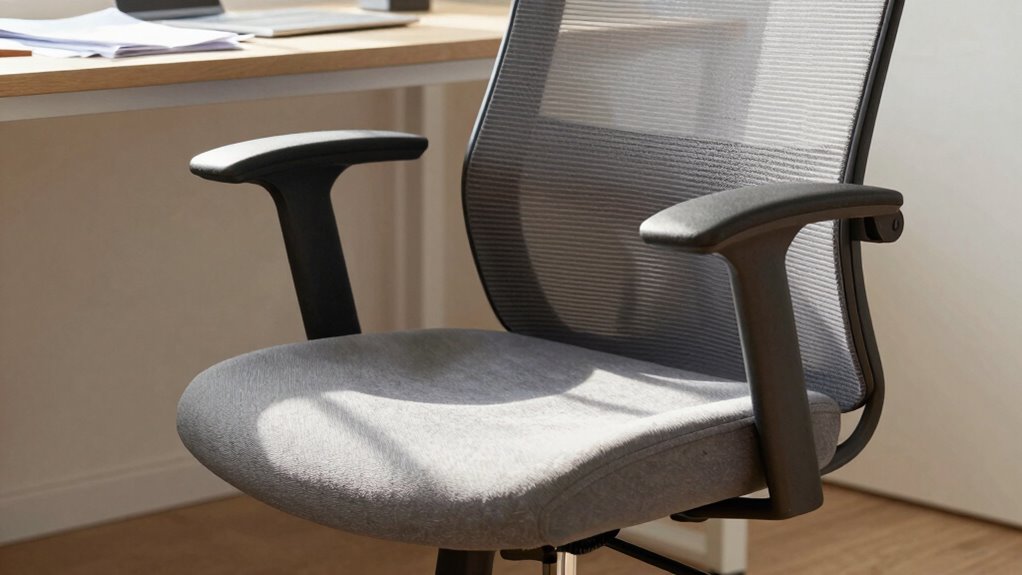
Have you ever settled into a chair that initially feels perfect only to start feeling uncomfortable after a while? It’s a common experience, and it often comes down to the chair’s design and material quality. When you first sit down, the ergonomic design might seem spot-on, providing just the right support and comfort. But as hours pass, that feeling can fade, and discomfort creeps in. This happens because many chairs aren’t built to sustain comfort over extended periods, revealing flaws in their ergonomic structure or material durability.
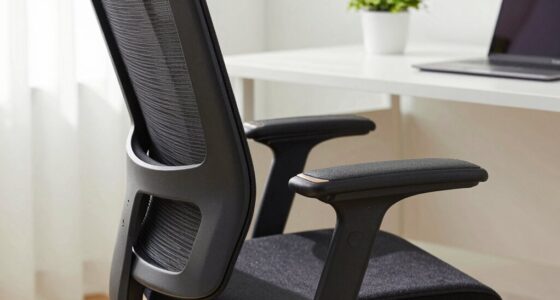
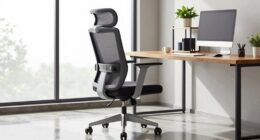
Ergonomic design is vital because it’s meant to support your body’s natural posture. A well-designed chair aligns your spine, cushions your hips, and keeps your feet flat on the ground. But if the ergonomic features aren’t adjustable or don’t suit your body type, you’ll find yourself shifting, slouching, or trying to find a more comfortable position. Over time, this constant repositioning causes muscle fatigue and strain, making the chair feel less comfortable as the day progresses. The initial support you felt might seem less effective after a few hours, especially if the design doesn’t accommodate movement or long-term support.
Adjustable ergonomic features are essential for long-lasting comfort and proper posture.
Material durability is another key factor. The materials used in a chair’s construction influence not just how long it lasts but also how comfortable it remains. High-quality, durable materials like sturdy plastic, reinforced metal frames, and resilient upholstery maintain their shape and support over time. Cheaper materials, on the other hand, tend to wear out quickly. Cushions made from low-density foam can flatten, and upholstery can sag or tear, leading to less support and increased discomfort. When the materials degrade, the chair’s ergonomic benefits diminish, and you feel the effects more acutely as the day drags on. material quality is crucial for long-term comfort, as it directly affects how well the chair maintains its supportive features.
Furthermore, the combination of poor ergonomic design and low material durability often results in a cycle of discomfort. What starts as a seemingly perfect chair can quickly turn into a source of pain or fatigue. This is why investing in a chair with a solid ergonomic design and high-quality, durable materials pays off. It might cost more upfront, but it guarantees sustained comfort, reducing the need to constantly shift or stand up. Ultimately, the secret to a chair that stays comfortable all day lies in thoughtful design and tough, resilient materials that support you from morning until evening. Paying attention to ergonomic principles and material quality can help you choose furniture that supports your health and comfort in the long run.
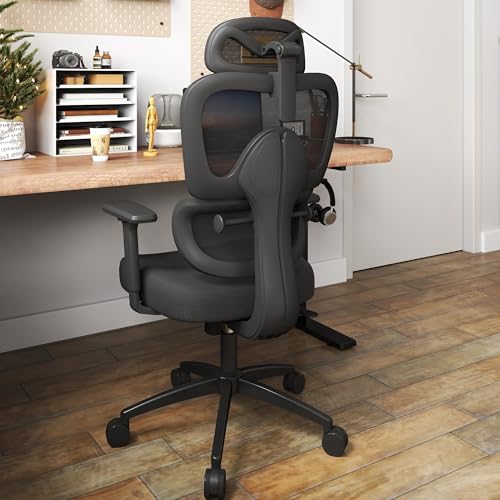
Ergonomic Office Chair with Adjustable Lumbar Support, 3D Arms and Headrest, High Back Wide Desk Computer Chair with Wheels, for Home & Office, Black
Large & Non-Deformable Cushion: Made from 4.33" thick, high-density shaped sponge, this wide comfy cushion resists sagging and…
As an affiliate, we earn on qualifying purchases.
As an affiliate, we earn on qualifying purchases.
Frequently Asked Questions
How Does Seat Material Affect Comfort Over Time?
Your comfort over time depends heavily on seat material. If the cushion density is too low, you’ll sink and feel discomfort quickly. Conversely, high-density cushions provide better support. Breathability issues also play a role; non-breathable fabrics trap heat and moisture, making you sweat and feel uncomfortable sooner. Choosing a chair with the right cushion density and breathable material helps maintain comfort throughout your day, preventing that sudden decline in satisfaction.
Can Posture Changes Improve Long-Term Chair Comfort?
Yes, changing your posture can improve long-term chair comfort. An ergonomic design encourages proper alignment, reducing strain, while adjustable seat padding helps you customize support. When you shift positions regularly, you prevent pressure buildup and muscle fatigue. Incorporate small posture adjustments throughout the day, like sitting upright or tilting slightly, to enhance comfort and support your body’s needs, making your chair feel better for longer periods.
Do Ergonomic Features Prevent Chair Discomfort?
Ergonomic features like lumbar support and armrest adjustability can markedly reduce chair discomfort. When your lumbar support contours to your lower back, it alleviates strain and promotes better posture, while adjustable armrests prevent shoulder tension. These features work together to support your body’s natural alignment, preventing discomfort throughout the day. However, they’re most effective when you customize them to fit your body, ensuring sustained comfort during long sitting periods.
How Does Body Weight Influence Chair Fatigue?
Think of your body as a ship steering through a sea of pressure distribution. If your weight exceeds the chair’s weight capacity, it’s like adding too much cargo, causing strain and fatigue. Your body weight influences how well the chair supports you, affecting pressure points and comfort. When your weight aligns with the chair’s capacity, you experience less fatigue, making your sit much smoother and more enjoyable throughout the day.
Are Adjustable Chairs Better Than Fixed Ones?
Adjustable chairs are generally better because they offer personalized comfort, reducing fatigue and improving your posture. With features like adjustable height, tilt, and lumbar support, you can tailor the chair to fit your body perfectly. While they might cost more upfront, their aesthetic appeal and ergonomic benefits enhance your workspace. Over time, their cost efficiency becomes clear, as they help prevent discomfort-related health issues and the need for frequent replacements.

Ergonomic Office Chair, Mesh Desk Chair with Headrest, Lumbar Support, Thick Seat Cushion, Flip-up Arms, High Back Computer Task Chairs for Home Office, Black/Silver
【Ideal for Long Hours, Back Pain, and Focused Work】Whether you're working, studying, or creating, this ergonomic chair is…
As an affiliate, we earn on qualifying purchases.
As an affiliate, we earn on qualifying purchases.
Conclusion
You sit, you feel good; you sit, you start to feel bad. You adjust, you find comfort; you adjust, discomfort returns. You think it’s the chair, but it’s more than that. It’s your posture, your habits, your body’s response. Understanding these patterns helps you choose better, sit smarter, and feel better longer. Because in the end, it’s not just the chair that makes you comfortable or uncomfortable — it’s how you engage with it.

TRALT Office Chair – Ergonomic Desk Chair with Adjustable Lumbar Support, Mesh Computer Chair, Executive Chairs for Home Office Comfortable Lumbar Support (Black)
Ergonomic Office Chair: Experience unparalleled support with our ergonomic office chair, designed to provide comprehensive assistance for your…
As an affiliate, we earn on qualifying purchases.
As an affiliate, we earn on qualifying purchases.

FLEXISPOT ErgoX Premium Ergonomic Office Chair with Footrest- Adjustable 3D Armrests, Dynamic Lumbar Support, Recline & Tilt Function, Mesh Seat, for Home & Office Use,Black
Customizable Comfort: Featuring adjustable seat depth (17"-20"), height (20.1"-22.4"), and tilt functions to ensure a perfect fit for…
As an affiliate, we earn on qualifying purchases.
As an affiliate, we earn on qualifying purchases.