To reduce eye strain, choose an ergonomic desk lamp with adjustable brightness and direction. Opt for LED lighting, which provides steady, flicker-free illumination and low energy use. Position the lamp to avoid glare and guarantee the light is focused where you need it most. Adjust the height and angle so it promotes good posture and minimizes shadows. For more tips to improve your workspace, keep exploring how the right lighting can make a difference.

Get comfort and recovery gear delivered free with Prime
- Fast, free delivery on millions of items
- Prime Video, Amazon Music and more included
- Member-only deals all year
Key Takeaways
- Use an adjustable LED desk lamp to customize brightness and reduce glare for your specific tasks.
- Position the lamp to direct light onto your work surface without creating shadows or reflections.
- Set the brightness level appropriately to prevent eye strain during extended reading or computer use.
- Opt for flicker-free lighting to minimize eye fatigue and headaches.
- Ensure the lamp’s height and angle support proper posture and reduce the need to lean forward.
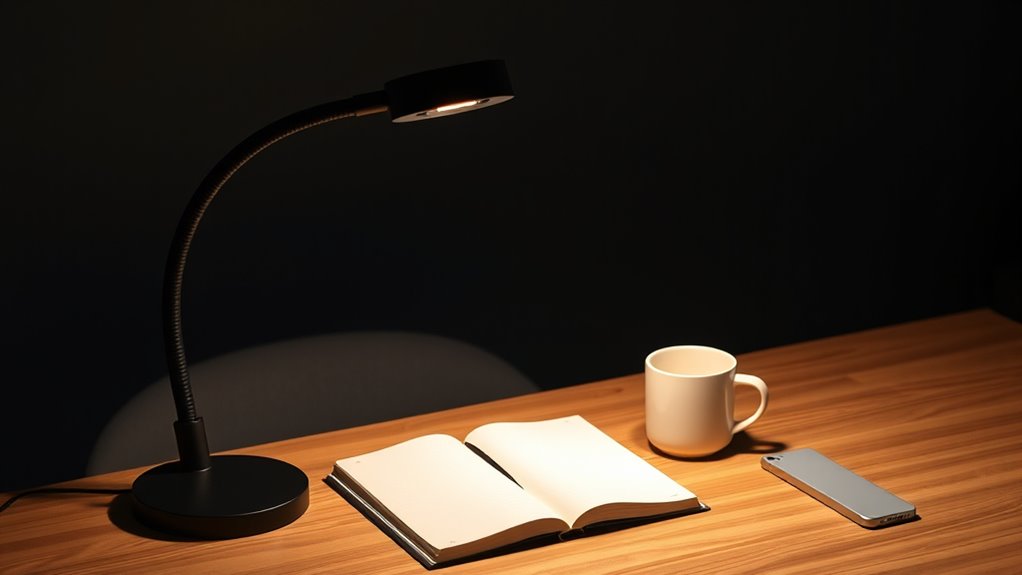
If you spend long hours at your desk, an ergonomic desk lamp can make a significant difference in reducing eye strain and improving your posture. Modern desk lamps equipped with LED technology are a game-changer because they deliver bright, focused light without consuming much energy. LED bulbs also last longer, so you won’t need to replace them frequently. When shopping for an ergonomic lamp, prioritize models that offer adjustable brightness. This feature allows you to customize the light intensity based on your task, whether you’re reading, writing, or working on a computer. Having control over brightness helps prevent glare and minimizes eye fatigue, especially during extended work sessions.
Adjustable brightness is essential because it enables you to create the perfect lighting environment. Bright enough to see clearly without straining your eyes, but not so intense that it causes discomfort. With a simple turn of a dial or press of a button, you can modify the light level to match your needs throughout the day. This flexibility is particularly useful when shifting from daylight hours to evening work, as ambient lighting conditions change. It also helps you avoid harsh shadows or overly dim areas that can cause eye strain and lead to poor posture as you lean closer to see better.
Adjusting brightness creates the ideal lighting for comfort and posture throughout your day.
LED technology combined with adjustable brightness ensures consistent, flicker-free lighting, which is vital for maintaining concentration and reducing eye fatigue. Unlike traditional incandescent bulbs, LEDs emit a steady light without flickering, which can cause headaches or blurred vision over time. The directionality of LED lights also allows you to focus the beam precisely where you need it, eliminating unnecessary light spill and reducing glare on your screen. This precise control is especially helpful if you work in a shared space or have multiple devices competing for the same light source. Additionally, choosing a lamp with ergonomic design features can further enhance comfort and support proper posture during long work sessions.
Choosing an ergonomic desk lamp with these features not only improves your visual comfort but also encourages better posture. Proper lighting reduces the tendency to hunch or lean forward, which often happens when your workspace is poorly lit. When you can easily adjust brightness levels and direct the light appropriately, you’re more likely to maintain a natural, upright position. Overall, investing in a lamp with LED technology and adjustable brightness can greatly enhance your workspace, minimize eye strain, and promote healthier working habits for long-term comfort.
Products Worth Considering

Bowflex SelectTech 840 Adjustable Kettlebell

Therabody TheraFace Mask Glo Cordless LED Skincare Mask

BowFlex Results Series 552 SelectTech Adjustable Dumbbell
As an affiliate, we earn on qualifying purchases.
Frequently Asked Questions
Can Ergonomic Desk Lamps Improve Sleep Quality?
Yes, ergonomic desk lamps can improve your sleep quality by reducing eye strain and supporting your circadian rhythm. When you use a lamp with adjustable brightness and color temperature, especially in the evening, you minimize blue light exposure that disrupts sleep patterns. This helps your body produce melatonin naturally, making it easier to fall asleep and enjoy restorative rest. Proper lighting, as a result, plays a key role in maintaining your overall sleep health.
Are LED Desk Lamps Better for Eye Health?
Did you know LED technology emits less blue light, which can reduce eye strain? LED desk lamps are better for eye health because they produce consistent, flicker-free illumination and minimize glare. This enhances eye safety, especially during long work hours. Choosing an LED lamp helps protect your vision, making it a smarter, safer option for maintaining eye health and reducing discomfort in your workspace.
How Do I Adjust Desk Lamp Brightness Effectively?
To adjust your desk lamp brightness effectively, start by finding the brightness adjustment controls, whether it’s a dial or touch sensor. Set the light to a comfortable level that reduces eye strain, avoiding overly bright or dim settings. Use light diffusion techniques, like lampshades or diffusers, to soften the light and prevent glare. Regularly tweak the brightness as your task or ambient lighting changes for ideal comfort.
Do Color Temperatures Impact Eye Strain?
Yes, color temperature impacts eye comfort. Cooler temperatures (around 5000-6500K) mimic daylight, helping you stay alert but can cause eye strain if overused. Warmer temperatures (around 2700-3000K) create a cozy environment, reducing eye fatigue during long tasks. Choose a color temperature that suits your activity and lighting conditions, balancing brightness and warmth to minimize eye strain and maximize comfort throughout your workday.
Can Desk Lamps Help With Migraine Prevention?
Did you know migraines affect over 39 million Americans? Desk lamps can help prevent migraines by reducing blue light exposure and flicker. Opt for lamps with flicker reduction technology and adjustable color temperatures to minimize triggers. Using the right lighting creates a calmer visual environment, decreasing strain and the likelihood of migraines. So, choosing an ergonomic desk lamp isn’t just about comfort—it’s a smart step toward migraine prevention.
Conclusion
By choosing the right ergonomic desk lamp, you can substantially cut down eye strain and boost your comfort during long work sessions. Did you know that poor lighting is responsible for up to 80% of digital eye strain? That’s a huge chunk of discomfort you can easily avoid with a well-placed, adjustable lamp. So, invest in good lighting, and your eyes will thank you for it—making your workspace healthier and more productive.