You might think a desk bike is just about pedaling, but proper posture is essential for comfort and effectiveness. Many don’t realize that adjusting your seat height, pedal position, and workspace can prevent strain on your neck, back, and wrists. Aligning your back, keeping wrists straight, and supporting your core helps avoid discomfort and boosts benefits. Keep in mind, small ergonomic tweaks can make a big difference — if you want to learn more, there’s plenty to discover.

Get comfort and recovery gear delivered free with Prime
- Fast, free delivery on millions of items
- Prime Video, Amazon Music and more included
- Member-only deals all year
Key Takeaways
- Proper posture maximizes muscle engagement and prevents strain during desk bike use.
- Adjusting seat height and pedal position ensures comfort and reduces joint stress.
- Maintaining a straight back and neutral workspace alignment prevents discomfort and promotes circulation.
- Correct hand and arm positioning reduces shoulder and neck tension.
- Ergonomic setup enhances overall health benefits and reduces long-term injury risk.
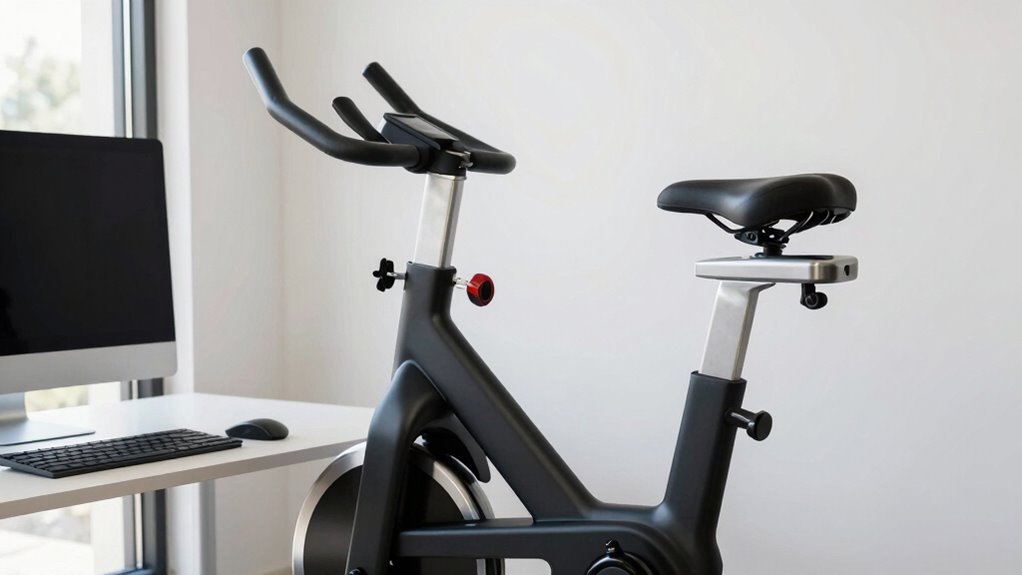
Many people buy desk bikes thinking they’ll improve their fitness without considering the importance of proper posture. While these machines can be a great way to stay active during work hours, overlooking ergonomic adjustments can undermine their benefits. If you don’t set your desk bike correctly, you risk straining your neck, back, or wrists, and you may not engage the right muscles effectively. Proper posture isn’t just about comfort; it’s about maximizing muscle engagement and preventing injury over time.
First, you need to adjust your seat height so your knees are slightly bent at the bottom of each pedal stroke. If your seat is too high, you’ll put unnecessary stress on your hips and knees; too low, and you won’t be able to pedal efficiently. The goal is to keep your feet flat on the pedals with your hips level, which encourages ideal ergonomic adjustments. This position ensures that your core remains engaged and that you’re not leaning forward or hunching over the handlebars, which can lead to discomfort and poor circulation. Maintaining proper ergonomic alignment is essential for long-term comfort and injury prevention.
Next, pay attention to your posture relative to the desk bike. Your back should be straight, with your shoulders relaxed but not slumped. Keep your chest open and avoid leaning excessively forward—this is where many people forget about ergonomic adjustments. If your desk setup doesn’t support a neutral spine, consider repositioning your desk or adding ergonomic accessories like a lumbar support cushion. Proper alignment allows you to maintain muscle engagement in your back and core, which are essential for sustaining longer periods of activity without fatigue. Additionally, adjusting your workspace to promote ergonomic principles can help prevent repetitive strain injuries often associated with poor posture. Remember that an ergonomic workspace isn’t just about the desk height but also about overall positioning to support your body’s natural posture.
Your hand and arm positioning also matter. Keep your wrists straight and relaxed, avoiding any bending that could cause strain. If your handlebars are adjustable, set them so you’re not reaching forward or downward. This minimizes tension in your shoulders and neck, fostering better ergonomic habits. The more you focus on maintaining a comfortable, upright posture, the more your core and back muscles actively support your body during exercise.
Incorporating these ergonomic adjustments makes a significant difference. Not only do they help prevent discomfort, but they also ensure you’re engaging the right muscles — especially in your core, back, and legs — maximizing the effectiveness of your workout. Over time, this proper alignment can improve your posture beyond your desk bike sessions, reducing the risk of chronic pain and enhancing overall stability. If you neglect these ergonomic principles, you might find yourself feeling more sore or fatigued, defeating the purpose of incorporating a desk bike into your routine. So, take the time to set up your equipment correctly; your body will thank you.
ergonomic desk bike seat cushion
As an affiliate, we earn on qualifying purchases.
As an affiliate, we earn on qualifying purchases.
Frequently Asked Questions
How Can I Adjust My Desk Bike for Optimal Ergonomic Posture?
To adjust your desk bike for ideal ergonomic posture, start by setting the ergonomic seat height so your knees are slightly bent at a 90-degree angle. Make sure the pedal alignment is correct, with your feet comfortably positioned and aligned with your hips. Adjust the seat forward or back if needed, so your hips are level. These tweaks help reduce strain and promote comfort during your workout.
Are There Specific Desk Bike Models Designed for Better Posture?
Yes, some desk bike models are designed for better posture, focusing on ergonomic comfort. Look for models with adjustable seat height, handlebars, and pedal positions to support proper alignment. You can also enhance desk bike comfort by adding posture accessories like lumbar support cushions or footrests. These features help reduce strain, promote better posture during workouts, and make your exercise sessions more comfortable and effective.
What Are the Long-Term Health Risks of Poor Desk Bike Posture?
Ignoring your posture on a desk bike is like planting weeds in your wellness garden. Over time, poor posture can lead to chronic back and neck pain, joint strain, and even nerve issues. Without ergonomic accessories and posture correction, you risk turning a healthy habit into a long-term health hazard. Prioritize proper alignment to protect your body’s foundation, ensuring your desk bike workouts boost health without unintended consequences.
Can Proper Posture on a Desk Bike Improve Productivity?
Yes, proper posture on a desk bike can boost your productivity. When you maintain correct alignment, you reduce discomfort and fatigue, allowing you to focus longer. Using ergonomic accessories and practicing posture correction help you stay comfortable and engaged. This improved comfort encourages consistent use, increases energy levels, and enhances concentration, ultimately making your work more efficient. Prioritizing posture on your desk bike is a simple step toward better performance.
How Often Should I Take Breaks to Prevent Posture-Related Issues?
Like a well-tuned machine, your body needs regular maintenance. You should take a break every 30 to 60 minutes to prevent posture-related issues. During these breaks, stretch or walk around to reset your posture. Use ergonomic accessories and posture correction tools to support proper alignment. This routine helps avoid strain, boosts comfort, and keeps you productive, ensuring your desk bike sessions are both healthy and effective.
adjustable desk bike with lumbar support
As an affiliate, we earn on qualifying purchases.
As an affiliate, we earn on qualifying purchases.
Conclusion
So, next time you hop on your desk bike, remember—your posture might be the real pedal you’re missing. Ironically, what’s supposed to keep you moving could be secretly hurting you if you don’t sit right. Don’t just focus on burning calories; focus on your back’s comfort too. After all, a healthy ride isn’t just about the speed, but about how you sit through the miles. Keep pedaling, but don’t forget to sit straight!
ergonomic office accessories for desk bike
As an affiliate, we earn on qualifying purchases.
As an affiliate, we earn on qualifying purchases.
wrist support for desk exercise bike
As an affiliate, we earn on qualifying purchases.
As an affiliate, we earn on qualifying purchases.
Fall Picks
fall essentials
As an affiliate, we earn on qualifying purchases.