To make your desk more stable and wobble-free, start by checking for uneven legs or loose screws and tighten or adjust them as needed. Use furniture shims or levelers to balance uneven legs, and add metal brackets or corner braces at joints for extra support. Reinforcing the underside of the tabletop can also help. If wobbling persists, exploring these techniques further will guide you toward a sturdier workspace.
Key Takeaways
- Inspect and tighten all screws, bolts, and joints to eliminate looseness causing wobbliness.
- Use furniture shims or adjustable levelers on uneven legs for a stable, even surface.
- Add metal brackets or corner braces at joints to reinforce the desk structure.
- Apply wood glue or reinforcement materials to weak or cracked areas for added stability.
- Regularly check and maintain fasteners, replacing worn hardware to prevent future wobbling.
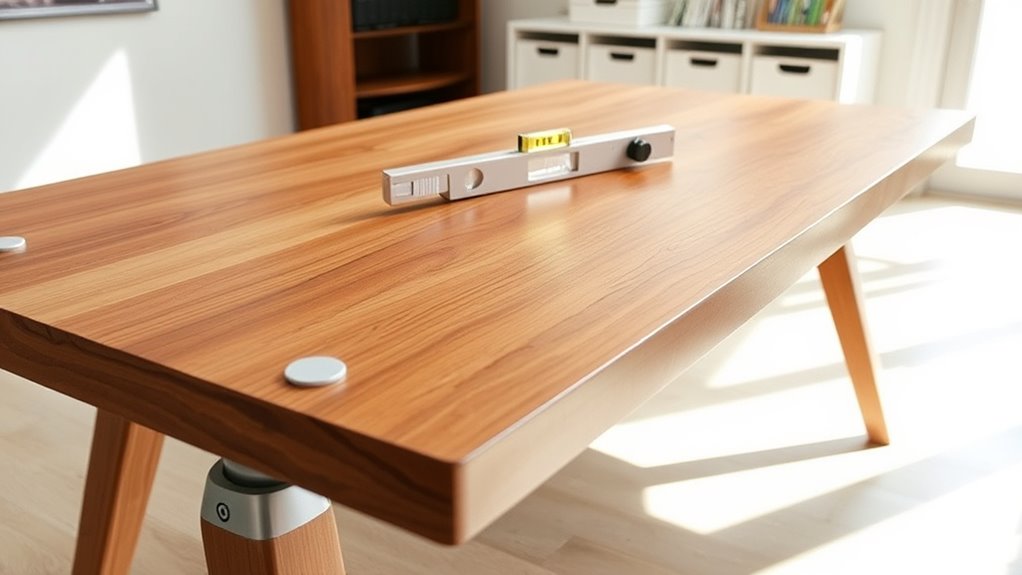
A wobbly desk can be frustrating and hinder your productivity, but fixing it is often simpler than you might think. The first step is to identify the source of the instability. Check if any of the legs are uneven or if the screws and bolts holding the frame are loose. Once you’ve pinpointed the problem, you can apply straightforward adjustment techniques to stabilize your desk. For example, use a carpenter’s level to see which legs are shorter or taller than the others. If you find uneven legs, consider adding furniture shims or adjusting the height of the legs if they are adjustable. Tighten all bolts and screws securely, as loose connections are a common cause of wobbling. If tightening doesn’t fully resolve the issue, you might need to replace worn-out hardware or add washers to distribute pressure more evenly. Ensuring your desk has a solid foundation can also prevent future issues related to instability. Material reinforcement is another effective strategy to make your desk more stable. If the surface or legs are weak or damaged, reinforcing these areas can prevent future wobbling. For wooden desks, applying wood glue to joints or adding metal brackets at critical points can markedly increase stability. You can also reinforce the underside of the tabletop with additional brackets or braces to prevent sagging. For metal desks, welding or applying steel reinforcements can help, but these may require professional assistance. Adding corner braces or L-brackets at the joints is a quick DIY fix that provides extra support and prevents movement. If the desk has a laminate or veneer surface that’s loose or cracked, consider re-gluing or replacing the damaged sections. When reinforcing, ensure that the materials used are compatible with your desk’s construction to avoid further damage. Another tip is to stabilize the legs by attaching adjustable furniture pads or levelers. These can be screwed into the bottom of each leg, allowing you to fine-tune the height and levelness of the desk. This step is especially useful if your floor is uneven. Combined with adjustment techniques, these pads can make a noticeable difference in stability. Regular maintenance also plays a role—periodically check and tighten all fasteners to prevent future wobbling. If your desk continues to wobble despite these efforts, consider replacing worn parts or consulting a professional for more extensive repairs. The key is to approach the problem systematically, focusing on adjustment techniques first and then reinforcing weak points. Proper desk stability can significantly improve your workspace comfort and efficiency. With a little effort, you can transform your unstable desk into a sturdy, wobble-free workspace that boosts your comfort and efficiency.

Furniture Leveler 12pcs Kit Size Variety | Multi-Purpose Rubber Shim for Leveling Feet Stable | Anti-Wobble Pad for Uneven Table, Dresser Leg, Toliet and More Furniture | Prevent from Wobbling
Multi-Size Options Wobble Wedge | Experience the convenience of choosing from a range of sizes to fix and…
As an affiliate, we earn on qualifying purchases.
As an affiliate, we earn on qualifying purchases.
Frequently Asked Questions
Can I Fix a Wobbling Desk Without Tools?
Yes, you can fix a wobbling desk without tools by focusing on desk leg repair and surface reinforcement. First, check if the wobble is due to uneven legs and add temporary shims or sturdy materials like cardboard or thick paper under the shorter legs. You can also reinforce the surface by placing heavy books or furniture pads underneath to stabilize it. These simple tricks help improve stability without needing tools.
How Long Does a Desk Stabilization DIY Take?
A desk stabilization DIY typically takes about 30 minutes to an hour, depending on your setup. You’ll start with desk leveling, adjusting the legs or using shims to even out uneven surfaces. Then, you’ll focus on stability enhancement by tightening bolts or adding braces. With some quick tools and patience, you can markedly improve your desk’s stability in under an hour, making it wobble-free and more secure.
Will Adding Weight to the Desk Improve Stability?
Adding weight to your desk can improve stability, especially if you focus on proper weight distribution. Place heavier items evenly across the surface to prevent wobbling and consider material reinforcement underneath, like brackets or braces. This helps balance the load and strengthens the structure. Just be careful not to overload, as excessive weight might strain the desk or cause damage over time. Properly managing weight distribution and reinforcement makes your desk more stable.
Are Certain Desk Materials More Prone to Wobbling?
Certain desk materials are more prone to wobbling due to wobble susceptibility. For example, lightweight or soft materials like particleboard or thin plywood can flex or shift easily, leading to instability. Conversely, solid wood and metal desks tend to be more stable because they resist wobbling better. When choosing a desk, consider the material’s wobble susceptibility to guarantee you get a sturdy, wobble-free workspace.
How Often Should I Check My Desk for Stability?
You should check your desk for stability every few months, especially if you notice any wobbling or unevenness. Did you know that over 60% of desk wobbles are caused by loose screws or uneven legs? Regular desk maintenance is key. Use stability tips like tightening bolts and adjusting legs regularly to keep your workspace steady. Staying proactive guarantees your desk remains stable and safe for daily use.

MROCO Furniture Leveling Feet with T-Nuts, 12 PCS 1/4"-20 UNC Thread Adjustable Levelers, Leg Levelers Table Feet Screw on for Deak, Chairs, Stool Legs, Cabinet
!!If you find any parts missing after receiving the goods, please email us and we will respond within…
As an affiliate, we earn on qualifying purchases.
As an affiliate, we earn on qualifying purchases.
Conclusion
By taking these simple steps, you transform your wobbly desk into a steadfast workspace. Think of your desk as the foundation of your daily productivity—without stability, everything else falters. With just a few adjustments, you can turn instability into unwavering support. Remember, a wobble-free desk isn’t just a luxury; it’s the silent partner in your focus and success. So, seize these tips and let your workspace stand strong, unwavering in the face of daily chaos.
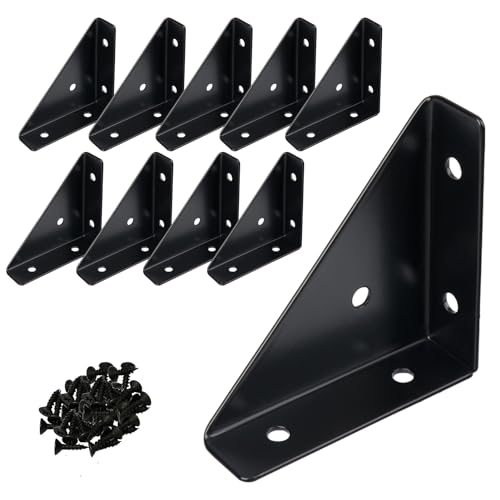
2-9/16" Corner Braces L Bracket (10 Pack) – Metal Angle Shelf Connector Brackets with Screws for Wood Shelves Furniture| Bookshelves/ Beds/ Tables/ Cabinets/ Desk (Black)
[Triangular Structure, Enhanced Reinforcement: An Upgrade Over Standard L-Brackets] Featuring a one-piece Triangle Corner Brace design that delivers…
As an affiliate, we earn on qualifying purchases.
As an affiliate, we earn on qualifying purchases.

Furniture Corner Connector – 20PCS Universal Stainless Steel L Brackets for Wood,Hardware Metal Angle Bracket Corner Braces,L Bracket for Shelves,Table,Cabinet,Drawer,Corner Brackets for Wood
EXCEPTIONAL STRENGTH & DURABILITY: Our angle brackets are crafted from heavy duty stainless steel,ensuring superior strength and durability.Thus,Corner…
As an affiliate, we earn on qualifying purchases.
As an affiliate, we earn on qualifying purchases.