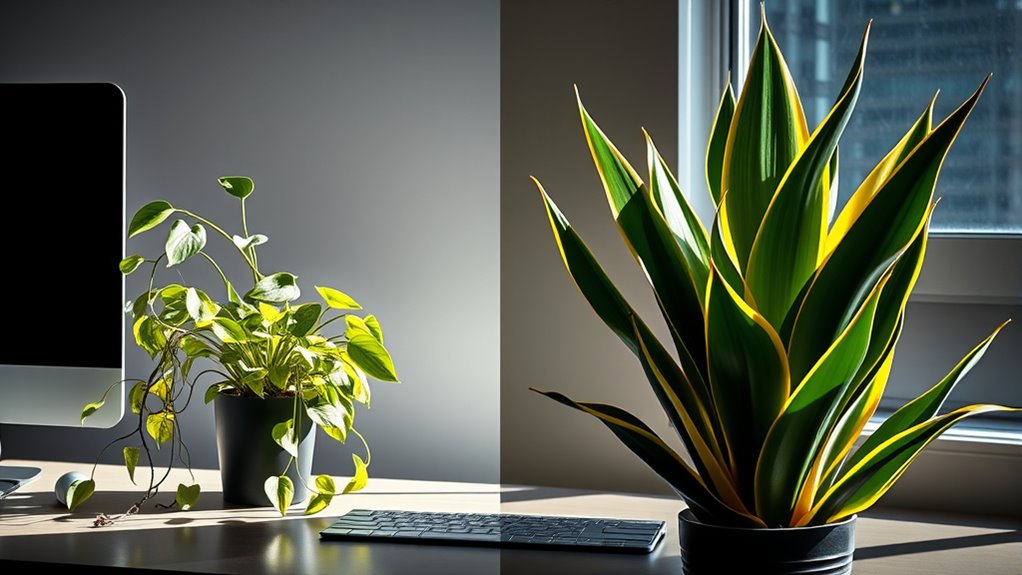

To choose the right office plant, consider your workspace’s natural light levels. If your office has limited sunlight, opt for low light plants like snake plants or pothos, which thrive in shaded areas and require less maintenance. If your space receives ample sunlight, bright light plants like succulents or ferns can flourish and improve air quality. Understanding these options helps you create a healthier, more inviting environment—continue exploring to find the best fit for your office.
Key Takeaways
- Assess your office’s natural sunlight levels to determine if low light or bright light plants are suitable.
- Low light plants, like snake plants and pothos, thrive in shaded areas and require less maintenance.
- Bright light plants, such as succulents and ferns, need direct sunlight and more frequent watering.
- Consider air purification benefits; many low light plants effectively filter toxins in shaded spaces.
- Match plant care needs with your maintenance capacity to ensure healthy growth and lasting air quality.
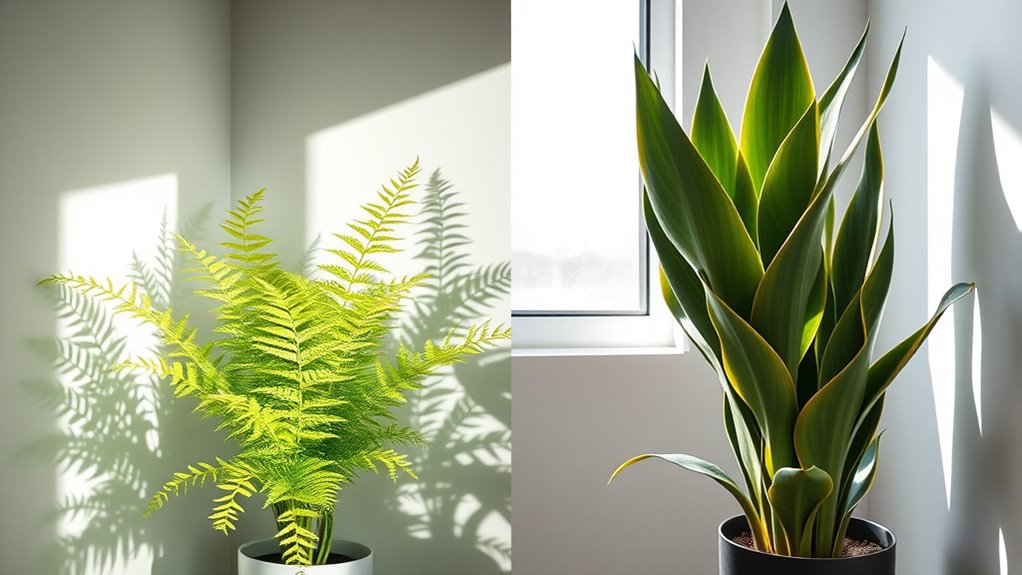
Selecting the right office plant can substantially boost your workspace’s atmosphere and productivity. When choosing between low light and bright light plants, you need to consider the natural lighting conditions of your office. If your space has limited sunlight, opting for low light plants is a smart move. These plants thrive in shaded areas and require less direct sunlight, making them easier to care for and more adaptable to typical office environments. On the other hand, if your workspace gets plenty of sunlight, bright light plants can flourish, adding vibrant greenery and even improving air purification. Your choice should align with the lighting conditions to guarantee your plant’s health and your satisfaction.
Choose low light or bright light plants based on your office’s natural lighting for a healthier workspace.
Air purification is a key benefit of many office plants, regardless of their light requirements. Plants like snake plants, pothos, and peace lilies are excellent at filtering out toxins and improving indoor air quality. If air purification is your priority, you’ll want to select plants known for their air-cleaning properties and ensure they’re suitable for your lighting conditions. For low light spaces, peace lilies and snake plants excel because they don’t need much sunlight to perform their air-purifying functions. Bright light plants, such as succulents or certain ferns, can also help purify the air but often require more sunlight to stay healthy and vibrant.
Maintenance tips are vital for keeping your office plants thriving, whether they’re in low or bright light. For low light plants, avoid overwatering, as these species tend to be more sensitive to excess moisture. Water them only when the top inch of soil feels dry, and use well-draining soil to prevent root rot. Bright light plants often need more frequent watering, especially during warmer months, but be cautious not to overdo it. Guarantee they receive enough light, and rotate them periodically to promote even growth. Regularly wiping the leaves helps maximize photosynthesis and air purification, as dust can block light absorption. Fertilize sparingly—once a month during the growing season—to provide necessary nutrients.
Ultimately, your choice depends on your office’s lighting and your ability to maintain the plant. Low light plants generally require less attention and are more forgiving of inconsistent watering or neglect. Bright light plants may need more care but reward you with lush growth and enhanced air quality. Whichever you choose, selecting the right plant tailored to your environment can create a healthier, more inviting workspace that boosts both your mood and productivity. Proper maintenance ensures your plant stays healthy and continues to purify the air, making it a worthwhile addition to your office.
Frequently Asked Questions
How Often Should I Water My Office Plant?
You’re wondering about watering frequency to keep your office plant healthy. Typically, you should water when the top inch of soil feels dry to the touch. This guarantees proper plant hydration without overwatering. In general, most office plants need watering once a week, but adjust based on your specific plant type and office conditions. Regular checks help you maintain ideal hydration, promoting lush, healthy growth.
What Are the Signs of Overwatering or Underwatering?
When it comes to watering signs, watch for plant stress that indicates overwatering or underwatering. Overwatered plants often have yellowing leaves, soggy soil, and root rot, while underwatered plants show wilting, dry soil, and crisp leaves. You can prevent these issues by adjusting your watering routine, ensuring proper drainage, and checking soil moisture regularly. Recognizing these signs helps keep your office plant healthy and thriving.
Can Office Plants Improve Air Quality?
Office plants can definitely improve air quality through air purification, removing toxins and increasing oxygen. When selecting plants, consider your office’s light conditions to choose the right type. For example, snake plants thrive in low light, while succulents prefer bright light. Proper plant selection enhances air quality and creates a healthier workspace, so you should pick plants suited to your environment for the best benefits.
How Do I Prevent Pests on My Office Plants?
Think of pest prevention as gentle gardening. Regular plant inspection helps you catch trouble early, preventing pests from taking hold. Keep leaves clean and avoid overwatering, which can invite unwanted guests. Use natural repellents or insecticidal soap if needed. By staying attentive and proactive, you’ll protect your office plants and enjoy lush, healthy greenery. Remember, consistent care and observation are your best defenses against pests.
Are There Maintenance Tips for Long-Term Plant Health?
To keep your office plants healthy long-term, focus on proper watering frequency—don’t overwater or underwater. Regularly check for pests to prevent infestations, which can harm your plants. Clean the leaves gently and remove debris to promote pest prevention. Make certain your plants are in suitable lighting conditions, and use appropriate soil and fertilization. Consistent care, including adjusting watering and monitoring for pests, helps maintain vibrant, thriving office plants.
Conclusion
So, whether you’re a low-light legend or a bright-light buff, picking the right office plant is a no-brainer—just don’t blame the plant when your workspace turns into a jungle or a desert. Remember, choosing the right plant isn’t just about aesthetics; it’s about avoiding the shame of killing your “easy-care” fern or overwatering that stubborn cactus. Happy planting—your colleagues will thank you for not turning the office into a botanical disaster zone.