Many people believe that simply having an ergonomic chair or setting their monitor correctly will prevent discomfort, but this isn’t true. Rigidly sticking to a perfect posture all day can cause tension, while moving and shifting often reduces strain. Relying solely on ergonomic equipment ignores habits like taking breaks and stretching. To truly stay comfortable and avoid harm, you need to understand that ergonomic health depends on your habits as well as your setup. Keep exploring to learn more.
Key Takeaways
- Believing perfect ergonomic setup prevents all discomfort ignores personalized adjustments and movement needs.
- Relying solely on ergonomic chairs doesn’t guarantee comfort without proper use and posture awareness.
- Maintaining rigid, upright posture all day can cause tension; natural, relaxed positions are healthier.
- Equipment alone isn’t enough; active habits like breaks and stretching are essential for ergonomic health.
- Focusing only on setup overlooks the importance of regular movement and posture variation to prevent strain.
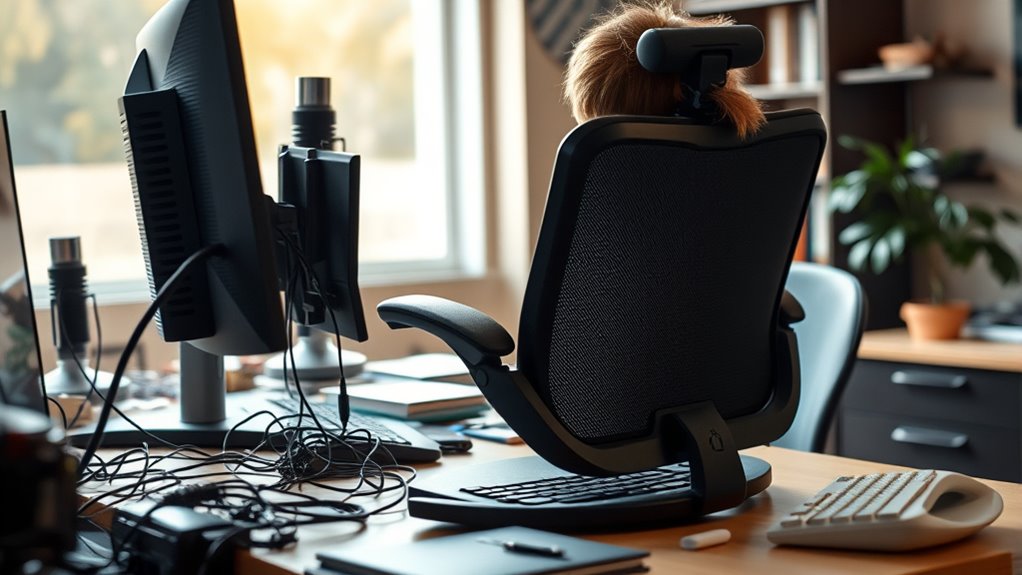
Have you ever wondered if all the commonly held beliefs about ergonomics are actually true? You’ve probably heard that setting up your workspace properly is essential for comfort and health, but many of these ideas are based on myths rather than facts. For instance, when it comes to proper desk setups, some advice might do more harm than good. You might believe that a perfectly adjusted chair and monitor will prevent all discomfort, but the reality is more nuanced. Many people fall into the trap of following ergonomic chair myths, assuming that buying the most expensive or “ergonomic” chair automatically solves their problems. In truth, no single chair or setup guarantees comfort unless you customize it to your body and work habits.
A common misconception is that an ergonomic chair is the ultimate solution to back pain. While these chairs are designed to support your spine properly, they’re not magic. If you don’t adjust the chair correctly or if it doesn’t fit your body, you may still develop discomfort or strain. Proper desk setups involve more than just the chair; your monitor height, keyboard position, and even desk height all matter. For example, you should keep your monitor at eye level to avoid neck strain, and your feet should rest flat on the floor or on a footrest. If you overlook these details, even the best ergonomic chair won’t prevent issues.
Many believe that sitting perfectly upright is the goal, but that’s another ergonomic myth. Maintaining a rigid posture all day can cause tension and fatigue. Instead, you should aim for a natural, relaxed position that minimizes strain. Frequent movement is key—standing, stretching, or shifting positions can dramatically reduce discomfort. The idea that you need a “perfect” setup is misleading; ergonomic comfort is more about consistency and movement than rigid perfection. Incorporating movement can help counteract the effects of prolonged sitting and promote better circulation.
Rigid posture isn’t the goal; relaxed positions and movement reduce discomfort and promote ergonomic health.
Another myth is that ergonomic equipment alone will improve your health. While a supportive chair and correct desk setup are helpful, they are part of a bigger picture. Regular breaks, stretching, and awareness of your posture play crucial roles. Relying solely on ergonomic furniture might give you a false sense of security, causing you to ignore the importance of active habits. Ultimately, understanding that ergonomic setups are tools, not cures, helps you better manage your comfort and prevent injury. So, don’t fall for the myths that suggest only equipment matters—your habits and adjustments make all the difference.
Frequently Asked Questions
Can Ergonomic Products Guarantee Complete Injury Prevention?
You might believe ergonomic products guarantee complete injury prevention, but that’s an ergonomic myth. While they can reduce strain and improve posture, they can’t eliminate all risks. Relying solely on these products may give you a false sense of security. To truly prevent injuries, you need to combine ergonomic tools with good habits, regular breaks, and proper workstation setup. Remember, injury prevention involves a holistic approach, not just relying on ergonomic myths.
Do Ergonomic Adjustments Work Instantly or Require Time?
When you make ergonomic adjustments, you might wonder if they provide instant benefits or if you need to wait. Usually, the adjustment duration varies; some improvements feel immediate, like better posture or comfort, while others may take time to notice, such as reduced strain. Keep in mind, consistent tweaks and proper setup lead to the best results. Patience and proper implementation guarantee you maximize the benefits of ergonomic changes.
Are Ergonomic Guidelines the Same for All Body Types?
Did you know that over 60% of people have different ergonomic needs? You might assume guidelines are universal, but body diversity means they aren’t one-size-fits-all. You should look for adjustable design options to customize your workspace. This way, you guarantee proper support for your unique body, reducing discomfort and injury risk. Personalizing your setup makes ergonomic principles more effective, no matter your body type.
Is Ergonomic Training Necessary for All Employees?
You might wonder if ergonomic training is necessary for all employees. The answer is yes, because ergonomic myths can lead to poor posture and injuries if not addressed through proper employee instruction. By understanding correct ergonomics, you help prevent discomfort and boost productivity. Training ensures everyone knows how to set up their workspace properly, reducing risks and debunking common misconceptions about ergonomics that could be harming you.
Can Poor Ergonomics Cause Long-Term Health Issues?
Poor ergonomics can definitely cause long-term health issues, especially if you neglect workstation customization and posture awareness. Over time, bad habits like slouching or improper desk setup can lead to chronic pain, repetitive strain injuries, and even nerve damage. By actively adjusting your workspace and staying mindful of your posture, you can reduce these risks and protect your health in the long run. Prioritize ergonomics to prevent future problems.
Conclusion
Don’t let common ergonomic myths put your health at risk. Surprisingly, 60% of office workers experience discomfort because of incorrect ergonomic practices. By debunking these myths and applying true ergonomic principles, you can boost comfort and productivity. Remember, small changes—like adjusting your chair or screen height—make a big difference. Stay informed, question misconceptions, and prioritize your well-being. Your body will thank you for it!