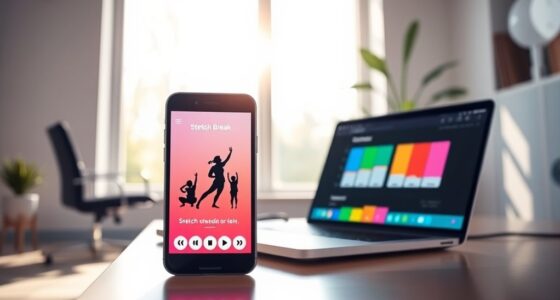
To stay comfortable at work, incorporate these desk stretches: roll your shoulders to release tension, extend your arms overhead to open your chest, and clasp your hands behind your back. Stretch one leg at a time to improve circulation, tilt your head toward each shoulder to ease neck strain, and touch your toes to reset posture. Doing these regularly can make a noticeable difference—you’ll discover more effective exercises just ahead.
Key Takeaways
- Incorporate shoulder rolls and upper back stretches to release tension and improve posture during work hours.
- Perform chest openings by clasping hands behind the back and lifting to counteract slouching.
- Stretch legs and stimulate circulation with seated or standing leg extensions and toe touches.
- Include neck tilts toward each shoulder to reduce neck strain from prolonged screen time.
- Use proper ergonomic setup, such as monitor at eye level and feet flat, to enhance the effectiveness of your stretches.

Have you ever felt stiffness or discomfort after hours at your desk? If so, you’re not alone. Sitting for long periods can take a toll on your body, especially if your ergonomic setup isn’t optimized or your office posture isn’t ideal. The good news is that simple desk stretches can help alleviate tension, improve circulation, and keep you feeling more comfortable throughout the day. Incorporating these quick exercises into your routine doesn’t require much time or space, making them perfect for a busy work schedule.
Start by adjusting your ergonomic setup to guarantee your workspace supports good posture. Your monitor should be at eye level, your feet flat on the floor, and your back supported by your chair. Proper alignment reduces strain and makes stretching more effective. Once your workspace is optimized, you can begin with gentle stretches to loosen up tight muscles. For example, roll your shoulders back and down to release tension in your upper back and neck, which often become stiff from poor office posture. Keep your movements slow and controlled, focusing on breathing deeply as you do.
Adjust your workspace for better posture before stretching to maximize comfort and effectiveness.
Next, extend your arms overhead and stretch upward, feeling the elongation along your sides and shoulders. This helps counteract the hunched position many people adopt when working at a desk. You can also clasp your hands behind your back and gently lift them, opening up your chest and improving your posture. These stretches not only relieve muscle tightness but also promote better alignment, helping you maintain a more ergonomic posture throughout the day.
Don’t forget to incorporate some lower body movements. While seated, extend one leg out straight and flex your foot, holding briefly before switching legs. This stimulates circulation in your legs and prevents the sluggish feeling that often accompanies prolonged sitting. Standing up for a quick stretch, such as touching your toes or doing a gentle side bend, can also help reset your body and improve your overall ergonomic posture at your desk.
Finally, take a moment to perform a neck stretch by slowly tilting your head toward each shoulder, holding each position for a few seconds. This can substantially reduce neck tension caused by staring at your screen or hunching forward. Regularly incorporating air quality considerations into your routine can also support your comfort and well-being by reducing airborne irritants. Remember, the key to effective desk stretches is consistency. Incorporate these movements into your daily routine to combat stiffness, boost circulation, and maintain a healthier office posture. Small, regular efforts like these can make a big difference in how you feel and perform at work.

Sweetcrispy Office Computer Desk Chair, Ergonomic High-Back Mesh Rolling Work Chairs with Wheels and Adjustable Headrests, Comfortable Lumbar Support, Comfy Flip-up Arms for Home, Bedroom, Study,Black
【Ergonomic Lumbar Support】The ergonomically designed backrest of our ergonomic office chair has prominent lumbar support to fit the…
As an affiliate, we earn on qualifying purchases.
As an affiliate, we earn on qualifying purchases.
Frequently Asked Questions
How Often Should I Do Desk Stretches During the Workday?
You should do desk stretches every 30 to 60 minutes during your workday for ideal timing. This frequency helps reduce muscle tension and improve circulation without disrupting your workflow. Incorporate quick stretches like shoulder rolls or neck tilts regularly, especially if you sit for long periods. Remember, consistent stretching boosts your comfort and productivity, so set reminders to maintain the recommended frequency and keep your body feeling its best throughout the day.
Are Desk Stretches Suitable for People With Back Pain?
Yes, desk stretches can help people with back pain, especially when combined with ergonomic chairs and regular stretch breaks. You should do gentle stretches that target your back and improve posture, but consult your healthcare provider before starting any new routine. Incorporate these stretches into your day, especially during long sitting periods, to reduce discomfort and support spinal health. Always listen to your body and avoid overstretching.
Can Desk Stretches Help Improve Posture Long-Term?
Yes, desk stretches can help improve your posture long-term by enhancing muscle flexibility and offering ergonomic benefits. When you regularly stretch, you loosen tight muscles and reduce strain, which encourages better alignment. Over time, this promotes healthier posture habits and less discomfort. Incorporating simple desk stretches into your daily routine can make a significant difference in maintaining good posture and preventing musculoskeletal issues at work.
What Are the Safety Precautions for Doing Desk Stretches?
Be mindful, my friend, of safety when stretching at your desk. Always check your ergonomic posture before beginning, ensuring your back is supported and movements are gentle. Keep stretch duration short, about 15 to 30 seconds, to prevent overstretching or discomfort. Avoid rapid or bouncing motions, and listen to your body’s signals. Prioritize safety by stretching slowly, staying comfortable, and stopping if you feel pain or dizziness.
Do Desk Stretches Require Any Special Equipment or Space?
You don’t need special equipment or much space for desk stretches. Just use ergonomic tools like supportive chairs and adjustable desks to make stretching easier and safer. Setting stretch timers helps remind you to take breaks regularly, preventing strain. Make certain you have enough room at your desk to move comfortably. Keep movements gentle and controlled, and avoid overstretching to stay safe during your stretches.

WALI Computer Monitor Stand for Desk, Adjustable Laptop Riser, Desk Monitor Stand Underneath Storage for Office, Home, School Supplies (STT003), 1 Pack, Black
Design: The monitor stand for the desk has a large 14.6 x 9.3 inches metal shelf that fits…
As an affiliate, we earn on qualifying purchases.
As an affiliate, we earn on qualifying purchases.
Conclusion
Think of your workday as a garden that needs daily tending. Just as you water and prune to keep plants healthy, these desk stretches nourish your body and refresh your mind. When you make time for these simple exercises, you’re planting seeds of comfort and vigor, allowing your energy to blossom. So, embrace these stretches as your daily sunlight—helping your well-being flourish amidst the busy workday landscape.

75 Desk Workout Cards – Move More at Work with 50 Easy Bodyweight Exercises & 25 Stretches – Compact 3.5" x 2.5” Chair Exercise Cards for Home or Office – No Equipment Needed and Beginner Friendly
75 Exercises and Stretches: Includes exercises targeting all areas of the body and encourages activity during your workday.
As an affiliate, we earn on qualifying purchases.
As an affiliate, we earn on qualifying purchases.

YBEATY 10 Pcs Pen Grippers Holder for Handwriting Writing Posture Correction Training Tools for Adults Beginners Preschooler Special Education Supplies Silicone
【Ergonomic Design】Our pencil grippers for handwriting are made of soft, high-quality silicone, the pencil holder provides a comfortable…
As an affiliate, we earn on qualifying purchases.
As an affiliate, we earn on qualifying purchases.