To relieve sciatica at your desk, focus on proper positioning before buying tools. Make sure your feet are flat on the ground, your monitor is at eye level, and your back is supported with good lumbar support or cushions. Adjust your chair so hips are level with knees and maintain a neutral spine. Small posture tweaks and regular stretches can make a big difference. Keep going to discover how simple adjustments can help you find lasting relief.

Get comfort and recovery gear delivered free with Prime
- Fast, free delivery on millions of items
- Prime Video, Amazon Music and more included
- Member-only deals all year
Key Takeaways
- Proper desk and chair positioning minimizes pressure on the sciatic nerve and promotes a neutral spine.
- Adjusting existing ergonomic tools, like chair height and lumbar support, can significantly improve comfort.
- Maintaining good posture and avoiding prolonged static positions reduces nerve compression risks.
- Regularly stretching and staying active helps manage muscle tension around the hips and lower back.
- Small, mindful adjustments in body alignment are more effective than immediate purchases for sciatic relief.
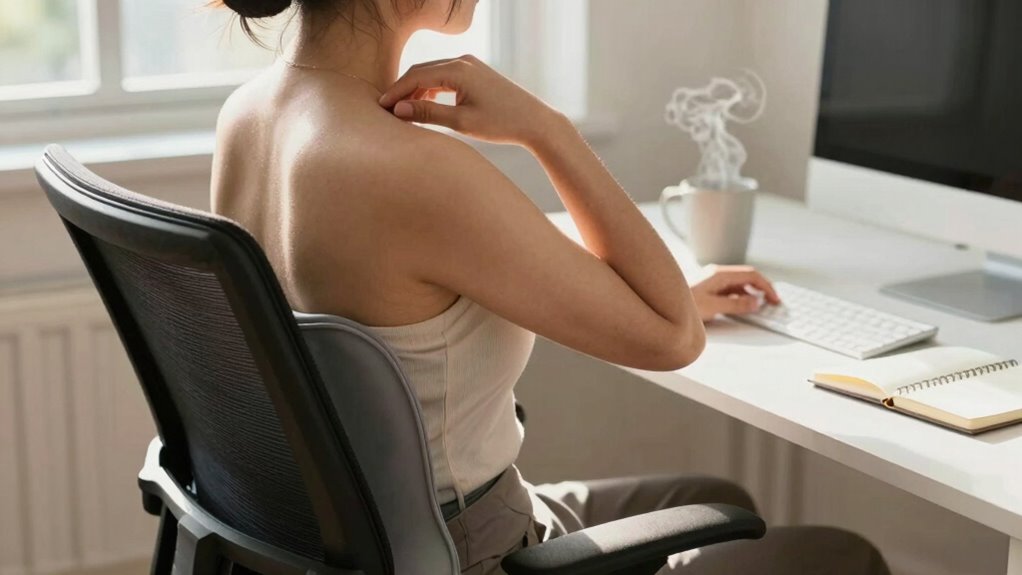
Are you tired of persistent sciatica pain flaring up while you’re stuck at your desk? The good news is that relief often starts with how you position yourself, not necessarily with a pile of new gadgets. For example, understanding the importance of ergonomic principles can help you make better choices in your workspace setup. Before spending money on ergonomic accessories, take a step back and evaluate your current setup. Small adjustments, like ensuring your chair supports your lower back or that your feet are flat on the ground, can make a significant difference. Proper positioning reduces pressure on your sciatic nerve and can prevent pain from worsening during long hours.
Adjust your current setup with small changes to support your lower back and keep feet flat for sciatic relief.
You might think that purchasing fancy ergonomic accessories will instantly solve your discomfort, but often, it’s about how you use what you already have. For instance, a lumbar roll or a well-placed cushion can improve your posture without needing to buy anything new. Adjust your chair height so that your hips are level with your knees, and keep your monitor at eye level to avoid straining your neck and back. These simple steps help maintain a neutral spine position, decreasing the likelihood of sciatic pain flaring up. Incorporating proper ergonomic principles can further enhance your setup and prevent strain. Additionally, taking regular breaks to stand or walk around can help reset your posture and reduce muscle fatigue.
Research indicates that posture correction plays a crucial role in alleviating nerve compression and related pain. In addition to better positioning, incorporating stretching routines into your day can help manage and prevent sciatica flare-ups. Regular stretching keeps your muscles flexible, reducing tightness around the hips and lower back that can compress the sciatic nerve. Simple stretches like hamstring and piriformis stretches loosen tight muscles and relieve pressure on your nerve. Instead of rushing through these stretches, take deliberate, gentle movements, especially every hour or so. It’s about consistency—small routines can create big improvements over time. Being mindful of your body’s signals and avoiding prolonged static positions can also significantly contribute to relief. Incorporating stretching exercises into your daily routine can further support your efforts to alleviate discomfort and prevent future flare-ups. Additionally, paying attention to your overall body alignment throughout the day can help reduce unnecessary strain.
Products Worth Considering

Withings BPM Connect Wi-Fi and Bluetooth Blood Pressure Monitor

Therabody SmartGoggles 2nd Gen Heated Eye and Temple Massager

Bowflex SelectTech 840 Adjustable Kettlebell
As an affiliate, we earn on qualifying purchases.
Frequently Asked Questions
Can Specific Desk Exercises Help Relieve Sciatica Pain?
Yes, specific desk exercises can help relieve sciatica pain. Incorporate stretching routines that target your lower back and hips, which can ease pressure on your sciatic nerve. Additionally, using ergonomic accessories like an adjustable chair or footrest promotes better posture, reducing discomfort. Regularly doing these exercises and maintaining proper ergonomics at your desk can considerably alleviate sciatica symptoms and improve your overall comfort during work.
How Long Should I Sit Before Taking a Break?
You should sit for about 30 to 45 minutes before taking a break. During this time, incorporate stretching routines to ease tension, and consider using ergonomic accessories like adjustable chairs or footrests. These tools support proper posture, reducing sciatic pressure. Taking regular breaks helps prevent pain from building up and keeps your muscles active, making it easier to manage sciatica symptoms while working at your desk.
Are There Recommended Office Chair Features for Sciatica Relief?
You should look for an office chair with lumbar support and adjustable height to ease sciatica pain. These features help keep your spine aligned and reduce pressure on your lower back. A chair that adapts to your body is worth its weight in gold, making long hours more comfortable. Don’t settle for a one-size-fits-all — customizing your chair is the key to sitting pretty and staying pain-free.
Does Posture Correction Permanently Eliminate Sciatica?
Posture correction can markedly reduce sciatic pain by improving spinal alignment and easing muscle tension, but it doesn’t always permanently eliminate sciatica. Maintaining proper posture helps manage symptoms and prevents flare-ups, yet underlying issues might persist. To truly address sciatica, combine posture correction with other treatments like stretching, strengthening exercises, and medical advice. Consistently supporting good spinal alignment is key to long-term relief and preventing recurrence.
Can Standing Desks Prevent Sciatica Symptoms?
Standing desks can help prevent sciatica symptoms if you use ergonomic accessories and pay attention to foot positioning. By adjusting your desk to promote good posture and keeping your feet flat on the ground, you reduce strain on your lower back and sciatic nerve. Remember, it’s not just about standing, but about maintaining proper alignment and comfort. Incorporate these habits consistently for the best prevention results.
Conclusion
Remember, a stitch in time saves nine—taking a few moments to adjust your posture and desk setup now can prevent pain later. Your comfort depends on mindful positioning, not just quick fixes or costly gadgets. Small changes, like sitting upright and supporting your lower back, make a big difference. Stay proactive, and you’ll find relief from sciatica, proving that sometimes, the simplest adjustments are the most effective in the long run.