
TL;DR

Get comfort and recovery gear delivered free with Prime
- Fast, free delivery on millions of items
- Prime Video, Amazon Music and more included
- Member-only deals all year
Fit&Well published a weekly lower-body routine built around forward, side and curtsy lunges, performed for two or three sets of six to eight repetitions per leg. The routine can be done with bodyweight or dumbbells; claims about muscle and joint benefits are the publication’s guidance, not a reported clinical finding.
Fit&Well has outlined a dumbbell-friendly leg workout using forward, side and curtsy lunges, recommending two or three sets of six to eight repetitions per leg for each movement. The fitness report presents the sequence as a weekly option for strengthening the glutes, while also saying it can be performed with bodyweight alone.
The routine combines three lunge patterns rather than relying on a single direction of movement. For the forward lunge, step ahead and bend both knees, keeping the front knee aligned over the foot and the chest upright. Push through the front foot to return to standing. The report recommends six to eight repetitions on each side.
In the side lunge, step laterally, bend the stepping knee and send the hips back while the other leg remains straight. The curtsy lunge involves stepping one foot diagonally behind the other and lowering until the rear knee approaches the floor. Fit&Well advises keeping the torso upright in both movements and returning to the start by pushing through the supporting foot.
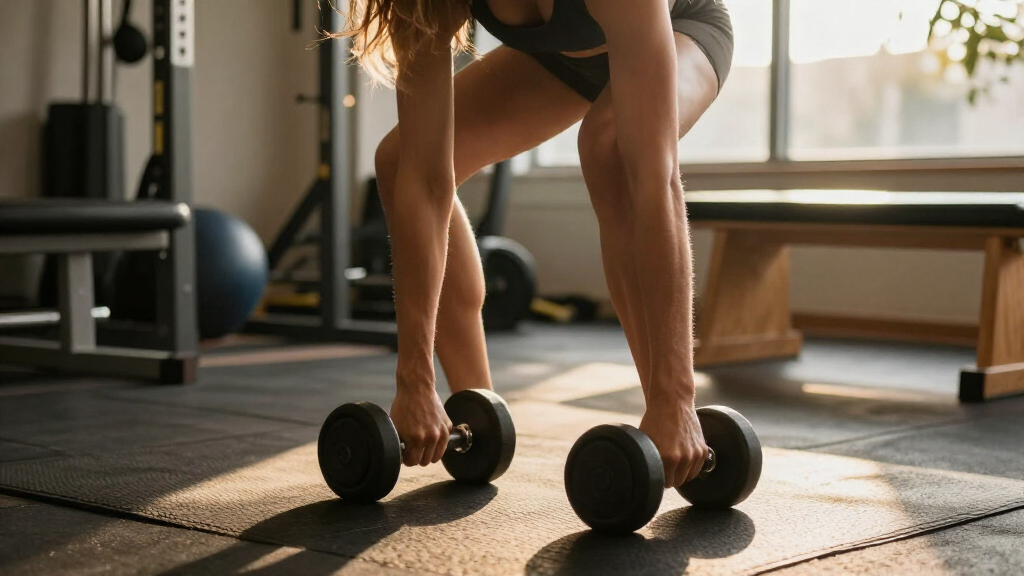
The suggested volume is two to three sets of each exercise, with six to eight reps per side. Dumbbells may be held at the sides, on the shoulders or at the chest, according to the report. It recommends starting with a bodyweight round as a warm-up before adding load, and increasing weight gradually. People who find alternating sides difficult can complete the repetitions on one side before switching.
Three Directions of Lower-Body Training
The routine offers a defined structure for people who want to include lunges in a weekly strength session without needing a gym machine. Its three movement directions provide a practical variation: forward, lateral and diagonal steps challenge balance and control in different ways. The report says this combination targets the gluteus maximus, medius and minimus, alongside other lower-body muscles.
Fit&Well also describes the exercises as supportive of hip and ankle mobility and stability. Those are fitness claims made in the source; the supplied material does not cite research establishing that this particular three-exercise sequence produces a specific outcome. The plan may be useful as a template, but results will depend on factors such as technique, resistance, training history and consistency.
For readers, the practical value is its adaptability. The same movements can be done with bodyweight or dumbbells, and the suggested repetitions provide a starting point rather than a guarantee of strength or muscle growth. Anyone adding load should choose a weight they can control through the full movement and stop if an exercise causes pain.
Products Worth Considering

BowFlex Results Series SelectTech Adjustable Dumbbells (Pair)

Bowflex SelectTech 840 Adjustable Kettlebell

Fitbit Sense Health & Fitness Smartwatch (White/Gold, International Version)
As an affiliate, we earn on qualifying purchases.
How the Weekly Lunge Plan Works
The report’s author says lunges complement squats by challenging the legs and glutes through additional movement patterns. The source describes the gluteus maximus as the largest glute muscle, with the gluteus medius and minimus positioned deeper and more toward the side of the hip. It links these muscles to movements including hip extension, moving the thigh outward and stabilizing the pelvis.
Fit&Well’s author also says side and curtsy lunges were personally helpful during rehabilitation after a bulging-disc diagnosis. That is an individual account, not a treatment recommendation or evidence that the exercises are suitable for everyone with back problems. The report suggests doing the sequence within a broader weekly program or as a short standalone workout, but it does not specify how it should fit around other training.
““Perform six to eight reps on each leg for each exercise, and complete two or three sets in total.””
— Fit&Well report
Limits of the Workout Guidance
The supplied report does not provide a publication date, cite a study testing this exact routine, or quantify how much strength or muscle a reader might gain. Its suggested frequency is once a week, but it does not define a full training schedule or explain how the workout should be adjusted for different experience levels.
The author’s account of back rehabilitation is personal. It does not establish safety or benefit for people with back, hip, knee or ankle conditions. The source also does not give a specific dumbbell weight, rest period or progression rule beyond increasing resistance gradually. Readers with existing injuries or health concerns should seek guidance from a qualified professional before trying loaded lunges.
Adapting the Routine Safely
There is no reported follow-up study or additional milestone attached to the workout. The next step for a reader using the plan is to begin with bodyweight repetitions, check balance and technique, and add a manageable dumbbell load only if the movements remain controlled. The source’s target is six to eight reps per side across two or three sets, but the number can be adjusted to match ability.
Readers should track how the exercises feel and avoid pushing through pain. Those new to strength training, uncertain about form or managing a pre-existing condition can ask a qualified trainer or health professional for individualized advice before progressing.
Key Questions
How often does the report recommend doing this workout?
The headline presents it as a once-a-week workout. The report does not set out a complete weekly training schedule.
How many sets and repetitions should I do?
Fit&Well recommends two or three sets of each lunge variation, with six to eight repetitions on each leg.
Do I need dumbbells?
No. The report says the movements can be performed with bodyweight alone. If adding dumbbells, it suggests warming up with a bodyweight round and increasing the load gradually.
Which exercises are in the routine?
The sequence includes a forward lunge, side lunge and curtsy lunge. The report describes them as different ways to work the lower body and glutes.
Is the routine suitable for people with back or joint problems?
The source does not establish that it is suitable for everyone with an injury or health condition. Its author’s account of rehabilitation is personal, so people with existing back, hip, knee or ankle concerns should seek professional guidance before trying the workout.
Source: fitandwell.com