TL;DR

Get comfort and recovery gear delivered free with Prime
- Fast, free delivery on millions of items
- Prime Video, Amazon Music and more included
- Member-only deals all year
Fit&Well published a yoga therapist’s seven-part seated movement sequence for older adults, including breathing, arm raises, twists, side bends and a forward fold. The therapist says chair-based movement can be adapted to a person’s range and comfort; the report does not provide clinical evidence that the routine improves health outcomes.
Fit&Well has published a seven-part chair-based movement routine recommended by a yoga therapist who works with older adults, including people living with Parkinson’s disease and other movement disorders. The sequence uses a sturdy chair and gentle movements, and the therapist advises readers to work within their own range and capacity rather than trying to achieve a specific pose.
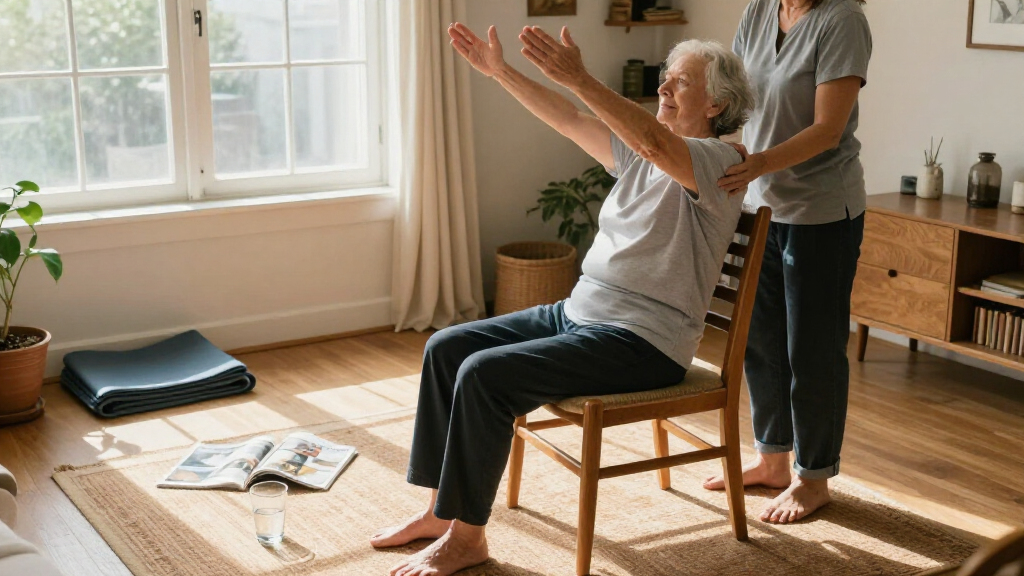
The routine begins with a minute of sitting upright, placing both feet flat on the floor, resting the hands on the lap and allowing the breath to settle. It then moves through arm arcs into a prayer position, seated torso twists, single- and double-arm raises, side bends, seated cat-cow movements and a forward fold. The therapist gives suggested repetitions for each movement, generally three to five, or three on each side.
The instructions pair movements with breathing: participants are asked to inhale while raising or opening the body and exhale while lowering, bending or rounding the back. Several moves include adaptations. For a side bend, a person who wants more stability can hold the chair instead of extending the lower arm; during the forward fold, hands can remain on the knees for support.
The therapist says chair-based yoga can serve people who lack the mobility for floor-based movement as well as those who are simply more comfortable exercising from a chair. In the Fit&Well report, the therapist describes the movements as gentle but says participants in their groups may still find them energizing. These are the therapist’s observations, not results from a study presented in the article.
A Seated Option for Gentle Movement
The sequence offers a structured way to move while seated, which may make basic stretching and joint movement more accessible to older adults who cannot or do not want to exercise on the floor. Its emphasis on adjustable range and chair support also gives readers ways to modify particular motions rather than treating each pose as something to reproduce exactly.
The report is practical guidance, not a clinical recommendation supported by trial results. It does not establish that the sequence prevents falls, treats Parkinson’s disease, improves a medical condition or produces a particular fitness benefit. Readers with pain, dizziness, balance concerns or health conditions that affect movement may want to ask a qualified clinician or therapist whether the exercises are suitable for them.
Products Worth Considering

Oura Ring 5 Smart Ring, Silver, Size 7

Therabody Theragun Relief Massage Gun, 3-Speed, Navy

Fitbit Sense Health & Fitness Smartwatch (White/Gold, International Version)
As an affiliate, we earn on qualifying purchases.
How the Seven-Move Sequence Works
The therapist presents the routine as a seated flow requiring a sturdy chair and enough clear space to raise the arms. It starts with a supported seated position, then combines upper-body movement with gentle rotation and bending. The order moves from settling and breathing to more active arm and torso movements, and finishes with a forward fold.
The report identifies the therapist’s work with older adults living with Parkinson’s, other movement disorders and chronic health conditions as the reason the postures are gentle. It does not name the therapist in the supplied material, give a formal exercise program duration beyond the one-minute opening, or describe the participants’ ages, health histories or outcomes. The recommendations are therefore best understood as an accessible routine suggested by a practitioner, not a tested program with reported results.
“I encourage everyone to move within the range and capacity of their body—there’s no particular shape or position to achieve.”
— The yoga therapist, as quoted in Fit&Well
Evidence and Individual Suitability
The supplied report does not state when the article was published, identify the therapist by name, or cite research testing this exact sequence. It also does not report how many people tried the routine or whether their mobility, energy or health changed afterward. The claim that participants feel rested or uplifted is attributed to the therapist’s experience with their classes.
Individual ability and medical circumstances vary. The article’s general instructions do not explain how every movement should be modified for a particular diagnosis, injury or level of balance. It is not clear from the source whether the routine is appropriate for every older adult, including people with significant pain or restrictions on movement.
Adapt the Routine Before Starting
The published sequence can be followed one movement at a time, using the stated repetitions as a guide rather than a target. Readers should use a stable chair, keep the surrounding space clear and choose the easier options when they need more support. They should stop if a movement causes pain, unusual shortness of breath, dizziness or another concerning symptom.
Anyone managing a chronic condition or uncertain about safe movement can check with a healthcare professional or qualified movement specialist before trying the routine. Fit&Well’s report does not announce a follow-up study or further clinical guidance, so evidence about the effects of this particular sequence remains unreported.
Key Questions
What exercises are included in the chair routine?
The seven movements are a settling exercise with natural breathing, an arm arc into prayer, seated twists, single- and double-arm raises, side bends, cat-cow and a forward fold.
What equipment is needed?
The therapist’s instructions call for a sturdy chair and enough open space to raise the arms comfortably. No other equipment is specified.
Can the movements be modified?
Yes. The report suggests holding the chair for extra stability during side bends and keeping the hands on the knees during a forward fold. The therapist also advises moving within each person’s own range and capacity.
Does the report show that the routine improves health?
No. It presents a therapist’s recommendations and observations from their groups, but the supplied material does not cite a study or report measured health outcomes for this sequence.
Should someone with a health condition ask for advice first?
People with chronic conditions, pain, balance concerns or restrictions on movement can ask a healthcare professional or qualified therapist whether the routine is suitable for them before starting.
Source: fitandwell.com