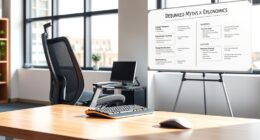
To manage back pain from office work, focus on choosing an ergonomic chair with good lumbar support and keep your feet flat on the floor. Take regular stretch breaks every 30 to 60 minutes, incorporating simple exercises like hamstring pulls or spinal twists. Maintain proper posture by sitting upright and avoiding slouching all day. Combining these habits with awareness of your body’s signals can help prevent discomfort—keep exploring for more ways to stay comfortable and pain-free.
Key Takeaways
- Use an ergonomic chair with proper lumbar support and adjust its height for correct posture.
- Take regular stretch breaks every 30-60 minutes to loosen muscles and improve blood flow.
- Practice proper posture techniques, keeping your back straight and shoulders relaxed while sitting.
- Incorporate stretching exercises like hamstring pulls and spinal twists into your daily routine.
- Maintain overall movement and awareness to prevent muscle stiffness and reduce chronic back pain risk.

In addition to choosing the right chair, incorporating stretching exercises into your daily routine can greatly ease back pain. Sitting for hours tightens your muscles, especially in the hips, hamstrings, and lower back. Stretching helps loosen these muscles, increase blood flow, and improve flexibility. Simple stretches like gentle hamstring pulls, seated spinal twists, or shoulder rolls can make a noticeable difference. Set a timer to remind yourself to stand up and stretch every 30 to 60 minutes. These brief breaks can prevent muscles from becoming stiff and reduce the risk of developing chronic pain. It’s not just about alleviating discomfort; stretching also enhances your overall posture and makes it easier to maintain a healthy spine alignment during long workdays. Additionally, understanding proper posture techniques can further support your back health and prevent strain.
Frequently Asked Questions
Can Specific Office Chairs Prevent Back Pain Effectively?
Yes, specific office chairs can effectively prevent back pain if they offer good lumbar support and adjustability. You should look for a chair that properly supports your lower back and allows you to customize height, tilt, and armrest positions. When you sit correctly with these features, you reduce strain on your spine, improve posture, and prevent discomfort during long work hours. Choosing the right chair makes a significant difference in back health.
Are There Quick Relief Exercises for Sudden Back Pain?
When sudden back discomfort strikes, gentle stretching routines and posture adjustments can offer quick relief. You should gently stretch your back, hamstrings, and hips to ease tension. Adjust your posture by sitting upright and avoiding slouching, which can worsen pain. These simple movements help reset your muscles, reducing discomfort swiftly. Remember, listening to your body and avoiding overexertion is key for safe and effective relief.
How Does Workstation Height Affect Back Health?
Your desk height and monitor positioning directly affect your back health. If your desk is too high or too low, it compels you to hunch or reach awkwardly, straining your back. Make sure your desk allows your elbows to be at a 90-degree angle and your monitor is at eye level to prevent slouching. Proper workstation setup promotes good posture, reduces discomfort, and helps prevent long-term back problems.
Is Back Pain From Sitting Reversible or Permanent?
Back pain from sitting is often reversible if you focus on posture correction and muscle strengthening. By improving your posture and engaging in targeted exercises, you can reduce pain and prevent it from becoming permanent. Consistent movement, stretching, and strengthening your core muscles help restore back health. Don’t ignore early signs—taking proactive steps can markedly improve your back’s condition and keep pain at bay.
What Ergonomic Accessories Are Most Beneficial for Back Support?
You should consider using ergonomic accessories like lumbar cushions and ergonomic footrests, which provide targeted back support and promote proper posture. Lumbar cushions help maintain the natural curve of your lower back, reducing strain, while ergonomic footrests keep your feet flat and hips aligned. These accessories work together to alleviate back pain, improve comfort, and prevent long-term issues, making your workspace more supportive and healthier for your back.
Conclusion
By making small changes to your daily routine, you can turn your back pain into a thing of the past. Think of your spine as a delicate garden—if you nurture it with proper posture, movement, and breaks, it will flourish instead of wither. Remember, taking care of your back isn’t a one-time task but a continuous journey. Keep these habits in mind, and you’ll find relief blooming where pain once grew.