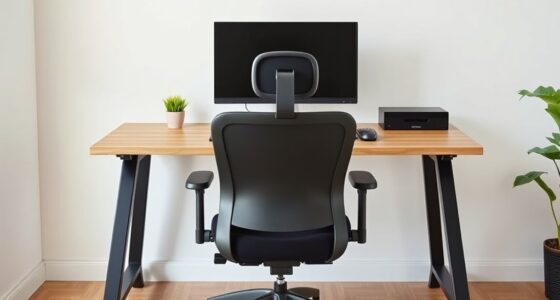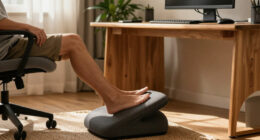
If you’re short, adjusting your standing desk setup is essential for comfort and health. Make sure your desk height allows your elbows to form a 90-degree angle, and keep your wrists straight to prevent strain. Use ergonomic accessories like an adjustable monitor stand, footrest, and anti-fatigue mat to support better posture. Proper setup reduces fatigue and enhances focus. Keep these tips in mind, and you’ll discover more ways to improve your workspace for long-term comfort and wellness.

Get comfort and recovery gear delivered free with Prime
- Fast, free delivery on millions of items
- Prime Video, Amazon Music and more included
- Member-only deals all year
Key Takeaways
- Adjust your desk height so elbows are at a 90-degree angle to ensure proper ergonomic alignment.
- Use adjustable accessories like monitor stands and footrests to accommodate a shorter stature comfortably.
- Incorporate anti-fatigue mats and ergonomic supports to reduce strain during standing work.
- Ensure your workspace promotes good posture, preventing long-term discomfort for shorter users.
- Regularly assess and modify your setup to maintain comfort and prevent ergonomic issues over time.
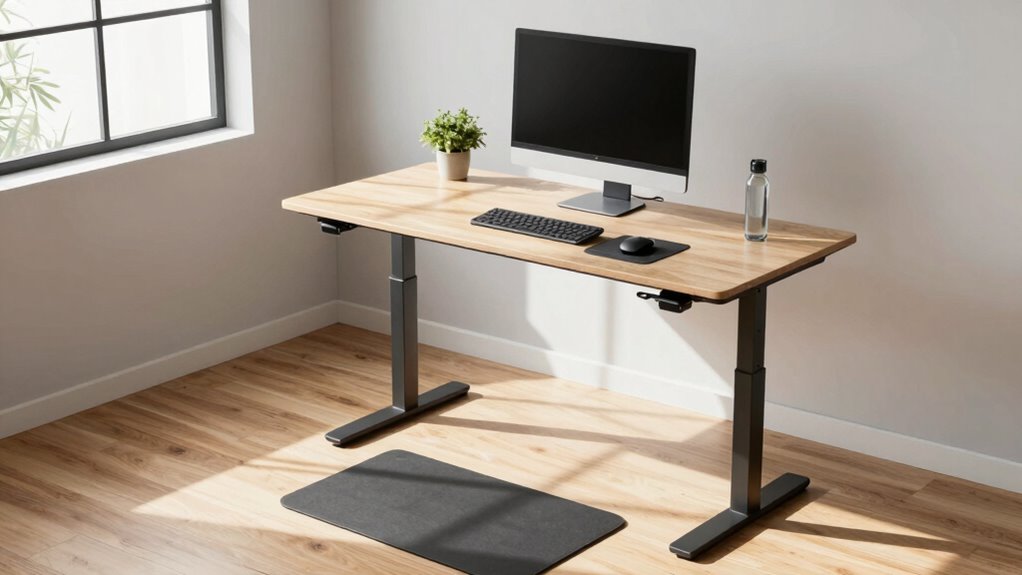
Setting up your standing desk correctly is fundamental for comfort and productivity. When you get it right, you reduce strain, improve posture, and make it easier to stay focused throughout your workday. The key starts with understanding how to properly utilize ergonomic accessories and perform desk height adjustment. These elements work together to create a workspace that supports your body’s natural alignment and minimizes fatigue.
First, pay attention to the height of your desk. It should be set so that your elbows are bent at about a 90-degree angle when your hands rest on the keyboard or mouse. Your wrists should remain straight, not bent up or down, to prevent discomfort and repetitive strain injuries. Using desk height adjustment features, whether manual or electric, allows you to make precise changes so that your work surface aligns perfectly with your body. This isn’t just about comfort; it’s about maintaining proper ergonomics that can prevent long-term health issues. Additionally, ensuring your workspace promotes proper ergonomic alignment can help you avoid unnecessary strain and maintain better posture throughout the day.
Adjust your desk height so elbows form a 90-degree angle, ensuring straight wrists for optimal comfort and health.
In addition to adjusting the desk height, ergonomic accessories play a crucial role in optimizing your standing setup. Consider investing in a good quality anti-fatigue mat. It reduces pressure on your feet and legs, helping you stand comfortably for longer periods. An adjustable monitor stand or arm is also essential—it allows you to position your screen at eye level, preventing neck strain and encouraging good posture. A footrest can help shift your weight and relieve pressure on your lower back, especially if your feet don’t comfortably reach the floor. Ensuring your workspace promotes proper ergonomic alignment can significantly impact your comfort and long-term health. Additionally, being mindful of workplace ergonomics can help you identify potential issues early and make necessary adjustments. Incorporating ergonomic principles into your setup encourages healthier habits and reduces the risk of discomfort over time. Furthermore, understanding ergonomic accessories can help you select the right tools to support your setup effectively.
Products Worth Considering

BowFlex Results Series 552 SelectTech Adjustable Dumbbell

Withings BPM Connect Wi-Fi and Bluetooth Blood Pressure Monitor

BowFlex SelectTech 552 Adjustable Dumbbells (Pair)
As an affiliate, we earn on qualifying purchases.
Frequently Asked Questions
Can I Adjust a Standing Desk for Multiple Users?
Yes, you can adjust a standing desk for multiple users. To do this effectively, focus on ergonomic adjustments like height, monitor position, and keyboard placement to match each user’s preferences. Make sure the desk has easy-to-use adjustment features, so users can quickly customize it for comfort and proper posture. By accommodating different ergonomic needs, everyone can enjoy a healthier, more comfortable workspace.
What Accessories Are Essential for a Standing Desk Setup?
You should prioritize ergonomic accessories like an adjustable monitor arm, a keyboard tray, and anti-fatigue mats to enhance comfort and support. These accessories help reduce strain and improve posture during long standing periods. Additionally, focus on desk organization tools such as cable clips and storage trays to keep your workspace tidy. Incorporating these essentials guarantees your standing desk setup is functional, comfortable, and promotes productivity throughout the day.
How Often Should I Switch Between Sitting and Standing?
You should switch between sitting and standing every 30 to 60 minutes to maintain ergonomic posture and avoid fatigue. Adjust your desk height during these shifts to guarantee your elbows are at a 90-degree angle and your monitor is eye level. Regular movement keeps your muscles engaged and reduces strain. Listening to your body helps you find the right balance, preventing discomfort and promoting productivity throughout your workday.
Are There Health Risks Associated With Standing Desks?
Standing desks are generally safe, but health risks can arise if you don’t prioritize posture correction and ergonomic accessories. Poor posture can lead to back, neck, and shoulder pain, so make sure your desk setup supports proper alignment. Use ergonomic accessories like an anti-fatigue mat, monitor stand, and adjustable keyboard to reduce strain. Regularly switching between sitting and standing also helps prevent discomfort, ensuring you stay healthy while working.
How Do I Prevent Foot and Leg Discomfort?
To prevent foot and leg discomfort, guarantee proper foot elevation by using a footrest or adjusting your desk height so your feet rest flat on the floor. Incorporate adequate leg support by maintaining a slight bend in your knees and avoiding prolonged standing. Take regular breaks to move around, stretch, and shift your weight, which helps reduce pressure on your legs and promotes better circulation.
Conclusion
By following this standing desk setup checklist, you’re not just creating a healthier workspace—you’re embracing a proven approach that can boost your comfort and productivity. Think of it this way: many experts believe that proper ergonomics reduce pain and increase efficiency, and evidence supports this. So, invest a few minutes now to set up correctly, and you’ll likely experience lasting benefits. It’s more than a habit; it’s a smart choice backed by science.