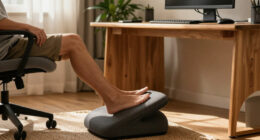
Foot fatigue when using a standing desk is often caused by setup issues, not standing itself. Wearing poor footwear or lacking proper arch support can lead to discomfort and strain. Adjusting your workspace, like using an anti-fatigue mat and ensuring your shoes fit well, makes a big difference. Incorporating movement and choosing supportive shoes helps prevent long-term problems like plantar fasciitis. Keep going to discover how to optimize your setup for lasting comfort.

Get comfort and recovery gear delivered free with Prime
- Fast, free delivery on millions of items
- Prime Video, Amazon Music and more included
- Member-only deals all year
Key Takeaways
- Poor footwear choices and lack of proper support are common causes of foot fatigue, not standing itself.
- An ergonomic workspace setup, including monitor height and anti-fatigue mats, reduces strain and improves comfort.
- Proper footwear with adequate cushioning and arch support prevents foot pain during prolonged standing.
- Adjusting posture and incorporating movement breaks help alleviate foot and leg fatigue.
- Addressing individual foot shape and support needs is essential for sustainable standing comfort.
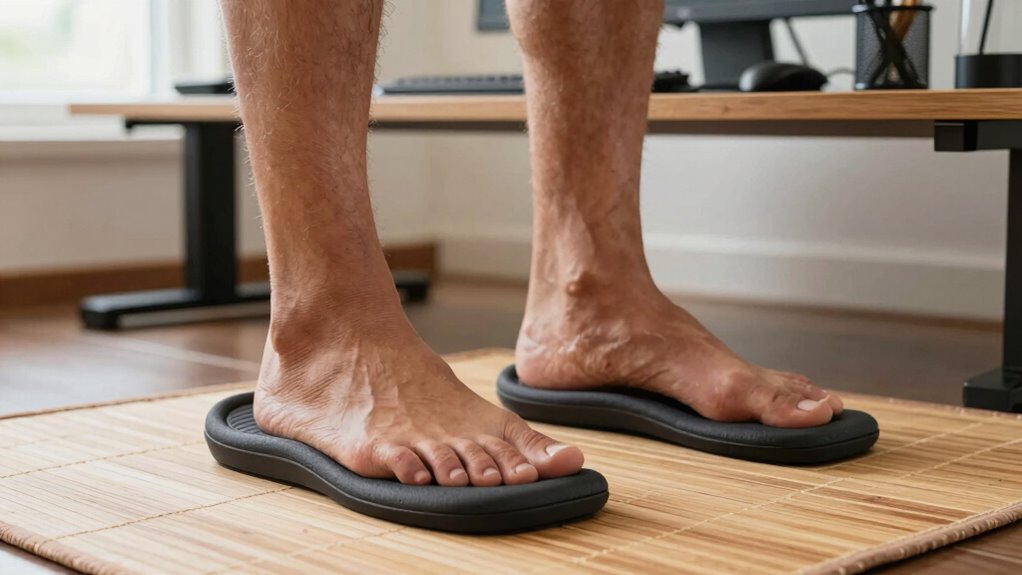
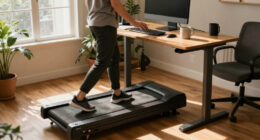
Standing at a desk all day can be beneficial, but it often leads to foot fatigue if you’re not careful. The good news is that most of this discomfort isn’t due to standing itself but rather how your setup supports your body. One of the most effective ways to combat foot fatigue is by paying attention to your footwear choices. Ergonomic footwear can make a significant difference, providing the necessary cushioning and stability to keep your feet comfortable throughout the day. Look for shoes that are designed with comfort in mind, featuring ample padding, a supportive sole, and a fit that doesn’t pinch or cause pressure points. Wearing the right footwear helps distribute your weight evenly, reducing strain on your arches and minimizing fatigue. Proper footwear also plays a role in foot arch support**, which is crucial for maintaining comfort during prolonged standing. Additionally, choosing shoes with appropriate sole material can enhance shock absorption and further reduce fatigue. Foot arch support is a key element often overlooked when it comes to standing comfortably for extended periods. If your shoes lack proper arch support, you may start to feel pain or soreness in your arches, heels, or even your lower back. Investing in insoles that offer targeted arch support can transform your experience, providing extra stability and reducing the strain on your feet. Recognize that your foot shape and arch type—whether high, neutral, or flat—dictate the kind of support you need. Correcting this imbalance can alleviate discomfort and prevent long-term issues like plantar fasciitis or fatigue-related injuries. Ensuring your footwear and standing desk setup are both ergonomic can significantly improve your comfort and reduce fatigue. Make certain your monitor is at eye level, and your elbows are at a 90-degree angle when typing. Using an anti-fatigue mat can also create a softer surface that reduces the impact on your feet and legs, making standing less tiring. Additionally, incorporating movement and stretching into your routine can help relieve tension and improve circulation, reducing overall fatigue during extended standing periods. Combining ergonomic footwear with a well-setup workspace helps your body maintain proper alignment, reducing unnecessary stress on your feet. In essence, foot fatigue during long standing sessions is primarily a setup problem, not an unavoidable consequence of standing. By choosing the right ergonomic footwear and ensuring your workspace is tailored to your body’s needs, you can stand comfortably for longer periods without discomfort or injury. It’s about making smart adjustments, paying attention to your foot support, and creating an environment that encourages proper posture**. When you do this, standing becomes a healthier, more sustainable habit rather than a source of pain.
Products Worth Considering

Withings BPM Connect Wi-Fi and Bluetooth Blood Pressure Monitor

Philips Sonicare 6500 Series Rechargeable Electric Toothbrush with 2 Brush Heads, White

Levoit Core 400S-P Smart Air Purifier for Large Rooms
As an affiliate, we earn on qualifying purchases.
Frequently Asked Questions
Can Wearing Specific Shoes Reduce Foot Fatigue at a Standing Desk?
Yes, wearing specific shoes can reduce foot fatigue at a standing desk. Your footwear choice matters, and selecting shoes with good support makes a big difference. You might also consider shoe insoles designed for comfort and arch support, which can help distribute your weight evenly and reduce strain. By choosing supportive footwear, you’ll feel less tired and more comfortable during long periods of standing.
How Long Should I Stand Continuously Without Taking a Break?
You should aim to stand for about 15 to 30 minutes at a time, then take a short break to sit or move around. Using ergonomic footwear can make this standing duration more comfortable and reduce fatigue. It’s important to listen to your body and avoid prolonged periods of standing without breaks. Incorporate movement and stretches during your breaks to improve circulation and minimize discomfort.
Are Foot Cushions Effective for Preventing Fatigue During Prolonged Standing?
Think of foot cushions as shock absorbers for your feet, absorbing the stress from prolonged standing. Foot cushion effectiveness can considerably improve your comfort when used correctly, especially within proper standing desk ergonomics. They help distribute pressure evenly and reduce fatigue, making long hours more bearable. Just make sure your cushion supports your foot’s natural posture, and you’ll notice less discomfort and greater endurance during extended standing sessions.
Does Foot Fatigue Affect Overall Posture and Back Health?
Foot fatigue can negatively impact your overall posture and back health by disrupting proper foot alignment and causing imbalance. When your feet lack adequate arch support, you’re more likely to develop pain that travels up your legs and into your back. Ensuring proper foot alignment and using supportive footwear or cushioned mats helps reduce fatigue, promotes better posture, and protects your back during long standing periods.
What Are Quick Tips to Alleviate Foot Pain After Standing?
Think of your feet as a garden needing care after a long day. To ease foot pain, step onto an ergonomic mat to cushion your soles and reduce strain. Incorporate simple foot stretching exercises, like rolling a ball under your foot or stretching your calves. These quick tips promote circulation, relieve tension, and help you recover faster, making standing more comfortable and preventing future fatigue.
Conclusion
Remember, foot fatigue isn’t a fault of standing but a fixable flaw in your setup. By balancing your stance, boosting your footwear, and taking timely tips to tweak your workspace, you’ll banish bothersome aches. Proper posture and proactive pauses promote power and productivity. So, step smartly, stay steady, and strike a sustainable stance — because a supportive setup guarantees your feet flourish, freeing you from fatigue and fueling your focus.