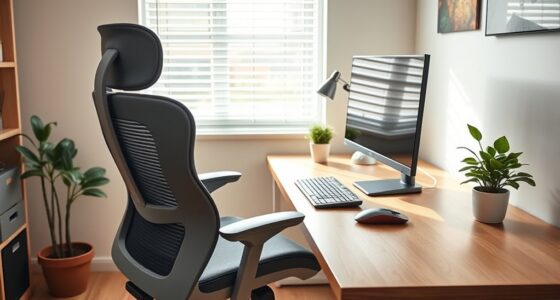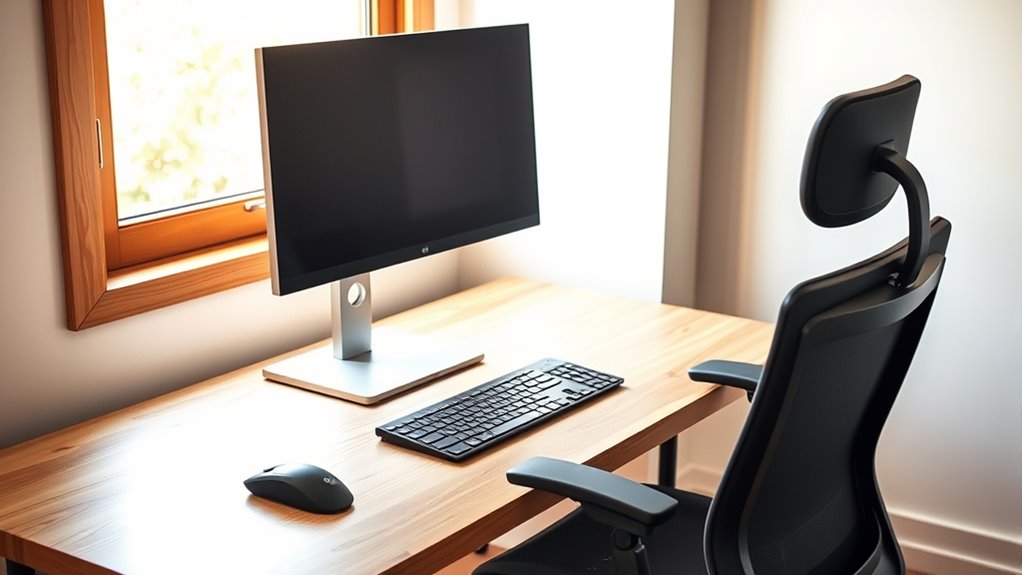

To find the perfect desk height, start by ensuring your elbows are at a 90-degree angle when your hands rest on the keyboard. Adjust your chair height so your feet are flat on the ground and your monitor is eye level, preventing neck strain. Small changes like raising or lowering your desk or adding monitor risers can make a big difference. Keep exploring simple ways to improve your workspace and boost comfort throughout your day.
Key Takeaways
- Use an adjustable desk or monitor stand to set your workspace at eye level.
- Keep your keyboard and mouse close, with elbows at a 90-degree angle.
- Adjust chair height so feet rest flat on the floor and thighs are parallel to the ground.
- Maintain your monitor about an arm’s length away to prevent eye strain.
- Regularly fine-tune your setup to ensure a neutral, comfortable posture during work.
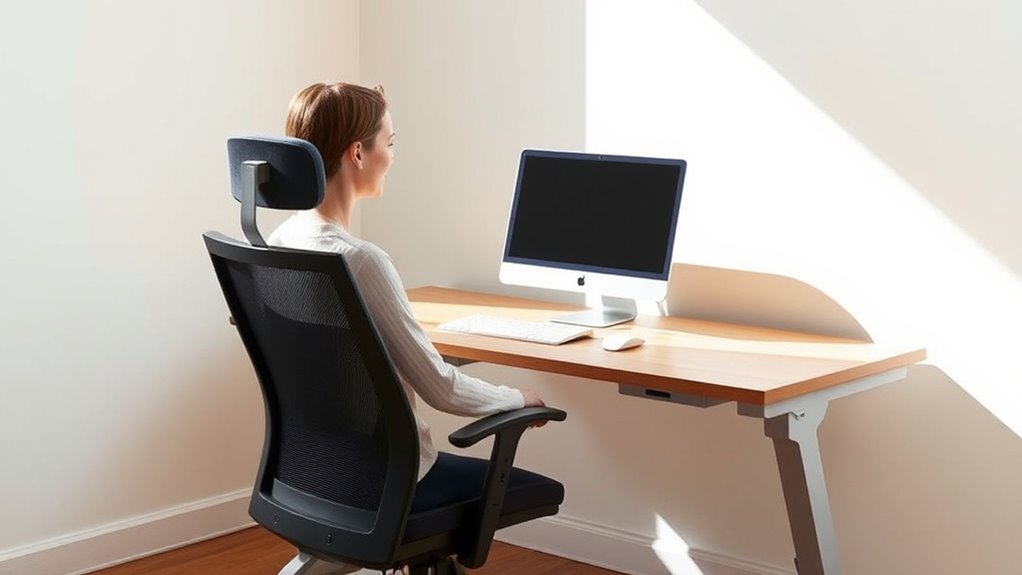
Making small adjustments to your desk can considerably improve your comfort and productivity. It’s often the little things that make the biggest difference, especially when it comes to setting up your workspace just right. One of the most effective ways to do this is by paying attention to your desk height and how it influences your posture. When your desk is at the proper height, you’ll find it easier to maintain a neutral position, reducing strain on your neck, shoulders, and wrists. This small change can prevent common discomforts and even long-term injuries, making your workday more comfortable and efficient.
Adjust your desk height to support proper posture and reduce strain for a more comfortable, productive workday.
To achieve this, start by investing in ergonomic accessories. An adjustable desk or a monitor stand can elevate your screen to eye level, so you’re not tilting your head down or craning upward. A good ergonomic keyboard and mouse are also essential, as they allow your arms and wrists to stay in a natural, relaxed position. These accessories make it easier to maintain proper alignment, which is *crucial* for long hours at your desk. Remember, the goal is to create a workspace where everything supports your body’s natural posture, not forces it into uncomfortable positions.
In addition to ergonomic accessories, desk organization plays a *vital* role in optimizing your setup. When your workspace is clutter-free, it’s easier to position your equipment at the right height and distance. Keep frequently used items within arm’s reach, reducing unnecessary stretching or twisting. Use organizers and trays to keep cables, documents, and accessories tidy, so your desk remains streamlined and distraction-free. Proper desk organization not only improves efficiency but also encourages better ergonomics, since you won’t need to bend or reach awkwardly for items. Additionally, understanding and implementing correct desk height can significantly reduce musculoskeletal strain and improve overall comfort during long work sessions.
Small adjustments like these are simple but powerful. Take the time to fine-tune your workspace by adjusting your chair height, aligning your monitor, and positioning your keyboard and mouse correctly. Incorporate ergonomic accessories that support your posture, and keep your desk organized to avoid clutter and unnecessary movements. These tweaks don’t require a complete overhaul but can *significantly* boost your comfort and productivity. Remember, your workspace should serve you, not hinder you—so make those small changes count. With a few mindful adjustments, you’ll notice less fatigue, fewer aches, and a more enjoyable workday.
Frequently Asked Questions
How Often Should I Readjust My Desk Height?
You should readjust your desk height whenever you notice discomfort or poor posture. Regularly check your ergonomic accessories and adjustable furniture to guarantee they support proper alignment. If you change your sitting position or switch tasks, it’s a good idea to readjust your desk height accordingly. Staying attentive to your body’s signals helps prevent strain and keeps you comfortable throughout the day. Make these small adjustments as needed for lasting relief.
Can Desk Height Affect My Posture Over Time?
You might be surprised, but your desk height can substantially impact your posture over time. Poor ergonomics benefits, like an improperly set desk, can lead to chronic discomfort or even long-term musculoskeletal issues. When you adjust your desk to the correct height, you promote posture correction, reducing strain on your neck, shoulders, and back. Small changes in your workspace can make a big difference in your comfort and overall health.
Is There a Recommended Desk Height for Standing Desks?
For standing desks, the recommended height according to ergonomic standards is when your elbows are at a 90-degree angle, with your hands comfortably resting on the work surface. Look for adjustable features to customize the height to your body. This guarantees proper alignment, reduces strain, and promotes better posture over time. Always fine-tune your desk height so you can work comfortably without hunching or overextending your arms.
What Tools Can Help Me Measure My Ideal Desk Height?
Did you know that using ergonomic tools can reduce discomfort by up to 60%? To measure your ideal desk height, you can use simple measurement techniques like a tape measure or adjustable desk gauges. These tools help you find the perfect setup, ensuring your elbows are at a 90-degree angle and your monitor at eye level. Proper measurement techniques are essential for comfort and productivity during long work hours.
How Do I Know if My Desk Height Is Causing Discomfort?
If you’re feeling discomfort, your desk height might be the culprit. Check if your shoulders are relaxed and your elbows rest comfortably at a 90-degree angle. Use ergonomic chairs and wrist supports to support proper posture. If you’re hunched over or experiencing neck, back, or wrist pain, it’s a sign your desk height isn’t right. Adjust it until your position feels natural and pain-free, ensuring better comfort throughout your workday.
Conclusion
By making small adjustments to your desk height, you can substantially improve your comfort and reduce strain. Did you know that proper ergonomic setup can boost productivity by up to 25%? Just a slight change in your desk height might be all you need for a more comfortable workday. So take a moment to fine-tune your workspace—those tiny tweaks could lead to big relief and a happier, healthier work routine.