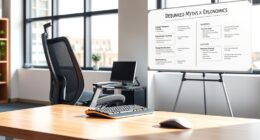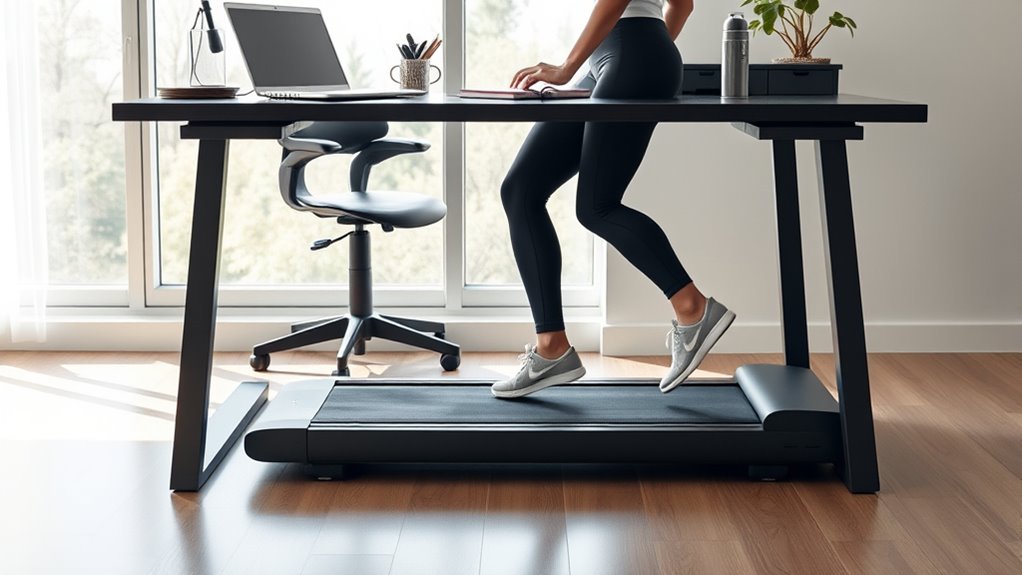

Using a desk treadmill can help you stay active and boost energy, but it requires proper ergonomic setup to avoid discomfort. While it offers benefits like increased movement and potentially improved focus, it may also cause noise or balance issues if not chosen carefully. Adjust your workspace to maintain good posture and take regular breaks to maximize comfort and safety. Interested in learning how to make the most of your treadmill workstation? Keep exploring for expert tips.
Key Takeaways
- Desk treadmills promote increased activity and can reduce sedentary health risks when ergonomically set up.
- They may cause distractions or noise if not chosen or positioned to minimize disturbance to others.
- Proper ergonomic adjustments, like monitor eye level and adjustable desk height, are essential for comfort and safety.
- Incorporate regular breaks, stretching, and movement to prevent fatigue and maintain productivity during use.
- Gradually adapt to walking routines to ensure sustainability and prevent discomfort or ergonomic issues.
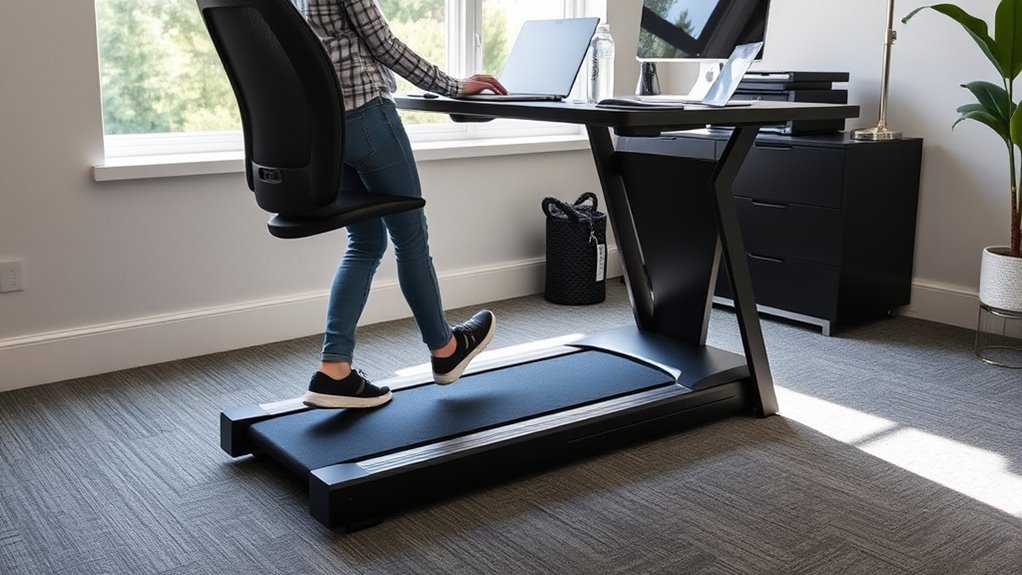
If you spend long hours at your desk, incorporating a treadmill can boost your productivity and health. The key is to make ergonomic adjustments that keep you comfortable and safe while walking. Position your desk at the right height so your elbows are at a 90-degree angle, and your monitor is at eye level to avoid neck strain. You’ll also want to guarantee the treadmill is set on a stable, non-slip surface and that you have enough space to move freely. These adjustments help prevent discomfort and allow you to focus on your tasks without distraction. One concern many people have is noise levels; a quiet treadmill lets you work without disturbing colleagues or family members. Look for models designed with noise reduction features, such as belt cushioning or sound-insulating materials, to keep your environment peaceful.
As you start using a desk treadmill, pay attention to your posture. Keep your shoulders relaxed, your wrists straight, and avoid leaning forward or slouching. Using an ergonomic keyboard and mouse can further reduce strain, especially since walking can shift your focus from traditional typing posture. It’s also wise to start slow—begin with short walking intervals, gradually increasing your pace and duration as your body adapts. This helps prevent fatigue and discomfort. Remember, the goal is to stay active without sacrificing comfort or productivity. If you notice any discomfort or pain, reassess your ergonomic setup and make necessary adjustments. Sometimes, a slight change in desk height or monitor position can make a significant difference. Additionally, considering the contrast ratio of your workspace lighting can help reduce eye strain during extended periods of work.
Another tip is to incorporate regular breaks. Even while walking, stand up periodically, stretch, and move around to prevent stiffness. Maintaining good noise levels with your treadmill can be achieved by choosing a quieter model or placing it on a mat to absorb vibrations. These steps help you create a balanced environment where you can work efficiently while staying active. Over time, you’ll find that adjusting your workspace ergonomically and managing noise levels makes using a treadmill a seamless part of your routine. It allows you to stay energized, improve circulation, and combat the sedentary nature of desk work, all without sacrificing comfort or focus. As with any new habit, patience and gradual adaptation are vital to making this a sustainable and beneficial addition to your workday.
Frequently Asked Questions
Can Desk Treadmills Help Improve Mental Focus?
Yes, desk treadmills can help improve your mental focus. By promoting ergonomic benefits, they reduce discomfort and fatigue, allowing you to stay alert longer. The light movement boosts blood flow and mental alertness, making it easier to concentrate on tasks. Incorporating walking into your work routine creates a healthier environment, helping you stay energized and focused throughout the day. Just remember to adjust your pace for ideal comfort.
Are There Safety Concerns With Walking and Working Simultaneously?
Yes, walking and working at the same time can raise safety concerns. To stay safe, make ergonomic adjustments like proper monitor height and keyboard placement to prevent strain. Also, consider noise considerations, as some treadmills may be noisy and distract you or others. Always start slow, stay attentive to your surroundings, and guarantee your workspace is secure to avoid trips or falls while multitasking.
How Do Desk Treadmills Affect Long-Term Posture?
Think of your posture as a garden that needs regular tending. Using a desk treadmill can cultivate ergonomic benefits and promote better muscle engagement over time, helping you stand taller and move more naturally. However, if you don’t set it up correctly, it might lead to strain or misalignment. To protect your long-term posture, make certain your workspace supports proper ergonomics and take breaks to stretch and reset.
What Is the Recommended Daily Usage Time?
The recommended duration for daily walking on a desk treadmill is about 30 to 60 minutes, split into manageable sessions. You should aim for a consistent daily walking time that boosts your activity without causing fatigue. Listen to your body, and gradually increase your usage to avoid strain. This balance helps you stay active, improve posture, and maintain energy levels throughout your workday.
Do Desk Treadmills Require Special Maintenance or Setup?
You don’t need special maintenance for your desk treadmill, but proper setup is essential. When setting up, confirm the treadmill is on a flat surface and follow the manufacturer’s instructions for assembly. Maintenance requirements are minimal—just keep it clean, check for loose screws, and lubricate the belt as recommended. Regularly inspecting your desk treadmill will keep it running smoothly and extend its lifespan.
Conclusion
Incorporating a desk treadmill can gently boost your daily activity, making work feel less like a chore. With a little balance and mindfulness, you’ll find it’s a subtle way to stay active without sacrificing productivity. Just remember to listen to your body and pace yourself—after all, progress is a journey, not a sprint. Embrace the rhythm, and you’ll discover a smoother, more energized workday waiting just around the corner.