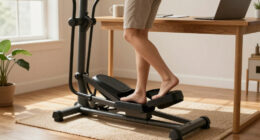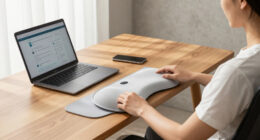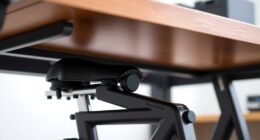
To effectively alternate between sitting and standing, start gradually by standing for short intervals, like 15-20 minutes, and use adjustable desks to make shifts easy. Incorporate ergonomic accessories such as footrests and monitor stands to keep your workspace aligned. Remember to move and stretch every 30 minutes to improve circulation and reduce stiffness. Maintain proper posture with the monitor at eye level and avoid locking your knees. Keep exploring for more tips on creating a comfortable, healthy workspace.

Get comfort and recovery gear delivered free — and shop member deals
- Fast, free delivery on millions of items
- Access to Prime Big Deal Days deals on October 6–7
- Prime Video, Amazon Music and more included
Key Takeaways
- Transition gradually from sitting to standing, starting with short intervals and increasing over time.
- Use ergonomic accessories like adjustable desks and monitor stands to maintain proper posture during transitions.
- Incorporate movement routines, such as stretching every 30 minutes, to promote circulation and reduce stiffness.
- Maintain proper workspace setup, including monitor at eye level and feet flat on the floor, to support comfort.
- Use reminders or alarms to prompt regular position changes and movement, ensuring a seamless sit-stand rhythm.
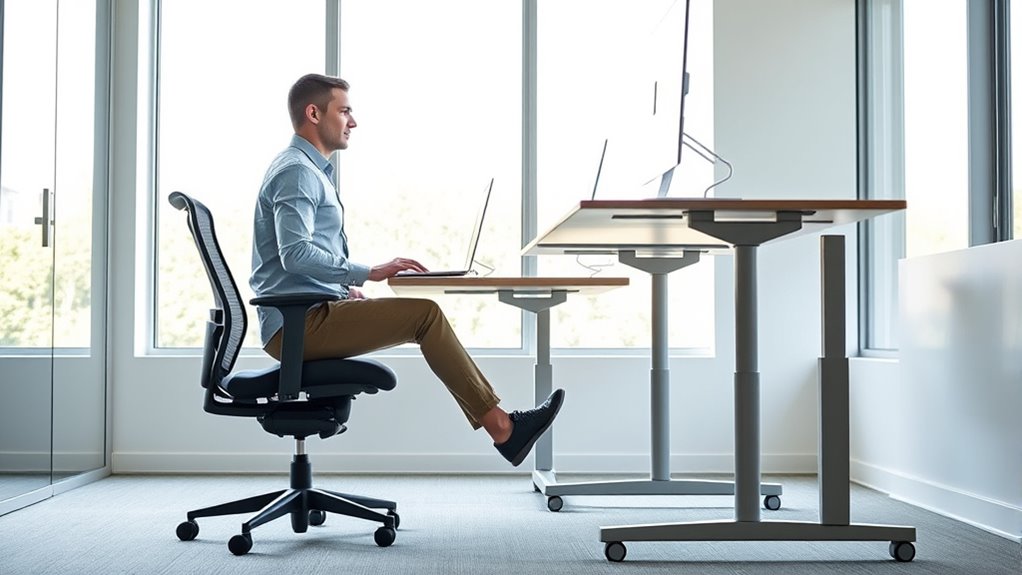
Switching between sitting and standing throughout your workday can boost your comfort and productivity, but doing so effectively requires some best practices. To make this shift smooth and sustainable, you should consider using ergonomic accessories designed to support your posture and comfort. For example, an adjustable standing desk allows you to effortlessly switch between positions without straining your back or neck. Adding a supportive anti-fatigue mat can reduce pressure on your feet and legs when standing, making prolonged periods more comfortable. Ergonomic accessories like footrests or monitor stands help keep your workspace aligned correctly, preventing strain and promoting better ergonomics.
Using ergonomic accessories like adjustable desks and anti-fatigue mats can improve your comfort and posture during work.
Incorporating movement routines into your day is equally important. Instead of just alternating between sitting and standing, aim to move regularly to keep your muscles active and circulation flowing. Simple routines such as stretching your legs, rolling your shoulders, or doing light torso twists every 30 minutes can make a significant difference. These movement routines prevent stiffness and reduce the risk of repetitive strain injuries. The key is consistency; set reminders or alarms to prompt you to change positions and perform these routines. This habit not only improves physical comfort but can also boost your mental alertness and focus.
When shifting from sitting to standing, take care to do so gradually. Sudden movements can cause dizziness or discomfort. Start by standing for short intervals, like 15-20 minutes, and gradually increase the duration as your body adapts. Use ergonomic accessories to guarantee your workstation remains aligned and supportive during these changes. Keep your monitor at eye level, your wrists straight, and your feet firmly planted on the ground or mat. Avoid locking your knees or leaning forward, which can lead to strain over time. Remember, the goal is to create a seamless rhythm that feels natural and sustainable throughout your workday.
Aside from physical adjustments, pay attention to your overall posture and environment. Proper lighting and a clutter-free workspace contribute to a more comfortable experience. Incorporate ergonomic accessories thoughtfully—don’t just add them for the sake of it but verify they serve your comfort and health needs. Combining these accessories with movement routines ensures you’re not only alternating positions but doing so in a way that promotes long-term well-being. Additionally, understanding how sound vibrations can influence your focus and relaxation may further enhance your workspace environment. By following these best practices, you’ll find that switching between sitting and standing becomes a natural, beneficial part of your daily routine, helping you stay energized and productive from morning to evening.
As an affiliate, we earn on qualifying purchases.
Frequently Asked Questions
How Often Should I Switch Between Sitting and Standing During Work?
You should switch between sitting and standing every 30 to 60 minutes to promote good posture awareness and reduce strain. Using ergonomic footwear helps support your feet during standing periods, making changeovers more comfortable. Pay attention to your body’s signals and adjust frequently to avoid discomfort. Regular movement boosts circulation and prevents stiffness, so find a rhythm that works for you and stay mindful of maintaining proper posture throughout the day.
What Accessories Can Help Improve Ergonomics When Alternating Positions?
You can improve your ergonomics with accessories like adjustable sit-stand desks, ergonomic keyboard and mouse, and supportive footrests. Posture aids such as lumbar supports and anti-fatigue mats help reduce strain during changes. While standing reduces back pain, sitting offers comfort; these accessories create a seamless shift, balancing both. Embrace ergonomic accessories to maintain proper alignment and prevent discomfort, making your workstations adaptable for healthier, more comfortable work sessions.
Are There Specific Stretches Recommended for Standing Desks?
Yes, there are specific ergonomic stretches you can do at a standing desk. Focus on ergonomic stretches like hamstring and calf stretches to relieve tightness, and shoulder rolls for posture correction. These stretches help prevent strain and promote better alignment. Incorporate them regularly to reduce fatigue and maintain good posture. Remember, staying active with these stretches supports your overall comfort and helps you maintain proper ergonomics throughout your workday.
How Can I Prevent Fatigue When Standing for Long Periods?
Think of fatigue as a stubborn shadow you can outmaneuver. To prevent it, focus on footwear comfort and posture alignment; supportive shoes keep your feet happy, while maintaining good posture keeps your energy flowing. Shift your weight regularly, take short breaks to stretch, and stay hydrated. These small acts act like a wind beneath your wings, helping you stand longer without tiring out.
What Are Signs I Need to Change My Sitting or Standing Habits?
You should change your sitting or standing habits when you notice discomfort indicators like persistent pain, numbness, or tingling. Pay attention to posture cues such as slouching, leaning forward, or uneven weight distribution. If your muscles feel tense or you experience fatigue, it’s time to switch positions. Regularly listening to these signals helps prevent strain and promotes better ergonomics, keeping you comfortable and focused throughout the day.
As an affiliate, we earn on qualifying purchases.
Conclusion
By mixing sitting with standing throughout your day, you’re giving your body a much-needed break and keeping discomfort at bay. Remember, don’t put all your eggs in one basket; alternating helps prevent strain and boosts your energy. Stick to these best practices, listen to your body, and make the change a habit. After all, a little balance goes a long way—you’re only as good as your health, so take care of it wisely.
As an affiliate, we earn on qualifying purchases.
As an affiliate, we earn on qualifying purchases.
Fall Picks
fall essentials
As an affiliate, we earn on qualifying purchases.