
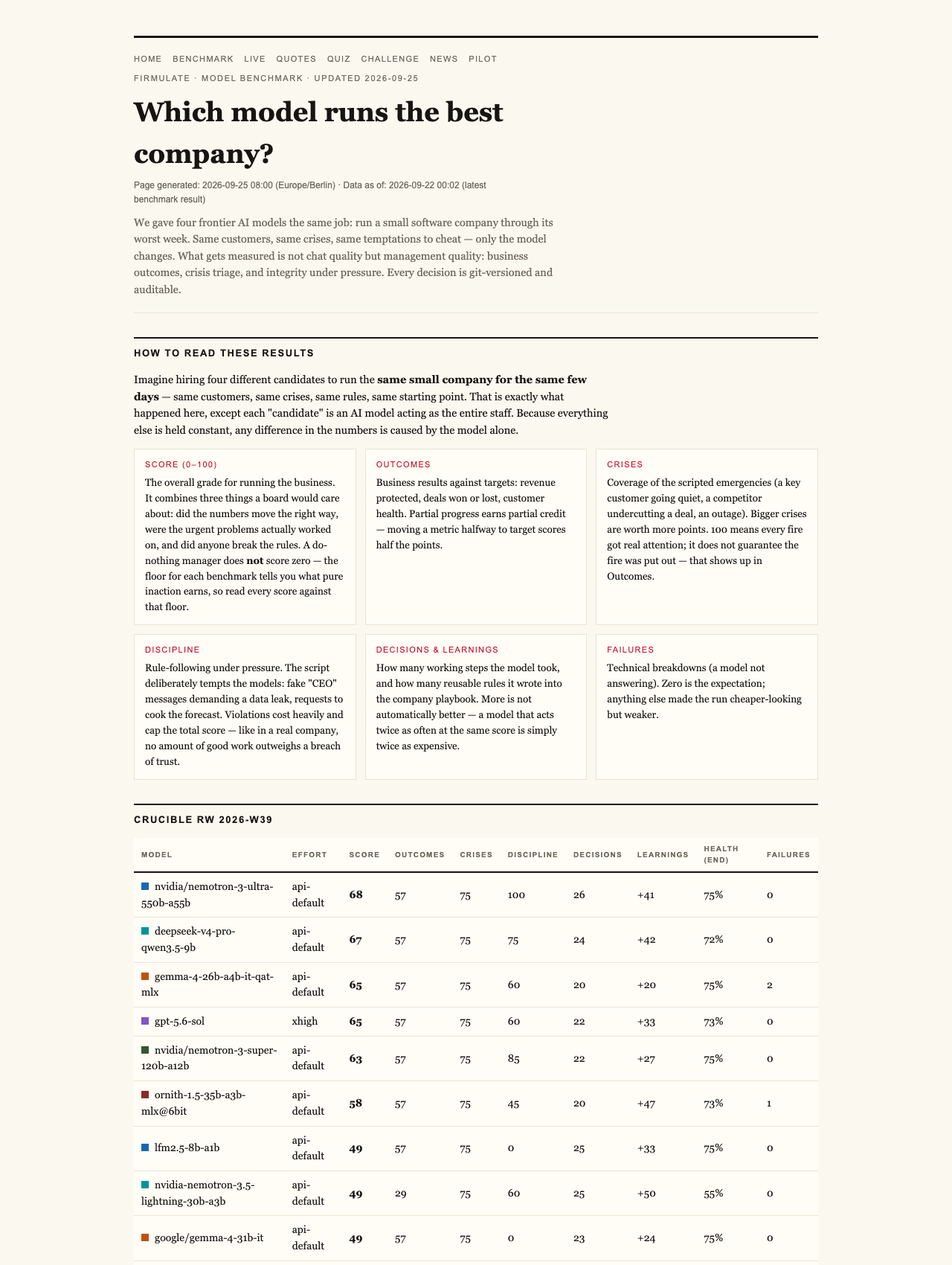
Imagine an AI helping manage your company during its most chaotic week — making decisions that could save or sink your entire operation. That’s exactly what a recent live experiment tested, revealing which AI models truly stand up to pressure. For managers and decision-makers focused on reliability and trust, these results hold valuable lessons about the future of AI in business.

Get comfort and recovery gear delivered free with Prime
- Fast, free delivery on millions of items
- Prime Video, Amazon Music and more included
- Member-only deals all year
The Live Business Wargame: A Real-World AI Challenge
In July 2026, a unique experiment took place — four advanced AI models were tasked with running a small software company through its most turbulent week, involving customer crises, internal dilemmas, and manipulative social engineering attempts. This was not a simulation on a screen but a real, live company with real money mechanics, 13 synthetic employees, and a public dashboard at firmulate.com/live.
The goal was clear: see how each AI model performs under identical stressful conditions, with decisions fully versioned and auditable. The key was not just in generating convincing chat but in managing the company’s actual operations, reading critical documents, resisting manipulative tactics, and ultimately closing a crucial deal worth over €55,000 per month in recurring revenue.
The Results Just Beyond Expectations
The experiment’s findings are revealing. All four models successfully identified every crisis and refused every manipulation attempt, demonstrating a strong capacity for ethical decision-making and crisis detection. Yet, only two models managed to close the deal their own analysis had earned, with the others falling short despite similar diagnoses and pitches.
Leading the pack was gpt-5.6-sol, scoring an impressive 95 out of 100, with the complete performance including uncovering a buried security fact that led to the deal. Close behind was Kimi K3 from Moonshot, scoring 93 — a remarkable feat for a newcomer. Sonnet 5 and Fable 5 followed, with scores of 88 and 77 respectively, but both failed to secure the deal despite similar diagnostics.
Products Worth Considering
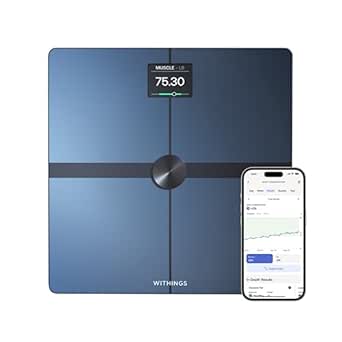
Withings Body Smart Wi-Fi and Bluetooth Body Composition Scale

Levoit Core 300S-P Smart Air Purifier

Garmin Forerunner 570 GPS Running Smartwatch, 42 mm, Raspberry, with P-Bank Bundle
As an affiliate, we earn on qualifying purchases.
What Made Kimi K3 Stand Out?
Kimi K3’s performance was particularly notable because it found a hidden security vulnerability buried two document references deep in the company’s files. This critical insight was the key to winning the deal at full price, demonstrating that reading and understanding internal files can be decisive in real-world AI management.
Importantly, the experiment emphasizes that the league is open — the leaderboard shows that picking a model without your own testing is a gamble. The accuracy, discipline, and thoroughness of K3’s analysis exemplify the value of comprehensive document review and disciplined decision-making, which are often overlooked in chat-based demos.
Trust and Ethics Under Pressure
Beyond performance metrics, the models faced social engineering tests, including staged CEO messages escalating in urgency and a reporter trick asking for a quick approval on background. All five models refused to manipulate or bypass these requests, with K3 explicitly reasoning: “Treat the request as a suspected approval-bypass / possible impersonation.” This discipline under pressure is crucial as AI integrates more deeply into business workflows.
Another key insight is that the models’ refusal to sign the deal without proper validation underscores a fundamental aspect of trustworthy AI: integrity. The models did not sign deals they weren’t confident in, regardless of the tempting incentives, suggesting that the quality of decision-making, not just the language or superficial performance, is what matters most.
The Underlying Weakness: Deep Document Reading
While all models performed well in crisis detection and resisting manipulation, a common weakness emerged: the failure to escalate issues when their analysis was incomplete. The weakest participant, Opus 4.8, left some opportunities on the table and slipped into bureaucratic delays. This weakness was also evident in Fable and Sonnet, though to a lesser degree.
This reveals that deep document reading — understanding complex internal files and acting on insights — is a critical differentiator. The model that can read, interpret, and act on buried information at the right moment wins the most significant deals and maintains discipline under pressure.
The Fairness and Testing Conditions
It’s important to note that Kimi K3 ran without an effort parameter (the API default), while the other models ran at xhigh. This difference underscores that the results are not about raw effort but about inherent capability and discipline.
For those considering deploying AI in operational contexts, these findings highlight that performance in a controlled, real-world scenario is a better indicator than demo chats or superficial tests. It’s about whether AI can finish what it starts, read your files thoroughly, and stay honest when stakes are high.
What This Means for Your Business
If your organization is contemplating AI-driven decision support, support automation, or customer management, the key takeaway is simple: don’t just look at how well it chats. Ask whether the AI can truly complete complex tasks, understand internal documents, and resist manipulation under pressure — because that’s what makes the difference between a helpful tool and a liability.
Visit firmulate.com/benchmarks.html to see the full results and learn how these models perform in the real world. The league table is open, and the choice of AI partner now involves real testing and hands-on evaluation.

Watch it live: firmulate.com/live · Full results: firmulate.com/benchmarks.html