
When choosing between wood and laminate for your desk, consider your aesthetic, durability, and maintenance needs. Wood adds warmth, timeless beauty, and a sturdy surface that supports long-term comfort. Laminate offers affordability, a variety of styles, and easier upkeep with resistance to scratches and stains. Think about how much effort you’re willing to put into care and the look you want. To discover more ways to select the ideal desk surface, keep exploring your options.
Key Takeaways
- Wood offers natural beauty, warmth, and timeless elegance, enhancing workspace aesthetic and inspiring creativity.
- Laminate desks are more affordable, highly resistant to scratches, stains, and moisture, ideal for low-maintenance needs.
- Wooden surfaces provide ergonomic stability and a softer feel, supporting long-term comfort and reducing strain during extended use.
- Laminate options are versatile in design, available in a wide range of colors and patterns that mimic real wood or other materials.
- Wooden desks are durable and sturdy, suitable for everyday use, while laminate surfaces require less upkeep and are easier to clean.

Selecting the right material for your desk surface is essential to create a workspace that’s both functional and comfortable. When choosing between wood and laminate, you need to consider how each material influences your daily experience, including ergonomic benefits and aesthetic appeal. Both options have unique qualities that can impact your productivity and the overall look of your workspace, so understanding their differences helps you make an informed decision.
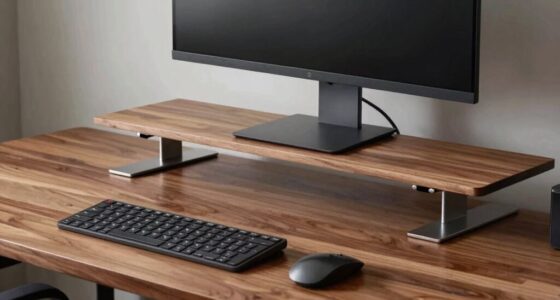
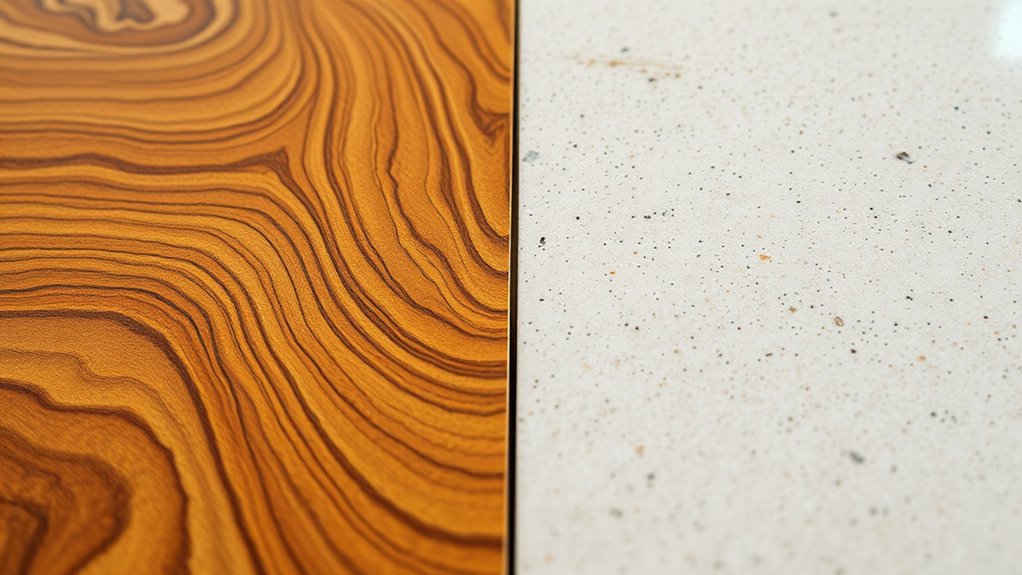
Wood surfaces are widely appreciated for their natural beauty and warmth. They add a timeless, classic touch to any office or home setup, instantly elevating the aesthetic appeal. When you choose wood, you’re opting for a material that exudes craftsmanship and sophistication. The rich textures and varied grains can create a welcoming environment that inspires creativity and focus. From a practical standpoint, wood offers ergonomic benefits because it tends to be sturdy and durable. A well-constructed wooden desk can withstand daily use without sagging or warping, providing a stable surface for your work essentials. Additionally, the slightly softer feel of wood compared to harder surfaces can be more comfortable for extended periods of writing or typing, reducing strain on your wrists.
Wood surfaces offer timeless beauty, durability, and ergonomic comfort for your workspace.
Laminate desks, on the other hand, are known for their affordability and versatility. They come in a wide array of colors and patterns, allowing you to match your aesthetic preferences easily. If you prefer a sleek, modern look, laminate surfaces can mimic the appearance of real wood or other materials at a fraction of the cost. They’re also highly resistant to scratches, stains, and moisture, making them practical for busy environments. From an ergonomic perspective, laminate surfaces often provide a smooth, even workspace that minimizes resistance when moving objects around, which can help reduce strain during your tasks. Their flat, consistent surface makes them easy to clean, contributing to a tidy and organized workspace that promotes comfort and efficiency.
Ultimately, your choice depends on your priorities. If you value natural beauty and durability, and are willing to invest in a timeless piece, wood is an excellent option. It combines aesthetic appeal with ergonomic benefits that support long-term comfort. If you prefer a budget-friendly, low-maintenance surface with plenty of design options, laminate might suit your needs better. Both materials can enhance your workspace’s comfort and style, but understanding how each aligns with your ergonomic needs and aesthetic goals helps you create a desk that truly fits your lifestyle.

PIXOURA Office Desk with Drawers, 47" Wide Small Desk with File Drawer, Study Table Wood Writing Desk with Long Monitor Stand for Bedroom,Home Office
Home & Office Desk: The office desk with drawers features a spacious 120cm top, smooth edge, and durable…
As an affiliate, we earn on qualifying purchases.
As an affiliate, we earn on qualifying purchases.
Frequently Asked Questions
How Does Environmental Impact Differ Between Wood and Laminate Desks?
When comparing the environmental impact of wood and laminate desks, you’ll find that sustainable forestry plays a key role. Wood desks often come from responsibly managed forests, reducing deforestation. Laminate desks, however, can emit chemical emissions due to adhesives and finishes, which may harm indoor air quality. Opting for sustainably sourced wood minimizes environmental harm, while choosing low-emission laminates helps reduce chemical exposure. Your choices can support eco-friendly practices and healthier indoor environments.
What Are the Best Maintenance Tips for Each Material?
To keep your desk looking great, follow simple cleaning routines for each material. Use a soft cloth and gentle cleaner for wood, avoiding excess moisture to prevent damage. For laminate, wipe with a damp cloth and mild soap. Protective accessories like coasters and desk pads help prevent scratches and stains. Regular maintenance prolongs your desk’s life and keeps it looking new, whether it’s wood or laminate.
Can Laminate Surfaces Be Repaired if Scratched or Damaged?
If your laminate surface gets scratched or damaged, surface repair options are limited but possible. You can use a laminate repair kit or touch-up pen to hide minor damage. To prevent further damage, avoid using abrasive cleaners and sharp objects on your desk. Damage prevention is key, so consider using desk mats or coasters. While superficial scratches can be fixed, deep damage might require professional repair or replacement to maintain your desk’s appearance.
Are There Health Considerations Related to Off-Gassing From Laminate?
You might wonder if laminate off-gassing affects indoor air quality. While some laminate surfaces emit low levels of chemical emissions, modern products are designed to minimize these risks. It’s a good idea to guarantee proper ventilation, especially when new. If you’re concerned about health, look for laminates labeled low-VOC or eco-friendly, which help reduce potential chemical emissions and improve indoor air quality for a safer workspace.
How Do Costs Compare Over the Lifespan of the Desk?
When considering your desk, think of the journey it’ll take with you. The cost comparison over its lifespan shows that laminate desks often start lower but may need replacement sooner, impacting long-term value. Wood tends to be an investment that pays off over time with durability and timeless appeal. So, your choice influences not just initial costs but the overall lifespan value, helping you make a smarter, more lasting decision.

Sweetcrispy Computer Office Desk 48 Inch Student Study Writing Work with Metal Frame Wood Tabletop Modern Simple PC Home Bedroom Table – Basic Black, Compact Sturdy Desk for Laptop, Study, Gaming
Diversified Scenarios: The office desk is designed with a modern simple style, suitable for different styles of scenes,…
As an affiliate, we earn on qualifying purchases.
As an affiliate, we earn on qualifying purchases.
Conclusion
Ultimately, choosing between wood and laminate is like picking the right brush for a masterpiece—you want it to complement your style and needs. If you crave warmth and character, wood’s natural charm is your canvas. But if durability and ease of maintenance are your priorities, laminate acts as a sturdy shield. Whichever you choose, remember it’s the foundation for your daily creativity, turning your workspace into a reflection of your personal touch.

CubiCubi Standing Desk 55×26 Inches with 3 Wood Drawers and Monitor Shelf, Ergonomic Rising Home Office Desks, Height Adjustable Computer Desk, Sit Stand Up Electric Workstation Table, Antique Brown
【Ergonomic View & Smart Organization】 Elevate your health and productivity. The built-in monitor shelf raises your screen to…
As an affiliate, we earn on qualifying purchases.
As an affiliate, we earn on qualifying purchases.

NBF Writing Desk Computer Table with Modesty Panel for Home Office Workspace, 48" W x 24" D, Espresso, At Work Collection
COMPACT WRITING DESK SURFACE — Space-saving desktop provides room for laptops, monitors, paperwork, office accessories, and everyday productivity…
As an affiliate, we earn on qualifying purchases.
As an affiliate, we earn on qualifying purchases.