If you wear heels at a standing desk, you need a customized approach to prevent discomfort and strain. Choose supportive, cushioned shoes with a broad heel base to improve stability, and adjust your desk and monitor height for better posture. Remember to shift weight often and take breaks to stretch your calves and back. Combining proper footwear, posture tweaks, and regular movement can make a real difference — exploring these tips further can help you stay comfortable all day.

Get comfort and recovery gear delivered free with Prime
- Fast, free delivery on millions of items
- Prime Video, Amazon Music and more included
- Member-only deals all year
Key Takeaways
- Use ergonomic footwear with cushioned insoles and arch support to reduce foot and lower back strain.
- Adjust desk height and monitor position to maintain proper posture despite heel height.
- Incorporate frequent breaks to stretch calves, hamstrings, and lower back muscles.
- Practice weight shifting and core engagement to distribute pressure evenly while standing.
- Combine supportive shoes, posture adjustments, and regular movement for long-term comfort.
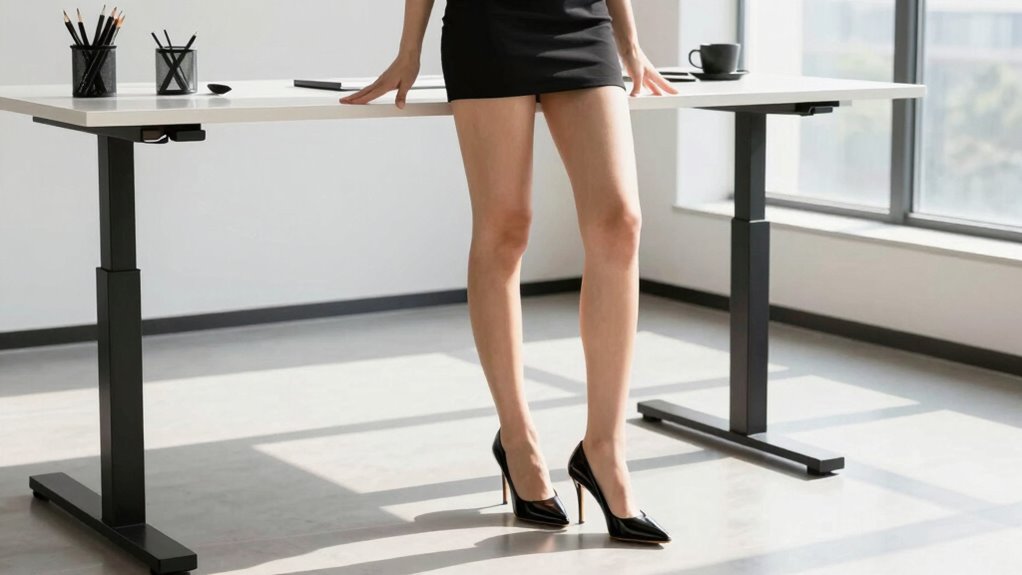
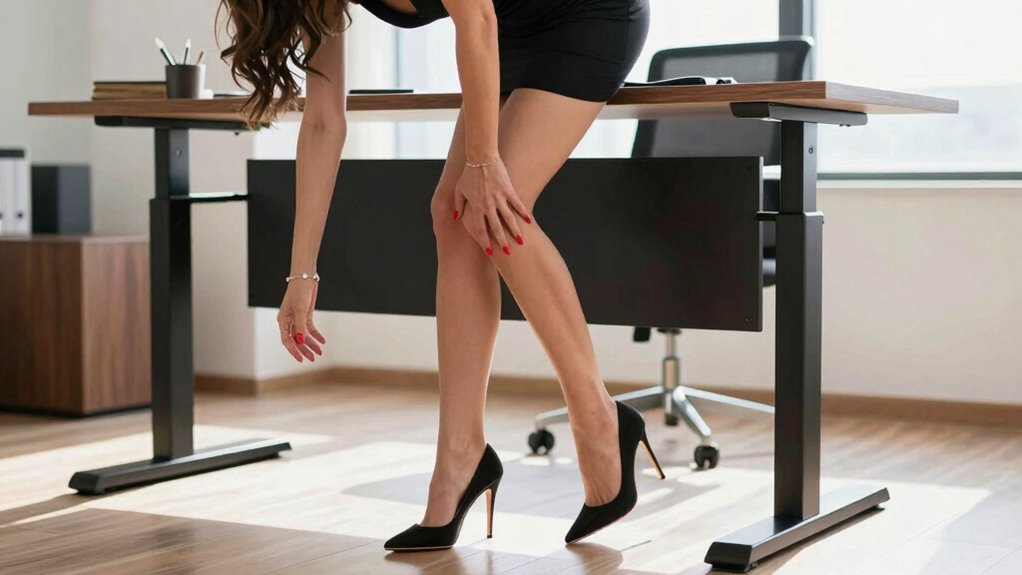
If you wear heels while working at a standing desk, you might be unknowingly putting extra strain on your feet, legs, and lower back. Heels elevate your posture, shifting your weight forward and creating uneven pressure on your body. Over time, this can lead to discomfort, fatigue,, and even injuries. To counteract these effects, it’s vital to consider ergonomic footwear that offers better support and stability. Opt for shoes with cushioned insoles, a wider heel base, and arch support. While heels may be your preferred style, choosing footwear designed for prolonged standing can help distribute your weight more evenly and reduce stress on essential areas.
Wearing heels at a standing desk can cause strain; choose supportive, ergonomic footwear to reduce discomfort and injury risk.
In addition to switching to ergonomic footwear, making posture adjustments is important. When wearing heels, your natural alignment gets disrupted, so focus on maintaining proper posture. Keep your shoulders relaxed and pulled back slightly to prevent slouching, and engage your core muscles to support your lower back. Adjust the height of your standing desk if possible, so your monitor is at eye level; this minimizes neck strain and encourages a more upright stance. Regularly shifting your weight from one foot to the other can also alleviate pressure and improve circulation. Incorporating ergonomic design principles can help you create a more comfortable standing environment. Additionally, paying attention to proper footwear selection can significantly impact your overall comfort and posture. Incorporating exfoliation techniques can also help keep your feet healthy and free from calluses caused by heels and prolonged standing. Using foot care routines to maintain skin health can further prevent discomfort and skin issues. Taking short breaks to sit or stretch helps reset your posture and prevents long-term strain. During these breaks, stretch your calves, hamstrings, and lower back to ease tension accumulated from prolonged standing. Remember, experimenting with different solutions can help you find the most effective combination for your comfort.
ergonomic supportive shoes for standing desk
As an affiliate, we earn on qualifying purchases.
As an affiliate, we earn on qualifying purchases.
Frequently Asked Questions
How Can I Prevent Heel Discomfort During Long Standing Periods?
To prevent heel discomfort during long standing periods, you should incorporate heel cushioning and arch supports into your shoes. These additions help absorb shock and distribute pressure evenly, reducing strain on your heels. Opt for insoles designed for heel support and make sure your shoes fit well. Taking regular breaks and stretching your calves also alleviates discomfort, keeping your feet comfortable and healthy throughout the day.
Are There Specific Heel Styles Better for Standing Desk Use?
Heels with a sturdy block or wedge shape are better for standing desk use because they provide more stability. Opt for shoe selection that includes ample heel padding to cushion your feet, reducing discomfort. Avoid stilettos or thin heels, which can cause strain. When choosing shoes, prioritize comfort and support, and consider adding gel inserts for extra heel padding—this helps you stay comfortable and balanced all day long.
What Exercises Can Help Reduce Foot Fatigue From Heels?
To reduce foot fatigue from heels, you should do regular foot stretches like rolling your feet on a tennis ball or stretching your calves and toes. Incorporate arch supports in your shoes to provide extra comfort and help distribute pressure evenly. These exercises and supports strengthen your foot muscles, improve flexibility, and lessen fatigue, making it easier to stand comfortably at your desk despite wearing heels.
How Often Should I Take Breaks When Wearing Heels at a Standing Desk?
Ever imagine your feet thanking you for breaks? You should take a break every 30 to 45 minutes when wearing heels at a standing desk. Opt for lower heel heights if possible, and prioritize shoe cushioning to reduce strain. These mini breaks let your feet recover, easing fatigue and discomfort. Remember, regular movement and supportive footwear are key to staying comfortable and maintaining good posture throughout your workday.
Can Ergonomic Accessories Improve Comfort for Heel Wearers?
Yes, ergonomic accessories can improve comfort for heel wearers. Footwear technology, like specialized ergonomic insoles, provides better arch support and cushioning, reducing foot strain. Using these insoles in your heels helps distribute pressure more evenly and alleviates discomfort during long periods at your standing desk. Additionally, consider ergonomic accessories like anti-fatigue mats or footrests to further support your feet and promote better posture throughout the day.
As an affiliate, we earn on qualifying purchases.
Conclusion
So, if you’re balancing on heels at a standing desk, you’re basically trying to tame a wild stallion on a rollercoaster—an epic challenge! But don’t worry, with the right strategies, you can conquer this high-wire act without tumbling into pain or chaos. Remember, your feet aren’t just supports; they’re your foundation for greatness. Master the art, and you’ll be standing tall, stylish, and pain-free—like a superhero in heels!
adjustable standing desk monitor riser
As an affiliate, we earn on qualifying purchases.
As an affiliate, we earn on qualifying purchases.
As an affiliate, we earn on qualifying purchases.
Fall Picks
fall essentials
As an affiliate, we earn on qualifying purchases.