To make your dining table ergonomic, start by adjusting your chair height so your feet rest flat and your knees form a 90-degree angle. Make certain the table is level and at a height where your elbows rest comfortably at about 90 degrees. Supports like ergonomic cushions or pads can help maintain proper posture, and keeping your table surface flat prevents strain. Want to optimize your setup further? Keep exploring for more tips.
Key Takeaways
- Adjust chair height so feet rest flat, knees are at a 90-degree angle, and thighs are parallel to the ground.
- Ensure the table is level and at a height that allows elbows to stay comfortably at 90 degrees.
- Maintain an upright posture with relaxed shoulders and support arms on the table to reduce tension.
- Use ergonomic accessories like cushions or adjustable footrests to enhance comfort during extended work periods.
- Regularly review and modify your setup to keep your posture natural and prevent strain over time.

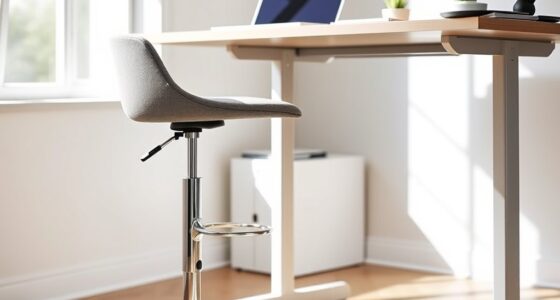
Creating an ergonomic dining table setup can considerably enhance your comfort and posture during meals. When you’re sitting down, it’s essential that your chair height allows your feet to rest flat on the floor, with your knees bent at roughly a 90-degree angle. If your chair is too high, your hips will be elevated, causing discomfort and putting strain on your lower back. Conversely, if it’s too low, your legs might be cramped or strained. Adjust your chair height so that your thighs are parallel to the ground, promoting proper circulation and reducing fatigue. This simple adjustment can make your dining experience much more comfortable and help maintain good posture, especially during longer meals or work sessions at the table. Regular use of ergonomic products can further support proper positioning and reduce discomfort during extended sitting periods.
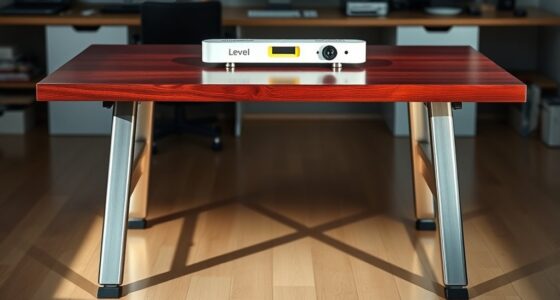
Next, pay attention to the table angle. An ergonomic setup means the table surface should be level to avoid unnecessary neck or shoulder strain. If the table is tilted, you might find yourself constantly adjusting your head or leaning forward to see or reach your food properly. Ideally, the table should be flat and horizontal, aligning with your eye level when seated comfortably. If you have the option to adjust the table angle, keep it as close to flat as possible. This will help you maintain a natural, upright posture and minimize awkward reaching or bending. When the table is at the right angle, you can naturally rest your arms and shoulders, reducing tension and discomfort.
Additionally, consider the height of the table itself. It should be at a level where your elbows rest comfortably at about a 90-degree angle when your hands are on the surface. This positioning ensures that your shoulders stay relaxed and your upper arms are close to your body. If the table is too high or too low, it forces your shoulders into unnatural positions, which can cause strain over time. Combining the right chair height with an appropriate table height and angle creates a balanced setup that supports your posture during meals or work.
Frequently Asked Questions
Can I Convert My Dining Table Into a Proper Workspace?
Yes, you can convert your dining table into a proper workspace. To do so, guarantee it maintains your dining room aesthetics by choosing a clean, clutter-free setup. Use ergonomic accessories like a supportive chair and adjustable monitor stand. Keep your table well-maintained by regularly cleaning and protecting its surface. This way, you create a functional, attractive workspace that balances style and comfort, making your dining table an efficient work area.
What Are the Best Ergonomic Accessories for a Dining Table?
You should add ergonomic cushions to your dining chair for better comfort and support during long work sessions. An adjustable desk riser can transform your table into a proper workspace, allowing you to set the right height and improve posture. These accessories help reduce strain on your neck, back, and wrists, making your dining table a more ergonomic and productive workspace. Don’t forget to adjust them regularly for maximum benefit.
How Do I Prevent Neck Strain While Working at a Dining Table?
Imagine your neck as a garden trellis; keep it straight and supported. To prevent neck strain, practice posture correction by sitting upright, aligning your eyes with your monitor or work surface. Adjust your chair height so your eyes are level with your screen, avoiding downward or upward gazes. Take frequent breaks, stretch, and shift positions. These simple steps help maintain a natural, comfortable posture, protecting your neck from unnecessary strain.
Is It Safe to Work on a Dining Table for Long Hours?
Yes, it’s safe to work on a dining table for long hours if you prioritize posture correction and adjust the desk height. Sit with your back straight, feet flat on the floor, and keep your monitor at eye level. Use a supportive chair or cushions if needed. Take regular breaks to stretch and reset your posture, helping prevent strain and discomfort during extended work sessions.
How Can I Adjust My Chair for Optimal Comfort at the Table?
Adjust your chair height so your feet rest flat on the floor and your knees are at a 90-degree angle. Make sure your lumbar support aligns with your lower back to maintain proper posture. Sit back fully in your chair, ensuring your back is supported. These adjustments help reduce strain, increase comfort, and promote better focus during long hours at the table.
Conclusion
By making small changes to your dining setup, you can markedly improve comfort and reduce strain. Did you know that poor ergonomics during daily activities can lead to chronic neck and back pain? Just adjusting your table height or using supportive cushions can make a big difference. So, take a few minutes to optimize your dining space—you’ll enjoy meals more comfortably and protect your health for years to come. Your body will thank you!