If you’re looking to save money and get quick ergonomic benefits, a desk converter is a great choice since it’s affordable and easy to add to your existing workspace. However, if you plan to stand long-term and want better stability and comfort, a full standing desk might be worth the investment. To make the best decision for your needs and avoid regret, consider your routine, space, and budget—more details ahead can help clarify your options.

Get comfort and recovery gear delivered free with Prime
- Fast, free delivery on millions of items
- Prime Video, Amazon Music and more included
- Member-only deals all year
Key Takeaways
- Desk converters are more budget-friendly and suitable for quick ergonomic upgrades; full standing desks are a long-term investment.
- Converters offer flexibility for occasional standing, while full desks support consistent, extended standing routines.
- Full standing desks provide greater stability and workspace capacity, beneficial for prolonged use.
- Consider your workspace size, daily routine, and budget to choose between quick adjustment and a permanent solution.
- Prioritize long-term health benefits from full desks or cost-effective convenience with converters to avoid regret.
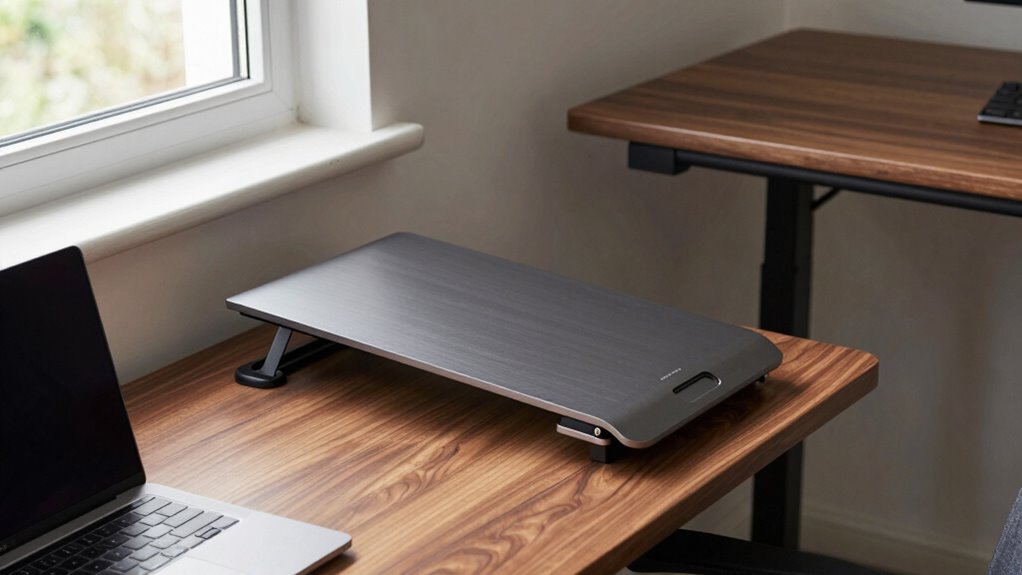
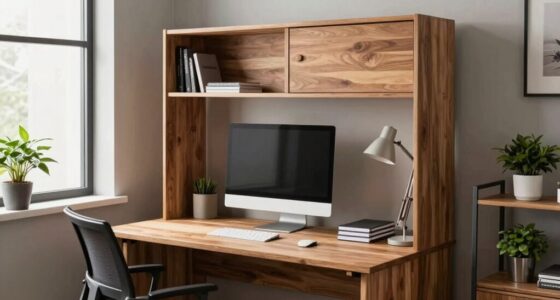
Choosing between a desk converter and a full standing desk can considerably impact your workspace comfort and budget. If you’re trying to decide, it’s essential to understand how each option influences ergonomic benefits and workspace flexibility. A desk converter is a versatile addition that sits atop your existing desk, allowing you to switch between sitting and standing easily. It’s a cost-effective way to improve your ergonomic setup without overhauling your entire workspace. With a converter, you can adjust the height for optimal comfort, reducing strain on your neck, shoulders, and back. This flexibility encourages movement throughout the day, which can boost your focus and productivity. Implementing digital concepts like adjustable height features can further enhance your ergonomic experience.
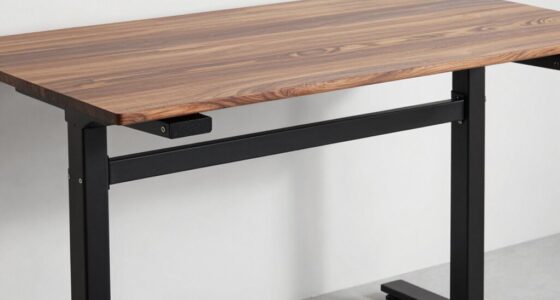
On the other hand, a full standing desk provides a dedicated workspace designed specifically for standing. It often offers a more stable and spacious platform, which can be beneficial if you prefer a consistent standing position. Investing in a full desk might require a larger upfront cost, but it can deliver long-term ergonomic benefits, especially if you plan to stand for extended periods. Standing desks promote better posture and can help reduce the health risks associated with prolonged sitting, such as poor circulation and back pain. They also offer excellent workspace flexibility, often with adjustable height settings, so you can switch between sitting and standing as needed. The key is to find a height that allows your elbows to rest comfortably at a 90-degree angle and your monitor at eye level.
While a desk converter is more affordable and easier to incorporate into your existing setup, it might lack some of the stability and workspace capacity of a full standing desk. Conversely, a full standing desk can be a more significant investment but provides a dedicated space that encourages a healthier workspace environment. When considering your decision, think about your daily routines, available space, and budget. If you only need occasional standing or want a quick upgrade, a converter might be the smarter choice. If you’re committed to a long-term standing routine and want a seamless transition between sitting and standing, a full desk could be more suitable. Ultimately, your choice should enhance ergonomic benefits and workspace flexibility, making your workday more comfortable and productive without regret.
Products Worth Considering

Hyperice Normatec 3 Full-Leg Compression Boots, Standard Size

Bowflex SelectTech 840 Adjustable Kettlebell

BowFlex Results Series 552 SelectTech Adjustable Dumbbell
As an affiliate, we earn on qualifying purchases.
Frequently Asked Questions
How Long Does It Take to Adjust to a Standing Desk?
It usually takes about a week to a month to fully adjust to a standing desk. During this time, you’ll notice improvements in comfort and posture, especially if you incorporate ergonomic accessories like anti-fatigue mats and adjustable monitors. Remember, balancing sitting vs standing is key, so gradually increase standing periods. Your body adapts faster when you listen to it, reducing discomfort and helping you enjoy the benefits of your new workspace.
Are There Health Risks Associated With Prolonged Standing?
Prolonged standing can lead to health risks like varicose veins or joint pain. Imagine Sarah, who ignored her fatigue and skipped ergonomic accessories like foot support; she ended up with swollen ankles after hours of standing. To avoid this, use ergonomic accessories and take regular breaks. Incorporate foot support to reduce pressure, and switch between sitting and standing, ensuring you protect your health while maintaining productivity.
Can a Desk Converter Fully Replace a Traditional Full Desk?
A desk converter can fully replace a traditional full desk regarding ergonomic benefits and furniture versatility. It allows you to switch between sitting and standing positions comfortably, promoting better posture and reducing strain. Plus, it’s portable and adjustable, fitting into various workspaces. While it may not offer as much surface space as a full desk, it’s a cost-effective, flexible solution that supports your health and productivity.
What Is the Ideal Height for a Standing Desk?
The ideal height for a standing desk is when your elbows are at a 90-degree angle, with your forearms parallel to the ground. This promotes an ergonomic posture, reducing strain on your neck and shoulders. Make sure the desk is stable at this height, so it doesn’t wobble or shift, which can compromise your posture. Adjust the height as needed for comfort and stability, and always prioritize your ergonomic needs.
How Much Space Does a Full Standing Desk Require?
A full standing desk typically requires about 60 to 72 inches in width and 30 to 36 inches in depth, depending on your workspace and ergonomic needs. You’ll want to take into account space for ergonomic accessories like monitor arms, keyboard trays, and footrests to maximize comfort. Opt for a desk with an aesthetic design that complements your office decor, ensuring it fits well without crowding your room.
Conclusion
Choosing between a desk converter and a full standing desk is like picking between a quick snack and a full meal—each has its perks and pitfalls. Think about your budget, space, and how often you’ll stand. Remember, this decision isn’t just about saving money today but avoiding regret tomorrow. So, weigh your options carefully—because in the end, it’s about finding a setup that works for you, not just for now, but for the long haul.