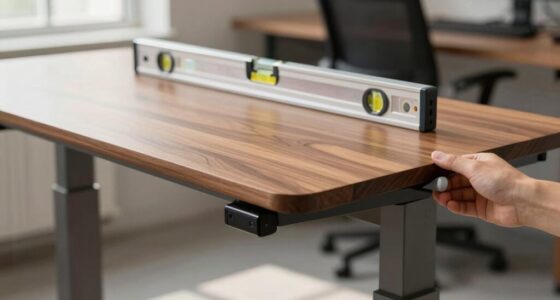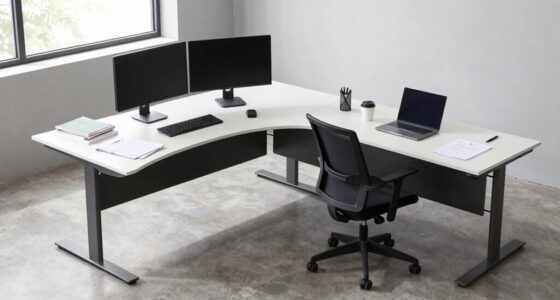
Working from a desk provides better ergonomic support, helping you maintain proper posture and reduce strain on your neck, shoulders, and back. Sitting on a couch often leads to slouching and awkward positions, which can cause pain and long-term health issues. While accessories can improve comfort on a couch, they aren’t as effective as a proper desk setup. To understand how to protect your health while working, explore the details further.
Key Takeaways
- Desks with ergonomic support promote proper posture, reducing long-term musculoskeletal strain during work.
- Couches often lead to poor posture, increasing risks of pain, tension headaches, and fatigue over time.
- Ergonomic accessories on couches improve comfort but do not fully replicate the stability and health benefits of a desk setup.
- Long-term health benefits are greater when working at a properly adjustable desk that supports natural spinal alignment.
- Prioritizing ergonomic workstations helps prevent discomfort, nerve compression, and chronic musculoskeletal issues.
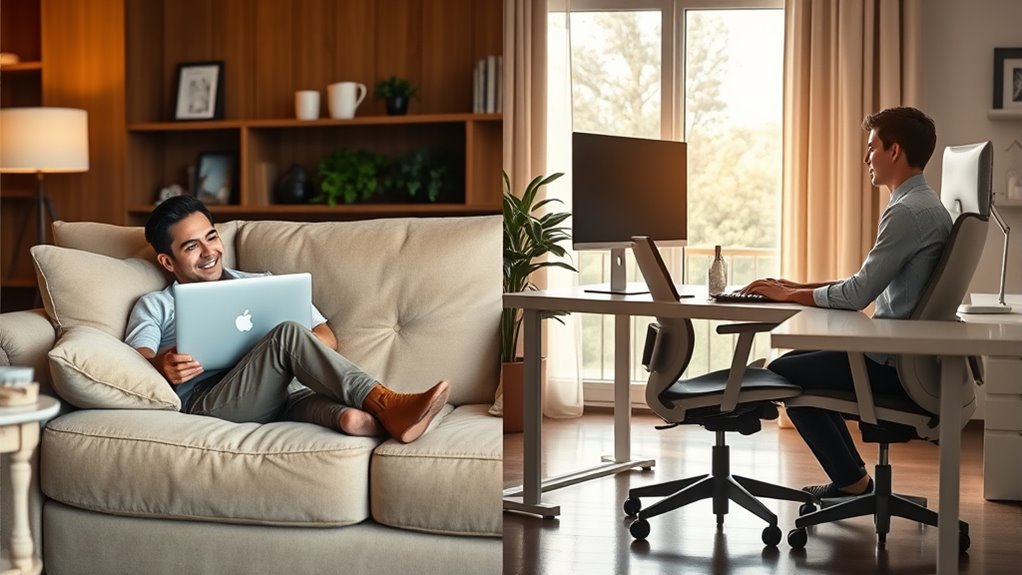
When it comes to choosing a workspace, many people debate whether working from a couch or a desk is better. While a couch might seem cozy and inviting, it often lacks the ergonomic support necessary to maintain good health during long work sessions. Without proper ergonomic support, you risk misaligning your posture, which can lead to discomfort and long-term musculoskeletal issues. On the other hand, desks are typically designed with ergonomics in mind, allowing you to position your body to promote posture alignment. Proper posture alignment ensures that your spine stays in a natural, healthy position, reducing strain on your neck, shoulders, and back.
Ergonomic desks support proper posture and long-term health during work sessions.
When you work from a couch, it’s easy to slouch or adopt awkward postures because couches aren’t built to support your body for extended periods. Over time, this poor posture can cause chronic pain, tension headaches, and fatigue. Without proper ergonomic support, your muscles work harder to compensate for misalignments, leading to discomfort and even nerve compression. If you prefer working from a couch, consider using ergonomic accessories like lumbar cushions or adjustable lap desks. These can help improve your posture by providing the necessary support and helping you maintain posture alignment, but they still don’t match the stability and design of a proper desk setup.
Desks, especially ergonomic desks, are designed to promote good posture. When you sit at a well-structured desk, you can adjust your chair height, monitor position, and keyboard placement to keep your body in an ideal posture. This setup encourages posture alignment, reducing unnecessary strain and supporting your musculoskeletal health. An ergonomic workstation helps you keep your feet flat on the floor, your back straight, and your wrists in a neutral position, all essential factors in preventing discomfort. Plus, with a dedicated workspace, you’re more likely to develop consistent habits that support your health, such as taking regular breaks and stretching. Additionally, high refresh rates in monitors can reduce eye strain during long work hours.
Ultimately, working from a desk with ergonomic support offers significant health benefits that a couch simply can’t provide. It encourages proper posture alignment, minimizes strain, and contributes to overall well-being. While a couch may feel more comfortable in the moment, it can lead to pain and discomfort over time. Investing in an ergonomic desk and chair setup makes a difference, helping you stay healthy and productive in the long run. Remember, your body deserves proper support to perform at its best and avoid unnecessary aches and pains.

Samsonite Lumbar Support Pillow for Office Chair, Lower Back Support for Car, Back Pillow Desk Chair Cushion with Memory Foam, Improved Posture Backrest
- Contoured Memory Foam: Provides all-day lumbar support
- Adjustable Straps: Ensures secure fit on chair and car seats
- Ventilated Mesh Cover: Promotes airflow for cooler sitting
As an affiliate, we earn on qualifying purchases.
Frequently Asked Questions
Can Working From a Couch Improve Productivity?
Working from a couch can sometimes boost productivity if you manage couch distractions and use ergonomic cushions for support. The relaxed environment may help you focus better, especially if traditional desks cause discomfort. However, be mindful of potential distractions and proper posture. Applying ergonomic cushions can reduce strain, making it easier to stay engaged. Ultimately, it depends on your ability to create a distraction-free zone and maintain comfort.
What Are the Best Ergonomic Practices for Couch Work?
You might find that using cushion support and maintaining posture alignment are key for ergonomic couch work. Sit upright with a small pillow behind your lower back to support your lumbar curve, and use a cushion to elevate your feet if needed. Keep your screen at eye level to avoid neck strain, and take regular breaks. These practices help you stay comfortable and reduce the risk of musculoskeletal issues.
How Does Working From a Couch Affect Mental Health?
Working from a couch can positively affect your mental health by providing couch comfort and promoting mental relaxation. When you’re comfortable, you’re less likely to feel stressed or anxious, which boosts your mood. However, it’s essential to balance relaxation with productivity, as prolonged lounging might lead to feelings of lethargy. Ultimately, a cozy couch can enhance your mental well-being, but it’s best used alongside healthy work habits.
Are There Specific Injuries Linked to Couch Working?
You might think working from a couch is harmless, but it can lead to specific injuries like lumbar strain due to poor couch posture. Slouching or unsupported sitting puts extra pressure on your lower back, increasing discomfort and risking long-term issues. Always guarantee your posture is supported, and if you notice persistent pain, consider adjusting your setup or switching to a more ergonomic workspace to prevent injury.
Is Hybrid Working From Both Couch and Desk Recommended?
Yes, hybrid working from both a couch and a desk is recommended. To do this safely, use ergonomic accessories like adjustable chairs and supportive cushions, and stay aware of your posture. Alternating between environments prevents strain and promotes movement, reducing health risks. Remember, maintaining good posture and taking regular breaks are key to avoiding discomfort and potential injuries, making hybrid work both comfortable and healthy for you.

Ergonomic Lumbar Support Cushion for Back Support & Pain Relief | 6-Zone Pressure Distribution Posture Corrector for Office Chair, Car Seat, Desk, etc. | Great for Father's day (Gray)
- Posture Correction: Automatically aligns your spine
- Ergonomic Design: Contours to natural S-curve of spine
- Multi-Region Support: Distributes pressure across six zones
As an affiliate, we earn on qualifying purchases.
Conclusion
Imagine trying to run a marathon in flip-flops—you might get there, but the journey will be uncomfortable and risky. Working from a couch is similar; it may seem cozy, but it can lead to back pain, poor posture, and long-term health issues. Just like investing in the right running shoes, choosing a proper desk setup supports your well-being. Prioritize your health now, so you can keep sprinting toward your goals without unnecessary setbacks.

Lumbar Support Pillow for Office Chair,Mothers Day Gifts for Mom, Back Support Pillow for Car, Office Supplies, Chair Cushions, Back Pain Relief Improve Posture, Mesh Cover Double Adjustable Straps
- Extended Adjustable Straps: Fits more chairs securely
- Ergonomic Back Support: Relieves back pain and improves posture
- High-Density Memory Foam: Maintains shape and provides firm support
As an affiliate, we earn on qualifying purchases.