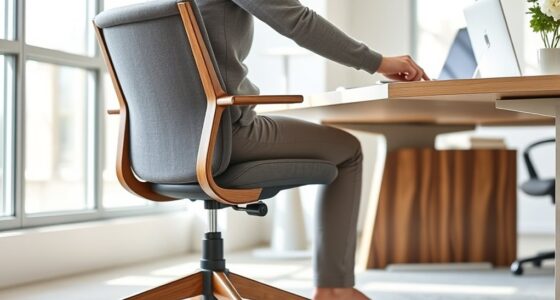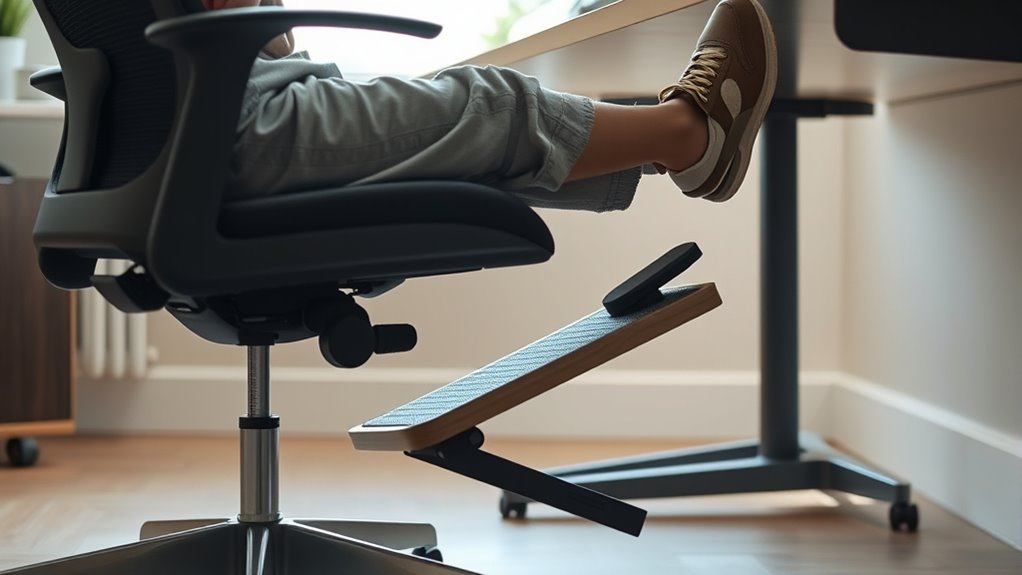
Using a footrest with your chair is highly recommended for proper foot positioning. It helps keep your feet supported and aligned, reducing strain on your ankles, knees, and hips. A footrest encourages a comfortable, ergonomic posture by ensuring your knees are at a right angle or slightly lower than your hips. Small adjustments like this can make a big difference in comfort and support—if you keep exploring, you’ll discover more tips for better sitting habits.
Key Takeaways
- Using a footrest promotes proper foot and leg alignment, reducing strain and enhancing comfort during sitting.
- A footrest supports ergonomic posture by keeping knees at a right angle or slightly lower than hips.
- It improves circulation, preventing fatigue, numbness, and swelling during prolonged sitting periods.
- Footrests help maintain balanced weight distribution, reducing stress on ankles, knees, and hips.
- Small adjustments with a footrest can significantly enhance overall sitting posture and long-term comfort.
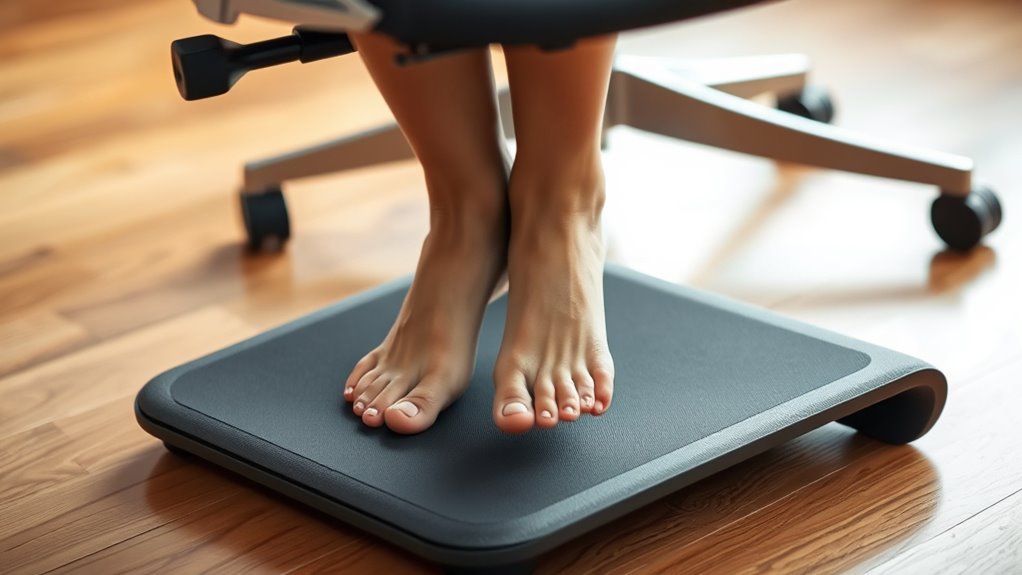
Have you ever wondered how proper foot positioning can improve your balance and performance? When you sit at your desk or workstation, your foot placement plays a vital role in maintaining good posture and preventing discomfort. One often overlooked aspect is how your feet are supported and aligned. Using a footrest can make a significant difference in achieving perfect ankle alignment, which directly influences your overall comfort and stability. Proper ankle alignment ensures that your feet are neither too angled nor twisted, reducing strain on your ankles, knees, and hips. When your ankles are correctly aligned, your foot support becomes more effective, helping you distribute your weight evenly across your feet. This not only helps prevent fatigue but also encourages better circulation, especially during long periods of sitting. Additionally, ergonomic design of your workspace can enhance the benefits of proper foot positioning and support.
If you find your feet dangling or pressing uncomfortably against the floor, a footrest can provide the necessary elevation and support. It allows you to position your feet at a comfortable height, keeping your knees at a right angle or slightly lower than your hips. This position reduces pressure on your lower back and promotes a more natural, ergonomic sitting posture. When your feet are well-supported, your entire body benefits because you’re less likely to shift or fidget to relieve discomfort. As a result, your focus and productivity can improve because you’re not distracted by aches or numbness. Plus, a good footrest can help you avoid common issues like varicose veins or swelling caused by poor circulation.
Using a footrest isn’t just about comfort; it’s about maintaining proper biomechanics. When your foot support is correctly positioned, your ankles stay in a neutral position, which supports overall alignment. This neutral ankle position helps keep your knees and hips in better alignment, reducing stress on joints and muscles. If your feet are poorly supported, you might unconsciously shift or lean to one side, causing uneven wear and strain. By investing in a quality footrest, you’re actively supporting healthy ankle alignment and promoting better foot support, which enhances your posture and reduces the risk of pain or injury over time. Remember, small adjustments in your foot positioning can lead to significant improvements in how you feel during and after sitting. So, consider whether a footrest might be the simple solution you need for better comfort, support, and overall ergonomic health.
Frequently Asked Questions
Is a Footrest Necessary for All Office Workers?
A footrest isn’t necessary for all office workers, but it offers ergonomic benefits like reducing pressure on your lower back and improving circulation. If your feet don’t comfortably rest flat on the floor, a footrest can help. While aesthetic considerations matter, prioritize comfort and posture. Using a footrest can make long hours at your desk more comfortable, especially if your workspace design allows for it.
How Do I Choose the Right Footrest?
Imagine working all day and feeling relief in your feet—this is how choosing the right footrest helps. To select one, consider ergonomic benefits, like promoting proper posture and reducing strain. Look at different footrest types, such as adjustable or fixed, to find what fits your desk height and comfort. A good choice supports your feet, encourages circulation, and prevents fatigue, making your workday more comfortable.
Can Using a Footrest Prevent Back Pain?
Using a footrest can prevent back pain by providing ergonomic benefits and improving circulation. When your feet are properly supported, your lower back stays aligned, reducing strain. A footrest encourages better posture and promotes blood flow, preventing discomfort and fatigue. By maintaining proper foot positioning with a footrest, you support your spine health and stay more comfortable during long periods of sitting.
Are There Risks to Using a Footrest Improperly?
Using a footrest improperly is like trying to balance on a crooked ladder — it can lead to discomfort or strain. If you don’t adjust it correctly, it may negate ergonomic benefits and cause poor posture. Risks include increased pressure on your legs or hips, which could lead to pain over time. Always make sure your footrest is properly adjusted to support your feet comfortably and promote healthy, ergonomic sitting.
Should Children Use Footrests at Their Desks?
Yes, children should use footrests at their desks to enjoy ergonomic benefits. A well-designed footrest provides proper foot positioning, reducing strain on their legs and back. Look for a footrest with adjustable height and a sturdy design to guarantee comfort and support. Using a footrest helps children maintain good posture, prevent discomfort, and develop healthy sitting habits early on, making their study time more comfortable and productive.
Conclusion
So, should you use a footrest? The truth is, it really depends on your comfort and posture. While some believe footrests prevent fatigue and improve circulation, others find them unnecessary. The key is to listen to your body—if your feet feel supported and your posture stays aligned, you’re likely on the right track. Ultimately, experimenting with a footrest can be worth trying to see if it boosts your comfort and productivity.