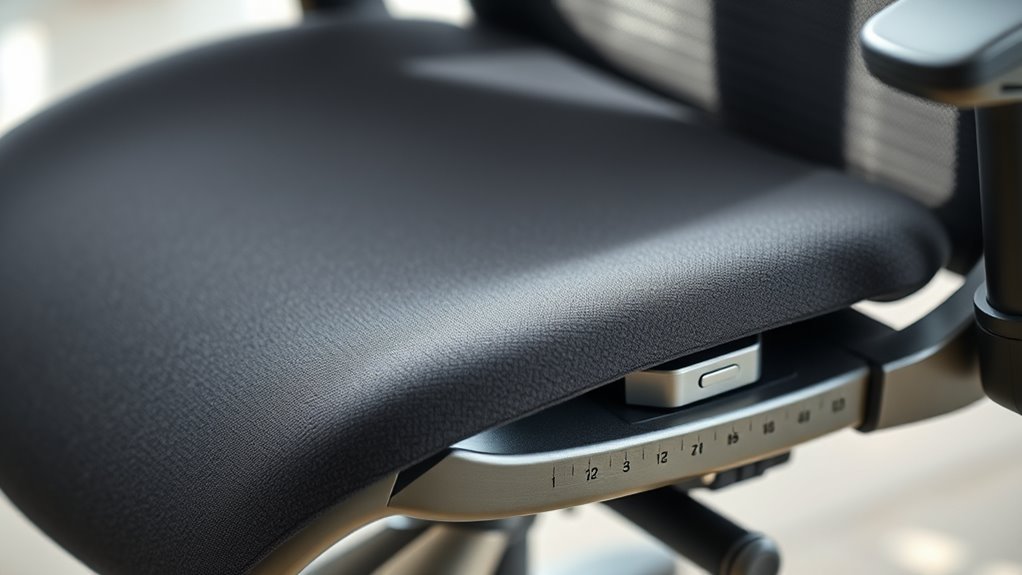

Your chair’s seat depth is key to comfort and good posture. When it’s just right, it reduces pressure on your legs and lower back, promotes healthy blood flow, and prevents discomfort over long sits. To adjust it, sit back with your back against the lumbar support and make certain 2-4 inches between your knees and the seat edge. Properly setting this can greatly improve your comfort and health—learn more to fine-tune your ideal setup.

Get comfort and recovery gear delivered free with Prime
- Fast, free delivery on millions of items
- Prime Video, Amazon Music and more included
- Member-only deals all year
Key Takeaways
- Proper seat depth reduces pressure on the back of knees and improves circulation for long-term comfort.
- Correct adjustment supports ergonomic posture, alleviating back pain and musculoskeletal strain.
- A well-fitted seat enhances the chair’s aesthetic, creating a balanced and professional appearance.
- Adjusting seat depth ensures hips align with knees, promoting spinal health and proper sitting posture.
- Proper seat depth adjustment prevents fatigue, improves blood flow, and contributes to overall workspace comfort.
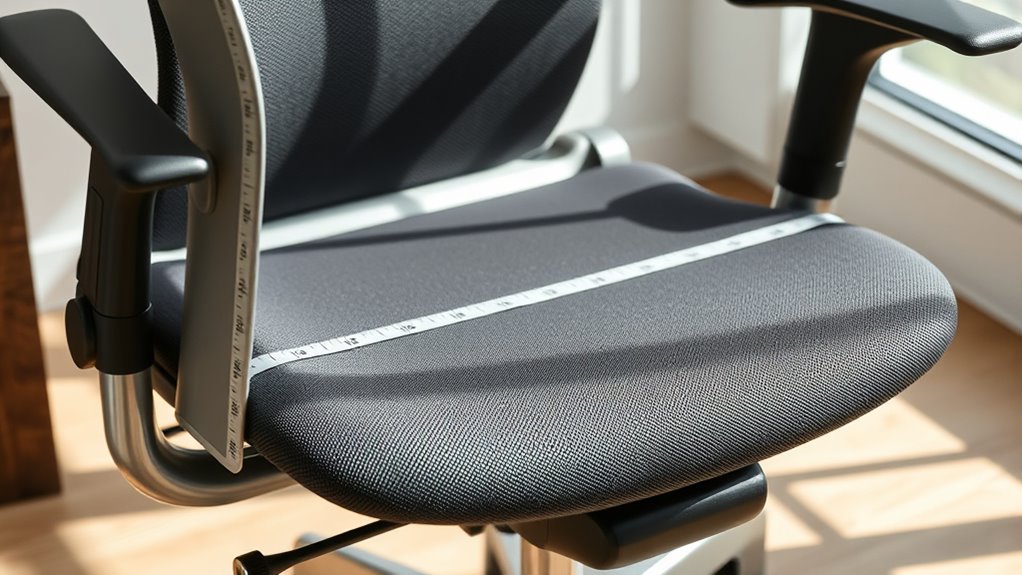
Choosing the right chair seat depth is vital for comfort and proper posture. When your seat depth aligns with your body, you reduce strain on your legs and lower back, making long periods of sitting more manageable. An ergonomic chair with the correct seat depth provides clear ergonomic benefits, helping to support your overall health and prevent discomfort or musculoskeletal issues. If the seat is too deep, you’ll find yourself constantly shifting, trying to avoid pressure on the back of your knees, which can lead to poor circulation and fatigue. Conversely, if it’s too shallow, you won’t get enough thigh support, resulting in instability and discomfort. By adjusting the seat depth properly, you promote better blood flow, reduce pressure points, and encourage a more natural sitting posture. Proper seat depth also contributes to overall posture correction, which can help alleviate chronic back pain over time.
Beyond ergonomic benefits, aesthetic considerations also come into play when selecting a chair with the right seat depth. A well-fitted chair not only feels better but also looks more appealing in your workspace or home office. Chairs with proper seat depth tend to have a more balanced, proportionate appearance, which can contribute to a cleaner, more organized aesthetic. When the seat depth matches your body, the overall design appears more intentional and tailored, avoiding the awkward look of a chair that’s either too deep or too shallow. Additionally, adjustable seat depth features can add to the aesthetic value, giving your space a modern, versatile touch while ensuring comfort. This flexibility allows you to customize your seating experience, creating an environment that’s both functional and stylish.
Adjusting the seat depth is often straightforward, whether through manual mechanisms or adjustable features built into ergonomic chairs. To find your ideal depth, sit back fully in the chair with your back against the lumbar support, and ensure there’s about two to four inches of space between the back of your knees and the edge of the seat. If the seat feels too deep or shallow, you can modify it by moving the seat pan forward or backward, if possible, or adjusting the mechanism to suit your height and leg length. Proper adjustment ensures your hips are aligned with your knees, promoting natural spinal alignment. When you take the time to set your chair’s seat depth correctly, you’re investing in both your physical well-being and the visual harmony of your workspace, making it a vital aspect of ergonomic comfort and aesthetic appeal.
Frequently Asked Questions
How Often Should I Adjust My Chair Seat Depth?
You should adjust your chair seat depth whenever you notice discomfort or after changes in your body or workspace. Regular seat adjustments enhance ergonomic benefits by maintaining proper posture and reducing strain. Ideally, check your seat depth at least once a month, ensuring a snug fit that supports your thighs without putting pressure on the back of your knees. Consistent seat adjustment promotes comfort and prevents long-term musculoskeletal issues.
Can Improper Seat Depth Cause Back Pain?
Yes, improper seat depth can cause back pain. When your chair isn’t adjusted correctly, it can lead to poor ergonomic posture, straining your lower back. If the seat is too deep, it might limit lumbar support and cause slouching. Conversely, if it’s too shallow, you won’t get enough support. Properly adjusting your seat depth guarantees your lumbar region is supported, reducing back pain and promoting better comfort.
Is Seat Depth Adjustment Suitable for All Chair Types?
Yes, seat depth adjustment is suitable for most chair types, especially those designed with ergonomic benefits in mind. It allows you to customize your chair for better support, reducing discomfort and improving posture. However, not all chairs offer this feature; check if your chair allows for customization. If it does, adjusting the seat depth can markedly enhance comfort and help prevent back pain during long sitting periods.
What Tools Are Needed to Modify Seat Depth?
To modify seat depth, you’ll need basic tools like a screwdriver, adjustable wrench, or Allen key, depending on your chair’s design. Ergonomic accessories, like seat risers or cushions, can also help with DIY modifications if your chair isn’t adjustable. Always check your chair’s manual first to identify specific tools required. With these tools, you can make precise adjustments to improve comfort and support.
How Do I Know if My Seat Depth Is Correct?
You know your seat depth is correct when your back is supported, your thighs rest comfortably, and your knees stay at a 90-degree angle. Proper seat depth promotes ergonomic benefits and encourages good seating posture. Check for a small gap between the edge of the seat and behind your knees, ensuring you’re neither too cramped nor too stretched out. This balance helps reduce strain and improves comfort during long sitting periods.
Conclusion
Remember, adjusting your chair seat depth isn’t just about comfort — it’s about your health. You might think it’s too much hassle, but a properly set seat depth can prevent back pain and improve posture, making your workday way more comfortable. Don’t settle for a one-size-fits-all chair; take a minute to customize it. Your back will thank you, and you’ll feel the difference every time you sit down.
Halloween Picks
halloween
As an affiliate, we earn on qualifying purchases.