When shopping for sciatica relief, focus on chairs with proper lumbar support that keeps your lower back naturally aligned, reducing nerve pressure. Look for adjustable height and seat depths to guarantee your feet rest flat, promoting good circulation and posture. Ergonomic features like pressure-distributing seats, tilt tension, and swivel functions help customize comfort and ease movement. If you’d like to discover more key features that can ease your discomfort, keep exploring.

Get comfort and recovery gear delivered free with Prime
- Fast, free delivery on millions of items
- Prime Video, Amazon Music and more included
- Member-only deals all year
Key Takeaways
- Prioritize chairs with adjustable lumbar support to maintain proper lower back alignment and reduce sciatic nerve pressure.
- Choose chairs with customizable height and seat depth for optimal circulation and comfort during prolonged sitting.
- Look for ergonomic seat design with firm padding and pressure distribution to alleviate pressure on sensitive areas.
- Ensure the chair has adjustable tilt tension, seat angle, and armrests to customize support and reduce discomfort.
- Opt for chairs with smooth-rolling casters and swivel functions to promote mobility and ease of movement.
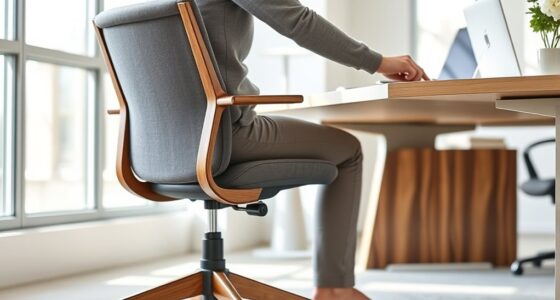
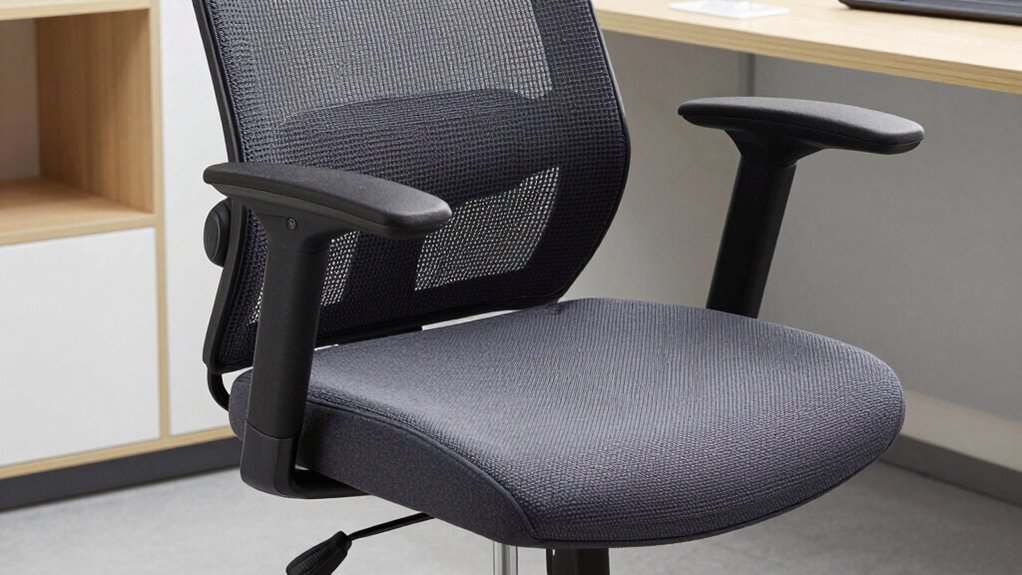
If you’re shopping for a chair to ease sciatic pain, knowing which features matter most can make all the difference. The right chair should provide proper lumbar support, helping to maintain the natural curve of your lower back. Lumbar support is vital because it reduces strain on your spine and minimizes pressure on your sciatic nerve. Look for a chair that offers adjustable lumbar support so you can tailor the fit to your body’s needs. This flexibility allows you to find a position that keeps your lower back comfortably aligned, preventing slouching and reducing pain during long periods of sitting.
Equally important is an adjustable height feature. When the chair’s height can be customized, you guarantee your feet rest flat on the ground, which promotes good circulation and reduces pressure on your lower back. Proper height adjustment also means your knees can be bent at about a 90-degree angle, which is ideal for comfort and spinal health. If the seat height isn’t adjustable, you might find yourself slumping or straining, worsening sciatic discomfort. So, prioritize chairs with a smooth, easy-to-use height adjustment lever to allow quick, precise changes as needed.
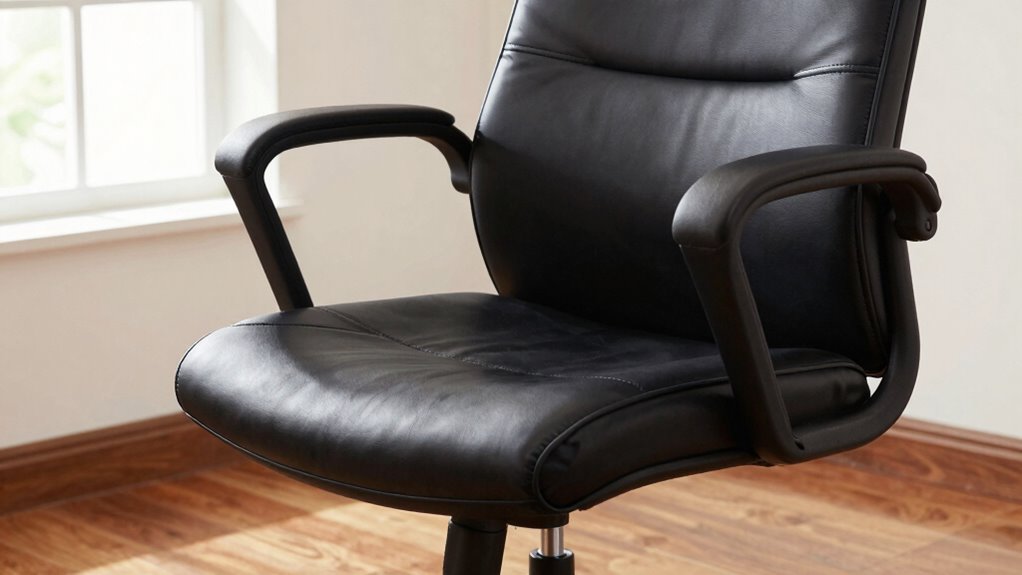
In addition to lumbar support and adjustable height, consider the chair’s overall design. A contoured seat that distributes your weight evenly prevents pressure points, which can aggravate sciatic pain. Padding should be firm yet comfortable, providing support without feeling too soft or too hard. The seat depth matters too—make sure there’s enough space between the backrest and your knees to avoid pressure behind your thighs, which can affect circulation and exacerbate pain. Proper ergonomic design can further enhance comfort and support proper posture, reducing the risk of discomfort over time. Additionally, selecting a chair with pressure distribution features can further alleviate pressure on sensitive areas and improve overall comfort during extended sitting periods.
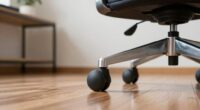
Furthermore, incorporating additional ergonomic adjustments, such as tilt tension or seat angle adjustments, can help customize your sitting experience for maximum relief. Mobility features are also beneficial. A chair with smooth-rolling casters and a swivel function helps you reach different areas of your workspace without twisting or straining your back. This reduces unnecessary movements that could worsen sciatic discomfort. Additionally, look for a chair with adjustable armrests; proper arm support can ease shoulder strain and encourage better posture overall.
Products Worth Considering

OMRON Complete 2-in-1 Upper Arm Blood Pressure Monitor with EKG

Withings BPM Connect Blood Pressure Monitor

Withings BPM Vision Blood Pressure Monitor with Wi-Fi and Bluetooth
As an affiliate, we earn on qualifying purchases.
Frequently Asked Questions
Can Any Office Chair Help Alleviate Sciatica Pain?
Not every office chair can help with sciatica pain. To find relief, look for one with ergonomic design and lumbar support. These features promote proper posture, reduce pressure on your sciatic nerve, and prevent discomfort during long hours. You should choose a chair that adapts to your body, offering adjustable height and support. This way, you can sit comfortably and minimize your sciatica symptoms effectively.
How Quickly Can I Expect Relief After Changing Chairs?
You might notice relief within a few days to a week after switching to an ergonomic chair with proper cushion support. As you adopt better posture, your sciatic pain can decrease considerably. Consistently sitting with correct alignment reduces pressure on your sciatic nerve. Keep in mind, individual recovery times vary, but prioritizing a chair that promotes good ergonomic posture and offers ample cushion support accelerates your path to comfort.
Are There Specific Materials Better for Sciatica Support?
Yes, certain materials can better support sciatica. Look for chairs with high-quality cushioning materials like memory foam or gel-infused foam, which conform to your body’s shape and reduce pressure. Lumbar support is essential, so choose chairs with adjustable lumbar cushions made from firm, supportive materials. These features help cushion your back, alleviate sciatic pain, and promote proper posture, providing more effective relief during long sitting periods.
Do Adjustable Features Significantly Improve Comfort for Sciatica?
Adjustable features greatly enhance comfort for sciatica by allowing you to personalize lumbar support and cushion firmness. When you can modify lumbar support, it helps maintain proper spinal alignment, reducing pressure on your sciatic nerve. Similarly, adjusting cushion firmness ensures your hips and pelvis are supported comfortably, preventing strain. These customizations let you find the best position, easing discomfort and making sitting more manageable during your day.
What’s the Recommended Weight Capacity for Sciatica-Friendly Chairs?
You should look for a sciatica-friendly chair with a weight capacity of at least 250 pounds to guarantee proper support. Prioritize chairs with adjustable lumbar support to relieve pressure on your lower back. Also, consider cushion firmness; a medium-firm cushion helps maintain proper alignment and reduces discomfort. Being mindful of these features ensures your chair can accommodate your needs comfortably and provide the necessary support for sciatica relief.
Conclusion
Choosing the right chair can make all the difference in managing sciatica pain. Prioritize features like adjustable lumbar support, cushioned seating, and ergonomic design to find relief. Did you know that chronic back pain, including sciatica, affects over 80% of adults at some point? Investing in a supportive chair isn’t just about comfort—it’s about improving your quality of life. Take the time to find the right fit, and feel the difference every day.