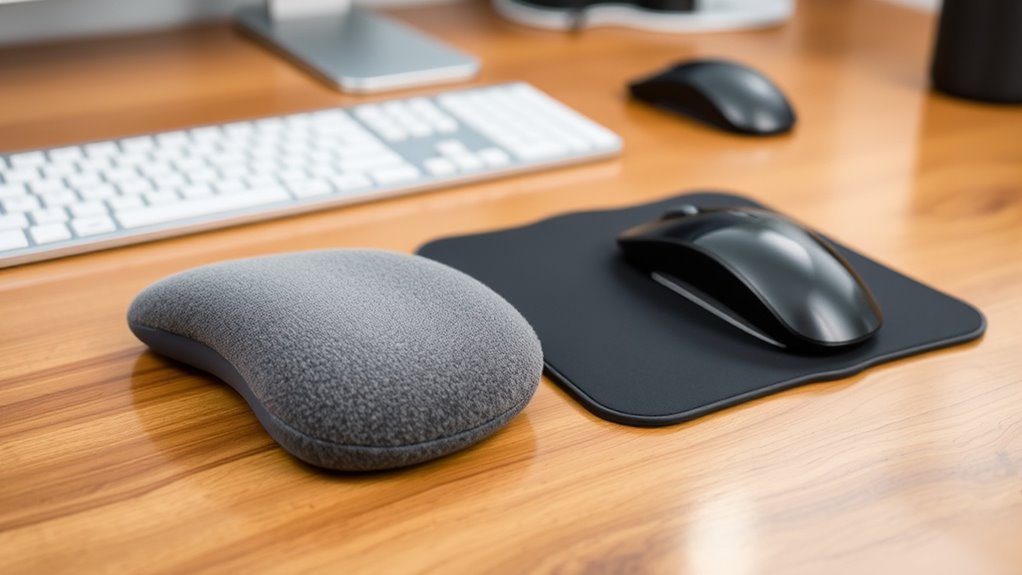

if you spend long hours typing or using a mouse, a wrist rest can be a valuable ergonomic tool. It supports your wrists, helps keep them in a natural position, and reduces strain and the risk of injuries like carpal tunnel syndrome. Properly designed wrist rests can boost comfort and promote better posture. Curious about how choosing the right one can improve your workspace? Keep exploring to find out more.
Key Takeaways
- Wrist rests support natural wrist posture, reducing strain during long typing or mouse use.
- They help prevent repetitive stress injuries like carpal tunnel syndrome.
- Properly designed wrist rests distribute pressure evenly and improve ergonomic comfort.
- They are especially beneficial for extended work sessions to decrease fatigue.
- Selecting a wrist rest that fits your workspace and needs enhances overall ergonomic health.

If you spend long hours typing or using your mouse, wrist rests can make a vital difference in comfort and health. They’re designed to support your wrists, helping to reduce strain and prevent repetitive stress injuries like carpal tunnel syndrome. But not all wrist rests are created equal. To get the most ergonomic benefits, you need to consider how they’re designed and how they fit into your workspace.
Wrist rests support your health and comfort during long hours at the keyboard.
When evaluating wrist rests, design considerations are key. A good wrist rest should be firm enough to support your wrists without being too hard, which could cause discomfort over time. It should also be the right height and width to align naturally with your keyboard and mouse. If it’s too high or too low, you might end up compensating with poor posture, which defeats the purpose of using it. Look for a rest that contours to your wrists, providing even support without creating pressure points. Materials matter, too—gel-infused or memory foam wrist rests distribute pressure evenly and adapt to your wrist shape, enhancing comfort. Additionally, choosing a wrist rest made from supportive materials can improve overall ergonomic benefits.
Ergonomic benefits come from proper support and alignment. When your wrists are properly supported, your hands stay in a more neutral position, reducing tension in the tendons and muscles. This can help prevent fatigue and discomfort during extended work sessions. Additionally, supporting your wrists encourages better posture overall, as it discourages you from leaning or bending your wrists unnaturally. Good design considers not just the shape and material but also how the rest integrates with your keyboard and mouse setup. Some wrist rests are designed with anti-slip bases to stay in place, which is essential for maintaining consistent support and avoiding awkward adjustments that could strain your wrists.
Choosing the right wrist rest isn’t just about comfort; it’s about creating a healthier workspace. When you prioritize ergonomic benefits and design considerations, you’re investing in your long-term health. A well-designed wrist rest encourages proper ergonomic habits, helping you avoid pain and injuries that can sideline you from work or leisure activities. Remember, the goal is to keep your wrists in a natural, relaxed position, minimizing unnecessary movement and tension. Combining a carefully selected wrist rest with good ergonomic practices can greatly improve your overall comfort and reduce the risks associated with prolonged computer use. So, take the time to choose one that fits your needs, and your wrists will thank you over the long haul.

KTRIO Ergonomic Keyboard Wrist Rest and Mouse Pad with Wrist Rest Set, Memory Foam Wrist Support for Typing, Gaming, Office and Home Use, Black
Ergonomic Design: Ergonomically designed to keep wrists aligned with the keyboard and mouse, helping reduce wrist pain, fatigue,…
As an affiliate, we earn on qualifying purchases.
As an affiliate, we earn on qualifying purchases.
Frequently Asked Questions
Are Wrist Rests Necessary for Ergonomic Comfort?
Wrist rests aren’t strictly necessary for ergonomic comfort, but they can help reduce strain. Choosing wrist rests made from supportive materials like gel or memory foam provides better ergonomic wrist support, preventing discomfort during long hours at your keyboard or mouse. If you experience wrist pain or fatigue, using a well-designed wrist rest can make a significant difference. Ultimately, it’s about personal comfort and ensuring proper alignment to avoid long-term issues.
Can Wrist Rests Prevent Carpal Tunnel Syndrome?
Wrist rests can help prevent carpal tunnel syndrome by reducing strain during extended use. Choosing wrist rest materials like gel or foam provides cushioning, while proper wrist rest placements keep your wrists in a neutral position, decreasing pressure on your median nerve. Make sure your wrist rests support your wrists comfortably without elevating or compressing them. When used correctly, they can be an effective ergonomic tool to protect your wrists over time.
How Do I Choose the Right Size Wrist Rest?
You should choose a wrist rest that matches your keyboard or mouse size for proper support. Look for materials like memory foam or gel that offer comfort and durability. Prioritize ergonomic design considerations, such as a gentle slope and padding, to reduce strain. Guarantee the wrist rest fits well without forcing your wrist into awkward angles, helping you work comfortably and prevent discomfort during long sessions.
Are There Any Risks Associated With Using Wrist Rests?
Using a wrist rest can pose risks if you neglect wrist rest hygiene or choose a material that irritates your skin. Poor hygiene can lead to bacteria buildup, causing infections, while uncomfortable materials may cause skin irritation or allergies. To avoid these risks, clean your wrist rest regularly and select one made of skin-friendly, breathable materials. This helps guarantee comfort and safety during long hours at your keyboard or mouse.
Do Wrist Rests Improve Typing Accuracy?
Wrist rests can be like a steady hand guiding you, but they don’t directly improve your typing accuracy. While they help reduce strain and support wrist flexibility, they don’t necessarily boost your typing speed or precision. Your accuracy depends more on your practice and technique. Using a wrist rest might make you more comfortable and consistent, but it’s your skill and focus that ultimately improve your typing performance.

Hoewina Keyboard Wrist Rest,Ergonomic Wrist Rest,Superfine Fabric and Gel Memory Foam Wrist Pad for Computer Keyboard for Easy Typing & Pain Relief, Suitable for Office, Family, Outdoor, Black
[WRIST PAD FOR KEYBOARD]: 17.5*3.5 inches keyboard wrist rest and 5.6*3 inches mouse wrist rest making it a…
As an affiliate, we earn on qualifying purchases.
As an affiliate, we earn on qualifying purchases.
Conclusion
Choosing a wrist rest is like planting a seed of comfort in your daily routine. It’s a small gesture that nurtures your well-being, helping you avoid strain and fatigue. Think of it as a gentle anchor, grounding you amid long hours of work. When you prioritize your comfort, you’re safeguarding your future self. So, whether you realize it or not, a wrist rest is your silent partner—a symbol of self-care in the busy rhythm of your day.
KTRIO Ergonomic Keyboard Wrist Rest and Mouse Pad with Wrist Rest Set, Memory Foam Wrist Support for Typing, Gaming, Office and Home Use, Black
Ergonomic Design: Ergonomically designed to keep wrists aligned with the keyboard and mouse, helping reduce wrist pain, fatigue,…
As an affiliate, we earn on qualifying purchases.
As an affiliate, we earn on qualifying purchases.
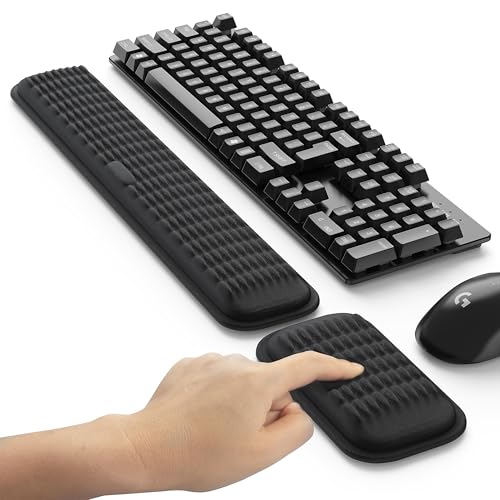
MEKASS Ergonomic Wrist Rest for Keyboard and Mouse, Soft Memory Foam Keyboard Wrist Rest Set with Non-Slip Silicone Base, Easy Typing, Pain Relief, Comfort for Office, Work, Gaming (Classic Black)
MASSAGE PATTERN DESIGN: The keyboard wrist rest set features a unique massage pattern design, which helps your hands…
As an affiliate, we earn on qualifying purchases.
As an affiliate, we earn on qualifying purchases.