
Proper seat depth adjustment is vital because it ensures you get the right support and comfort during long sitting periods. When you set the seat correctly, it helps distribute your weight evenly, reduces pressure on your thighs and knees, and supports a natural lumbar curve. This can prevent lower back pain and improve your posture. If you want to learn more tips on optimizing your seat position, keep exploring how to make your seat work best for you.

Get comfort and recovery gear delivered free with Prime
- Fast, free delivery on millions of items
- Prime Video, Amazon Music and more included
- Member-only deals all year
Key Takeaways
- Proper seat depth provides optimal support and comfort during extended sitting sessions.
- Correct adjustment promotes healthy posture and reduces fatigue and discomfort.
- It helps distribute weight evenly across the hips, minimizing pressure points.
- Proper seat depth prevents lower back pain and improves spinal alignment.
- Adjusting seat depth correctly enhances overall sitting health and reduces circulation issues.

Adjusting the seat depth on your chair is essential for ensuring proper support and comfort during extended periods of sitting. When done correctly, it offers significant ergonomic benefits that can reduce fatigue, prevent discomfort, and promote better posture. Proper seat depth adjustment ensures that your hips are positioned correctly, providing a balanced distribution of weight and minimizing pressure points. This helps prevent issues like lower back pain and circulatory problems that often arise from prolonged sitting in an improperly adjusted chair. Additionally, understanding ergonomic principles can enhance your ability to customize your chair for optimal comfort and health.
To maximize these ergonomic benefits, you need to understand the adjustment techniques that best suit your body. First, sit back in your chair with your back fully supported by the backrest. Then, move the seat forward or backward until there’s about a two to three-inch gap between the back of your knees and the edge of the seat. This spacing allows your thighs to rest comfortably without putting unnecessary pressure on the backs of your knees or restricting blood flow. Conversely, if your knees are pressed against the seat edge or if you feel strain in your thighs, you’ll need to modify the depth accordingly.
Adjusting the seat depth isn’t just about moving the seat; it’s also about achieving a proper ergonomic alignment. Ensure your feet are flat on the floor, and your hips are level or slightly higher than your knees. This positioning encourages a natural, healthy lumbar curve and supports your lower back. If your chair has a sliding seat mechanism, use it to fine-tune the depth. Some chairs feature a seat depth adjustment lever or a sliding mechanism that allows you to easily customize the fit. If your chair lacks this feature, consider adding a cushion or lumbar support to improve overall comfort.
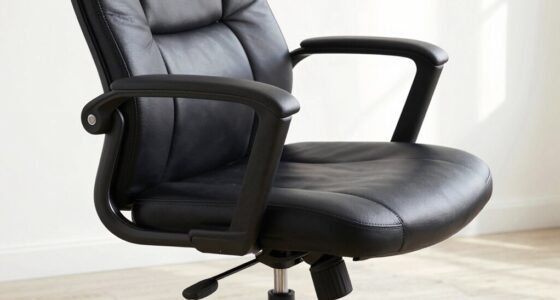
ergonomic office chair with seat depth adjustment
As an affiliate, we earn on qualifying purchases.
As an affiliate, we earn on qualifying purchases.
Frequently Asked Questions
Can Improper Seat Depth Cause Long-Term Posture Issues?
Improper seat depth can indeed cause long-term posture issues. When your seat isn’t adjusted correctly, it may lead to poor ergonomic benefits, making your muscles work harder than necessary. Over time, this can increase muscle strain, especially in your lower back and hips, which might result in discomfort or injury. Ensuring your seat depth is properly set helps maintain good posture and reduces muscle strain, supporting your overall health and comfort.
How Often Should I Recheck My Seat Depth Adjustment?
You should recheck your seat depth adjustment regularly, ideally every few months or whenever you notice discomfort. This guarantees you maintain the ergonomic benefits of proper alignment and support. Adjusting your seat depth frequently helps prevent strain and long-term posture issues. Factors like changes in your body, activity level, or workspace setup can affect ideal positioning, so staying attentive guarantees you get the most ergonomic benefits from your chair.
Does Seat Depth Vary Between Different Chair Types?
Think of seat depth like a tailored suit—different chairs have unique fits. You’ll find that ergonomic design influences how much your seat adjusts, ensuring comfort and support. With chair customization, each model offers variations to suit your body, so it’s normal for seat depth to differ. Always check your chair’s specifications and adjust accordingly, because a perfect fit keeps you comfortable and prevents strain, no matter the chair type.
What Tools Are Recommended for Adjusting Seat Depth?
To adjust your seat depth, you’ll want ergonomic tools like an adjustable wrench or Allen key, depending on your chair’s design. Using adjustment guides can help you find the correct position for comfort and support. Always follow the instructions provided with your chair or in the adjustment guide to guarantee a proper fit. With these tools, you can easily customize your seat depth for ideal ergonomic comfort.
Can Incorrect Seat Depth Affect Circulation or Comfort?
Incorrect seat depth can critically impact blood circulation and ergonomic comfort. When your seat is too deep, it can restrict blood flow to your legs and cause discomfort, leading to fatigue. Conversely, if it’s too shallow, you may not get proper support, which affects posture. Adjusting your seat depth correctly helps maintain healthy blood circulation and ensures ergonomic comfort, reducing strain and improving overall sitting experience.
As an affiliate, we earn on qualifying purchases.
Conclusion
Don’t underestimate the power of a proper seat depth adjustment—it’s the key to transforming your comfort and preventing pain that feels like a relentless storm inside you. When you take the time to get it just right, you’ll feel like you’re sitting on a throne made for royalty. So, make this small tweak today; your body will thank you, and you’ll never settle for discomfort again. Your perfect sitting experience is just an adjustment away!
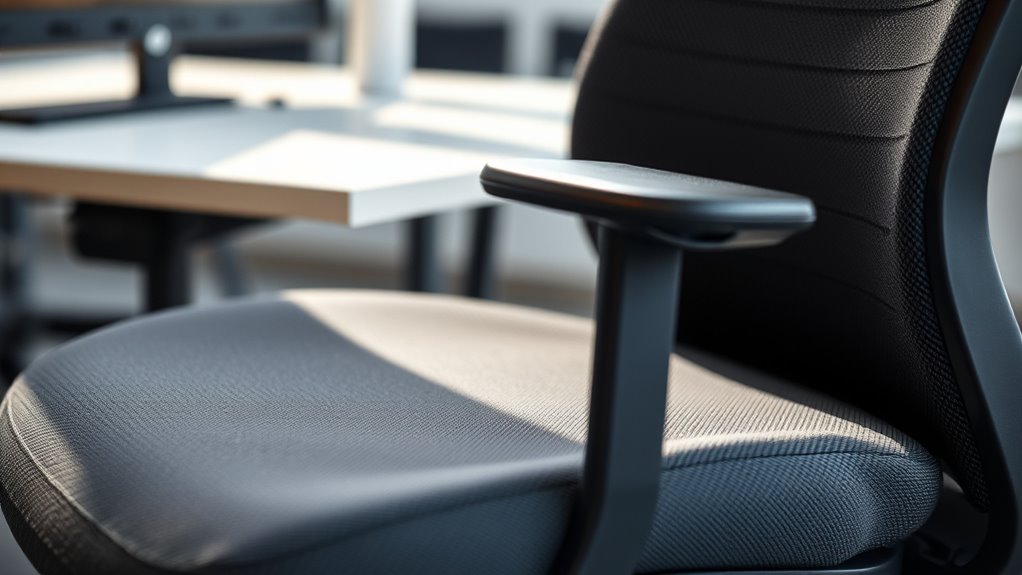
seat depth adjustable office chair
As an affiliate, we earn on qualifying purchases.
As an affiliate, we earn on qualifying purchases.
lumbar support chair for long sitting
As an affiliate, we earn on qualifying purchases.
As an affiliate, we earn on qualifying purchases.
Halloween Picks
halloween
As an affiliate, we earn on qualifying purchases.