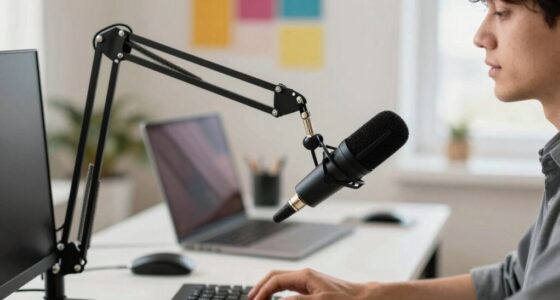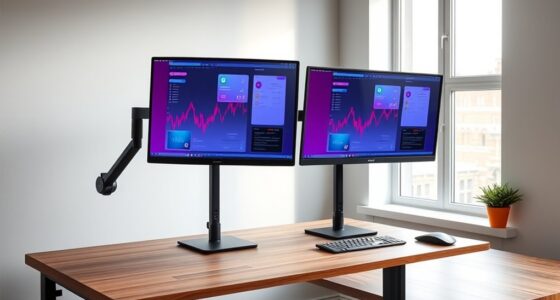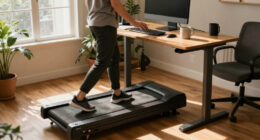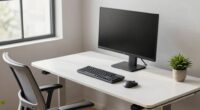
To avoid neck strain with stacked monitors, make sure your primary screen is at eye level and directly in front of you. Use adjustable stands or mounts to set the height correctly, so you don’t have to tilt your head constantly. Position secondary screens slightly below or to the side to minimize awkward angles. Keeping your monitors at a comfortable viewing distance and reducing glare helps, and adjusting your setup over time can keep your neck comfortable—more tips await if you continue exploring.

Get comfort and recovery gear delivered free with Prime
- Fast, free delivery on millions of items
- Prime Video, Amazon Music and more included
- Member-only deals all year
Key Takeaways
- Proper monitor height and alignment prevent awkward neck angles, reducing strain during extended use.
- Use adjustable stands or mounts to ensure each monitor is at eye level, minimizing head tilting.
- Position primary monitors directly in front, with secondary screens slightly below or to the sides.
- Maintain an arm’s length distance and avoid overlapping screens to promote natural viewing angles.
- Take regular breaks and periodically adjust monitor positioning for long-term neck comfort.

If you spend long hours in front of your computer, stacking monitors can be a game-changer for your productivity and comfort. But without proper ergonomic adjustments, even the best setup can lead to neck strain and fatigue. The key is to guarantee your monitors are positioned to optimize visual ergonomics, which focuses on reducing eye and neck strain by aligning screens with your natural line of sight. When monitors are stacked, it’s tempting to simply place one on top of the other without considering how you view them, but that can create awkward neck angles and cause discomfort over time.
To prevent this, you need to adjust your monitors’ height and angle so that your eyes are level with the top third of the screens. This minimizes the need to tilt your head up or down constantly. If your monitors are too low or too high, your neck muscles will work overtime, leading to soreness and stiffness. Using ergonomic adjustments, such as adjustable monitor stands or mounts, allows you to set each screen at the perfect height. When stacking, make sure the primary monitor, where you spend most of your time, is at eye level directly in front of you, with secondary screens positioned slightly below or to the sides, depending on your workflow.
Visual ergonomics isn’t just about height; it also involves reducing glare and optimizing the viewing distance. Keep monitors about an arm’s length away, with the top of the screens roughly at eye level. Proper placement reduces the need to crane your neck or squint, which can cause long-term strain. When stacking, avoid overlapping screens in such a way that you have to turn your head excessively to see the peripheral monitor. Instead, position them in a way that encourages a natural, comfortable viewing angle. Additionally, long-term comfort can be improved by taking regular breaks and adjusting your setup as needed.
Products Worth Considering

BowFlex Results Series SelectTech Adjustable Dumbbells (Pair)

Withings BPM Connect Wi-Fi and Bluetooth Blood Pressure Monitor

BowFlex SelectTech 840 Adjustable Kettlebell
As an affiliate, we earn on qualifying purchases.
Frequently Asked Questions
How Do I Determine the Best Monitor Height for My Setup?
To find the best monitor height, start by aligning the top of your monitor with your eye level for proper monitor alignment. Adjust your desk height so your elbows are at a 90-degree angle when typing, ensuring comfort. Keep in mind that a good setup prevents neck strain, so regularly check your monitor position and make small tweaks to maintain ideal ergonomics.
Can Monitor Placement Affect Eye Strain?
Think of your eyes as your body’s most dedicated fans—if they’re strained, they won’t cheer for long. Yes, monitor placement affects eye strain, causing eye fatigue and visual discomfort if not set right. Keep the top of your monitor at eye level, about an arm’s length away, and avoid glare. Proper positioning guarantees your eyes stay comfortable, letting you focus without unnecessary strain or fatigue.
What Are Some Ergonomic Accessories for Monitor Positioning?
To enhance your monitor positioning ergonomically, consider using monitor stands to raise or angle your screens properly, reducing neck strain. Cable management accessories help keep cords organized, preventing clutter and accidental pulls that can shift your setup. These tools allow you to customize your workspace, ensuring your monitors are at eye level and comfortable to view, which minimizes eye strain and promotes better posture during long work sessions.
How Often Should I Take Breaks When Using Multiple Monitors?
They say “all work and no play makes Jack a dull boy,” so take breaks frequently. When using multiple monitors, aim for a 5-10 minute break every hour. During breaks, look away from the screens to reduce eye strain from blue light and screen glare. Use this time to stretch and reset your posture. Regular breaks help prevent fatigue and keep your eyes and neck comfortable.
Are There Specific Chair Adjustments That Improve Neck Comfort?
To improve neck comfort, focus on chair ergonomics and posture correction. Adjust your chair height so your feet are flat on the floor and your knees are at a 90-degree angle. Make sure your back is supported, and the chair’s height allows your monitor to be at eye level. This helps keep your neck aligned, reducing strain. Regularly check and adjust your chair to maintain ideal posture during long work sessions.
Conclusion
Remember, your neck is the anchor in your digital skyline. Stacking monitors might seem like reaching for the stars, but without proper alignment, they can cast shadows over your comfort. Think of your neck as the steady mast supporting your ship—if it tilts or strains, your entire voyage becomes perilous. Balance is the lighthouse guiding your workspace, illuminating the path to both productivity and well-being. Prioritize it, and your view of success will stay clear and steady.