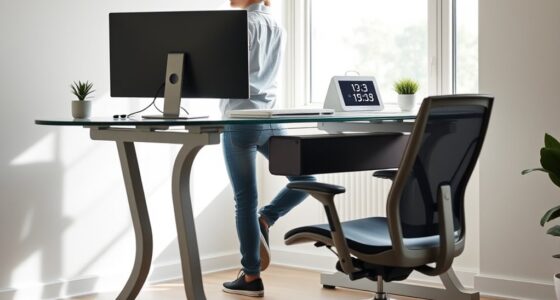
Your chair can considerably affect your mood and mental health by influencing your physical comfort and posture throughout the day. An ergonomic chair supports good alignment, reduces discomfort, and improves circulation, which boosts your overall sense of well-being. When you feel physically good, it’s easier to stay focused, relaxed, and positive. Small adjustments in your workspace can make a big difference—and understanding these connections will help you create a healthier, more balanced environment.
Key Takeaways
- Proper ergonomic chairs promote good posture, reducing physical discomfort and preventing irritability that can negatively impact mood.
- Comfortable seating decreases physical stress and tension, helping to manage workplace anxiety and improve overall emotional well-being.
- Ergonomic support enhances breathing and circulation, supporting mental clarity and stability.
- Awareness of ergonomic importance encourages mindfulness and proactive self-care, positively influencing mental health.
- Well-designed ergonomic chairs demonstrate valuing mental health, fostering a better workplace environment and emotional resilience.
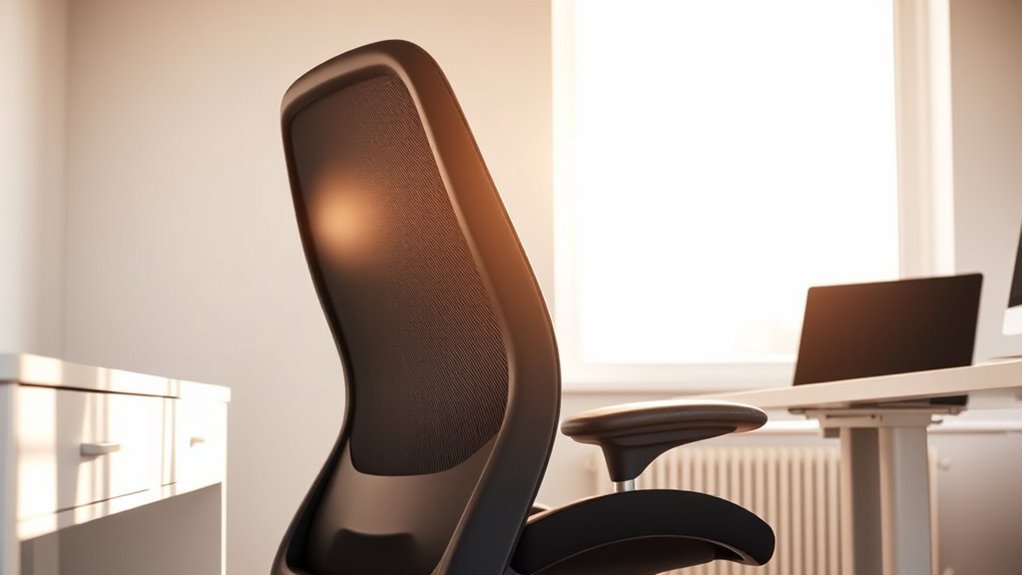
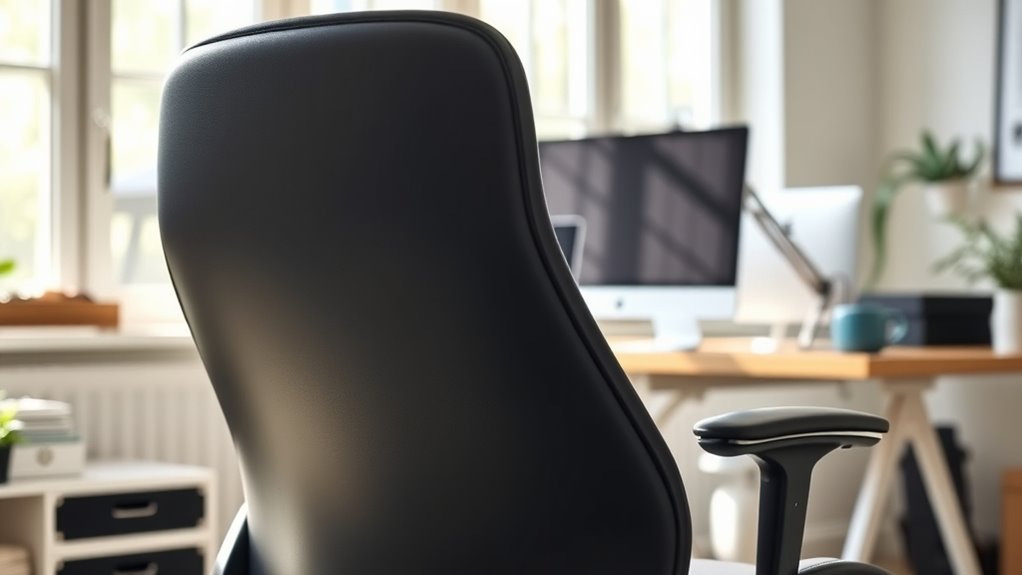
Good ergonomics in your workspace can substantially influence your mental health. When your chair supports good posture, you’re less likely to experience discomfort, which can directly impact your mood and overall well-being. One key aspect is posture awareness—being conscious of how you sit and move throughout the day. When you’re aware of maintaining proper alignment, your body feels more comfortable, reducing physical strain. This, in turn, helps prevent the fatigue and irritability that often accompany poor posture. When your body isn’t battling aches and pains, it’s easier to stay focused and positive, fostering a better mental state. Maintaining proper ergonomic posture is essential for both physical comfort and mental health. Workplace stress often worsens when your environment isn’t ergonomically sound. If your chair causes discomfort or forces you into awkward positions, you might find yourself increasingly tense or distracted. Over time, this physical discomfort can amplify feelings of frustration and anxiety, making it harder to concentrate or stay motivated. Conversely, an ergonomic chair that encourages correct posture can lower physical stress, which helps in managing workplace stress more effectively. When you’re comfortable, you’re less likely to feel overwhelmed by your workload, and your mood stays more balanced. Investing in a supportive chair isn’t just about preventing physical issues; it’s also about protecting your mental health. When you sit properly, you better breathe, which can improve oxygen flow to your brain and enhance your mood. Good ergonomic design also promotes better blood circulation, reducing numbness or swelling that might contribute to irritability or fatigue. These physical benefits translate into mental clarity and emotional stability. When your body feels good, it’s easier to stay positive, resilient, and less prone to mood swings caused by discomfort or fatigue. Furthermore, posture awareness plays a key role in mental health because it encourages mindfulness. Being conscious of how you sit prompts you to take regular breaks, stretch, and adjust your position. These small actions can break the cycle of prolonged tension and help you reset emotionally. Recognizing the importance of proper ergonomics also fosters a proactive attitude towards self-care, which can boost your confidence and overall sense of well-being. When you actively choose ergonomic solutions, you’re sending a message to yourself that your mental health matters, which can have a powerful, positive ripple effect throughout your day. In essence, your chair isn’t just a piece of furniture—it’s a fundamental part of your mental health toolkit. Maintaining awareness of posture and prioritizing ergonomic comfort helps you manage workplace stress better and keeps your mood stable. Small adjustments can make a significant difference, turning your workspace into a place that supports both your physical and mental health.

Lumbar Support Pillow for Office Chair, Office Home Essentials,Gifts for Mom,Dad, Back Support Pillow for Car, Chair Cushions,Back Pain Relief Improve Posture,Mesh Cover Double Adjustable Straps
For convenience and durability, we upgraded and lengthened the straps to fit more chairs instead of adding extra…
As an affiliate, we earn on qualifying purchases.
As an affiliate, we earn on qualifying purchases.
Frequently Asked Questions
Can an Uncomfortable Chair Cause Anxiety or Depression?
An uncomfortable chair can indeed contribute to anxiety or depression by affecting your posture awareness, leading to physical discomfort and stress. Poor posture may also influence your mood through color psychology if your chair’s color impacts your emotions. When you sit comfortably, you feel more relaxed and positive, while discomfort can heighten negative feelings. Choosing an ergonomic chair with calming colors promotes better mental health and a balanced mood.
How Quickly Can a New Chair Improve Mood?
A new chair can turn your mood around faster than you’d expect, often within a few days. When you focus on posture correction, it reduces discomfort and stress, boosting your mental well-being. Incorporating color therapy through your chair’s hues can enhance this effect, encouraging relaxation. You’ll feel a difference quickly, as improved ergonomics and soothing colors work together to lift your spirits and promote a positive mindset.
Are There Specific Chair Features That Boost Mental Well-Being?
Yes, certain chair features can boost your mental well-being. Look for chairs with color therapy options, such as calming blues or energizing yellows, to influence your mood positively. Prioritize posture alignment by choosing chairs that support your spine and promote good sitting habits. When you sit comfortably and are surrounded by soothing colors, you’ll feel more relaxed, focused, and uplifted throughout your day.
Does Sitting for Long Periods Impact Mental Health?
Sitting for long periods can dampen your mental health, draining your motivation and mood. When your office aesthetics are dull and social interactions decrease, you might feel isolated and uninspired. To combat this, take short breaks, boost your office ambiance, and engage with colleagues. These small shifts can stimulate your spirit, strengthen social bonds, and help you feel more energized, even during extended sitting sessions.
Can Ergonomic Chairs Reduce Stress Levels During Work?
Yes, ergonomic chairs can reduce your stress levels during work by promoting better posture alignment and enhancing office aesthetics. When you sit comfortably and maintain proper posture, you feel less physically strained, which helps lower stress. An aesthetically pleasing workspace with ergonomic furniture also boosts your mood and motivation, making your work environment more inviting and less stressful. This combination encourages a positive mental state and improves overall well-being.

TRALT Office Chair – Ergonomic Desk Chair with Adjustable Lumbar Support, Mesh Computer Chair, Executive Chairs for Home Office Comfortable Lumbar Support (Black)
Ergonomic Office Chair: Experience unparalleled support with our ergonomic office chair, designed to provide comprehensive assistance for your…
As an affiliate, we earn on qualifying purchases.
As an affiliate, we earn on qualifying purchases.
Conclusion
Your chair isn’t just a piece of furniture; it’s a silent guardian of your mood. When you sit comfortably, it’s like planting a seed of calm and focus within you. But a poor chair can be a storm, stirring stress and frustration. Choose ergonomics wisely—because your mental well-being blooms when supported. Remember, the right chair isn’t just about posture; it’s about nurturing your inner peace, one comfortable sit at a time.

Nexthro Ergonomic Office Chair, Desk Chair with Adjustable Lumbar Support, Breathable Mesh Comfy Computer Chairs with Flip-up Armrests Executive Task Chair for Adults Home Office(Black)
【Ergonomic Office Chair】The Nexthro ergonomic office chair is designed to alleviate back pain, offering a comfortable seating experience….
As an affiliate, we earn on qualifying purchases.
As an affiliate, we earn on qualifying purchases.