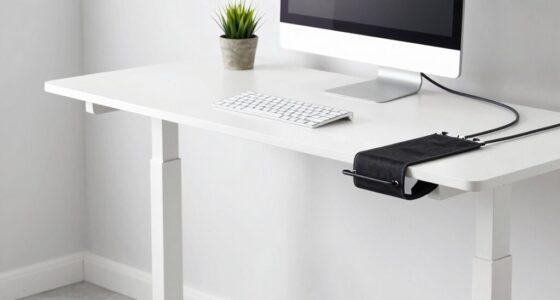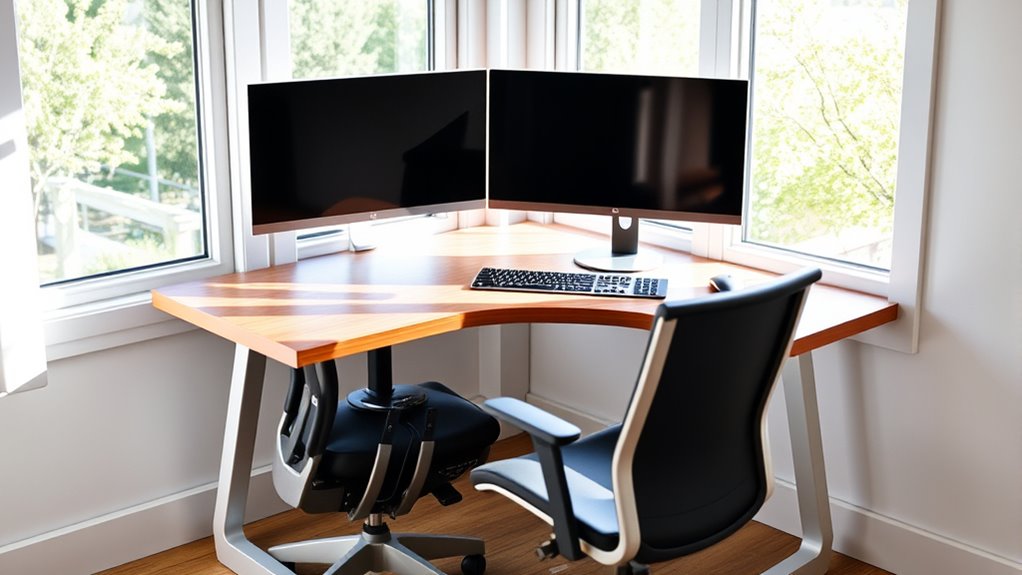
A corner desk offers significant ergonomic benefits by supporting better posture and reducing strain. It places your monitor directly in front, minimizing neck discomfort, while the keyboard is within easy reach, promoting natural alignments of your neck, shoulders, and back. Its space-saving design maximizes your room’s utility and keeps your workspace organized, helping you work comfortably for extended periods. Stay with us to discover how a corner desk can transform your work environment even further.
Key Takeaways
- Corner desks promote better posture by positioning monitors and equipment directly in front, reducing neck and shoulder strain.
- They optimize space utilization, freeing up room for movement and additional furniture in your workspace.
- Larger surface areas improve workflow by keeping essential tools within easy reach, minimizing unnecessary movements.
- Adjustable features support natural body alignment, enhancing comfort during long work sessions.
- Organized layouts foster healthier work habits and sustained productivity through ergonomic setup and clutter reduction.
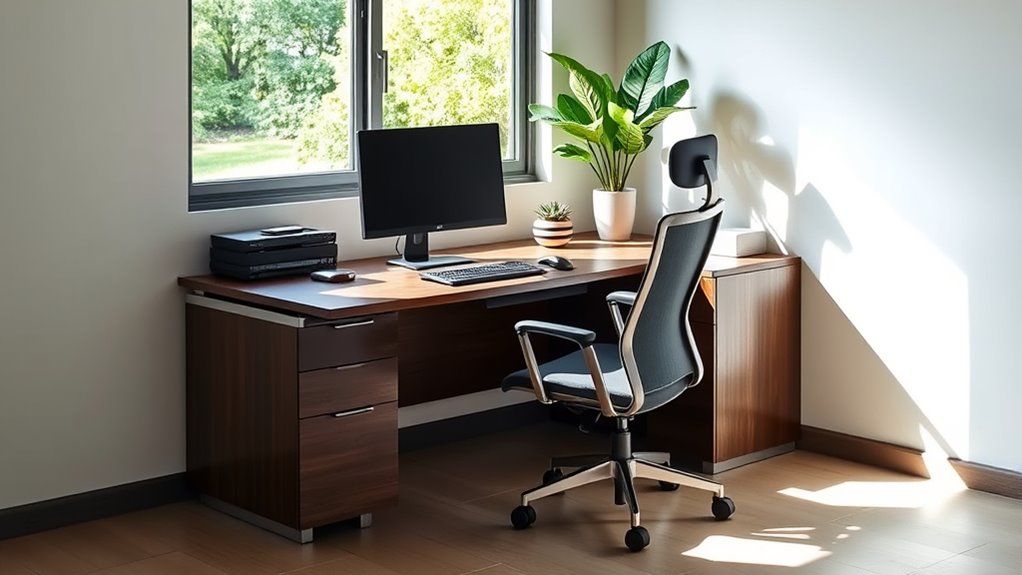
Have you ever considered how a corner desk could transform your workspace? If you’re looking to boost productivity and create a more comfortable environment, a corner desk might be just what you need. One of the biggest advantages is its ergonomic benefits. Unlike traditional desks, a corner desk allows you to position your equipment and workspace in a way that supports better posture. With your monitor directly in front of you and your keyboard within easy reach, you reduce unnecessary stretching or twisting, which can lead to discomfort or long-term strain. This setup encourages a natural alignment of your neck, shoulders, and back, helping you stay comfortable during long work sessions. Additionally, many corner desks come with adjustable features, so you can customize the height and angles to suit your body’s needs, further enhancing ergonomic benefits. Proper research and evaluation of your workspace setup can ensure you maximize these ergonomic benefits effectively.
Beyond comfort, space optimization is another compelling reason to opt for a corner desk. Standard rectangular desks often leave unused space in the corners of a room, which can go to waste. A corner desk, on the other hand, makes excellent use of these often-underutilized areas. By fitting neatly into the corner, it frees up the center of your room, giving you more open space to move around or add other furniture. This maximizes the utility of your room without making it feel cluttered or crowded. If you work with multiple monitors, files, or accessories, a corner desk provides ample surface area, helping you organize everything efficiently. You get enough room to spread out your work materials without feeling cramped, which can substantially boost your focus and productivity.
Another point worth considering is that corner desks often have a unique design that encourages better workflow. They typically feature a larger surface area, which means you can group related items together—your computer, printer, documents—keeping everything within arm’s reach. This reduces the need to constantly get up or reach across your workspace, saving you time and effort. Plus, because corner desks are available in various styles and sizes, you can choose one that perfectly fits your space and personal preferences, making your work environment more inviting and tailored to your needs.

Casaottima 63 Inch L Shaped Electric Standing Desk, Home Office, White
- Ideal for home office and corner setups: Supports sitting and standing positions
- Adjustable height from 27.9" to 46.1": Electric height adjustment with memory keypad
- Spacious L-shaped desktop: Accommodates multiple monitors and devices
As an affiliate, we earn on qualifying purchases.
As an affiliate, we earn on qualifying purchases.
Frequently Asked Questions
How Do I Choose the Right Size Corner Desk?
To choose the right size corner desk, consider your workspace and how much desk dimensions you need for your tasks. Measure your available space carefully and opt for a desk that fits comfortably without overcrowding. Look for adjustable height options to customize ergonomics. Make sure the desk surface provides enough room for your monitor, keyboard, and other essentials, ensuring comfort and efficiency during your workday.
What Materials Are Best for Ergonomic Support?
Think of your desk as the foundation of comfort, where materials symbolize strength and support. Opt for a desk made of sturdy, smooth wood or high-quality laminate that complements your ergonomic chair. Look for options with built-in lumbar support or that allow easy integration of an ergonomic chair, ensuring proper posture. These materials promote stability and reduce strain, helping you stay comfortable and focused throughout your workday.
Can a Corner Desk Improve Productivity?
A corner desk can boost your productivity by improving workspace organization and aesthetic appeal. With more surface area, you can keep your essentials within reach and reduce clutter, helping you stay focused. Its design often creates a dedicated work zone, minimizing distractions. Plus, the aesthetic appeal of a corner desk can make your workspace more inviting, motivating you to work efficiently and comfortably throughout the day.
How Do I Optimize Storage on a Corner Desk?
To optimize storage on your corner desk, focus on smart desk organization by using corner shelves, desk drawers, and storage bins to keep essentials within reach. Incorporate cable management solutions like clips and sleeves to reduce clutter and improve airflow. This setup not only maximizes your workspace but also creates a tidy, efficient environment, so you can work comfortably and stay productive without the mess.
Are Corner Desks Suitable for Small Spaces?
Corner desks are actually ideal for small spaces because they maximize space efficiency without sacrificing style. You might worry they’ll make your room feel cramped, but their L-shape design fits snugly into corners, freeing up other areas. Plus, they add aesthetic appeal by creating a sleek, organized look. So, if you want a functional workspace that feels open and tidy, a corner desk suits small rooms perfectly.

SEDETA Farmhouse 55 inch L Shaped Standing Desk with Storage Drawers
- Multifunctional Workstation: Includes drawers, cabinets, outlets, motor
- Adjustable Height: 28 to 47 inches with memory function
- Maximized Corner Space: L-shaped design for expanded storage
As an affiliate, we earn on qualifying purchases.
As an affiliate, we earn on qualifying purchases.
Conclusion
A corner desk truly boosts your productivity and comfort, making your workspace more efficient. Did you know that 75% of people report increased focus and reduced strain when using an ergonomic corner setup? By choosing a corner desk, you’re investing in your health and work quality. So, consider making the switch—you’ll be surprised how a simple change can transform your daily routine and overall well-being.
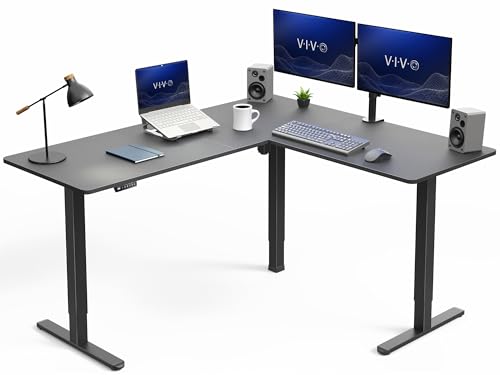
VIVO Black 63 x 55 in Corner Standing Desk, DESK-E3CTB
- Instant Active Standing: Smooth sit-to-stand transition
- Corner L-Shape Design: Spacious 63” x 55.2” workspace
- Three-Part Top: Main and return desks for versatility
As an affiliate, we earn on qualifying purchases.
As an affiliate, we earn on qualifying purchases.

Tangkula White Corner Desk – 90 Degrees Triangle for Computer, Small Space, Bedroom, Makeup Vanity Desk with Storage Shelves & CPU Stand, Space Saving Writing Desk
- Corner Space Saving Design: Fits wall corners for efficient use
- Flexible Placement: Can be positioned on left or right corner
- Spacious Work Surface: Accommodates laptop, notebooks, and lamp
As an affiliate, we earn on qualifying purchases.
As an affiliate, we earn on qualifying purchases.