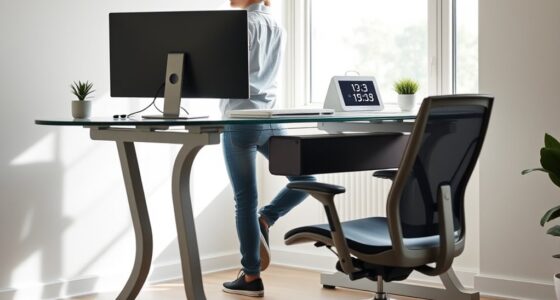
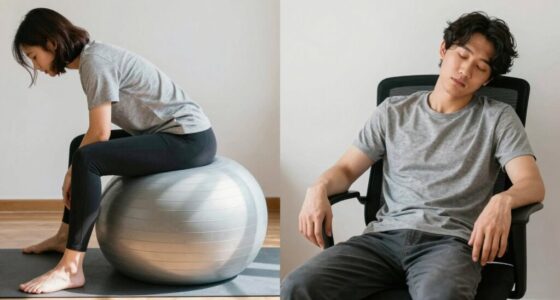
You should switch from a chair to a stool before discomfort or fatigue even start. Pay attention to subtle signals like slouching, tingling in your legs, or a dip in focus—these are cues to change your position early. Moving proactively helps maintain good posture and prevents long-term issues. Taking small adjustments before symptoms appear keeps you comfortable and alert. Want to discover more ways to optimize your ergonomic routine? Continue on to learn strategies that keep you moving effectively.
Key Takeaways
- Switch at the first signs of discomfort or fatigue to prevent long-term musculoskeletal issues.
- Pay attention to subtle body signals like tingling or tension indicating the need to change positions.
- Transition early during mental fatigue to boost focus and prevent stiffness.
- Proactively switch before poor posture causes pain or circulation problems.
- Regularly adjusting positions maintains ergonomic health and enhances overall comfort throughout the day.
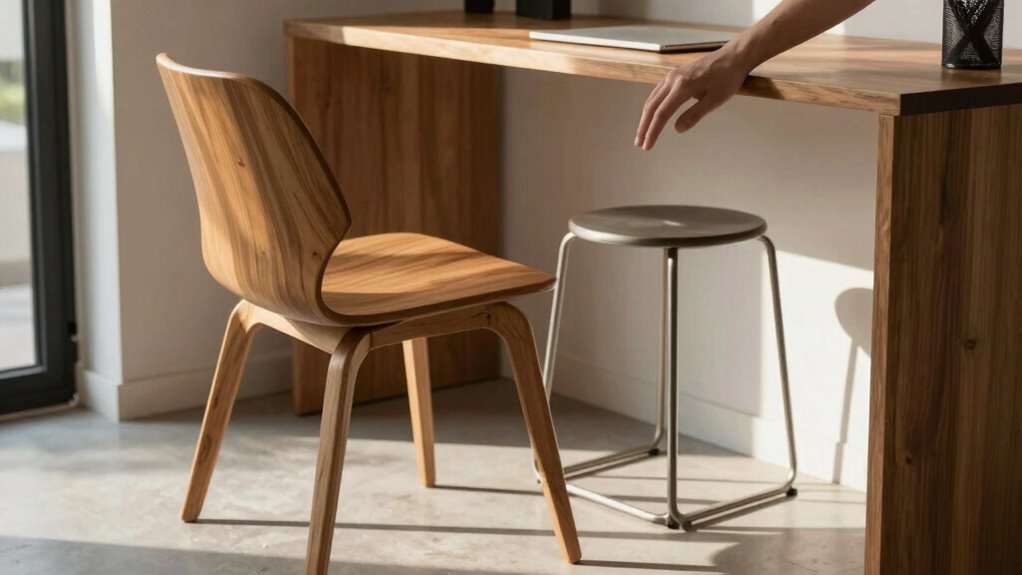
Choosing the right time to switch between a chair and a stool can make a significant difference in comfort and productivity. You might not realize it, but your body signals when it’s time to change positions—sometimes sooner than you think. Paying attention to ergonomic adjustments and maintaining posture awareness are key. When you’re sitting for long periods, your muscles and joints can become strained, leading to discomfort or even long-term issues. Recognizing the subtle cues early allows you to make a switch before discomfort escalates, helping you stay focused and energized.
Switch positions early to boost comfort, focus, and prevent long-term strain during long sitting sessions.
You should consider switching when you notice your posture starting to slip. If you find yourself slouching or leaning forward, it’s a sign your current setup isn’t supporting good ergonomics anymore. A chair typically offers more back support, but as fatigue sets in, your posture might deteriorate. A stool, on the other hand, encourages a different alignment—often more upright and engaging your core muscles. Switching early helps reset your posture, preventing poor alignment from setting in. It’s not just about comfort; it’s about actively engaging in ergonomic adjustments that promote musculoskeletal health. Staying mindful of posture awareness can help you catch these signs sooner.
Another cue to switch is when your feet or legs start feeling numb or tingly. That’s often a sign that blood flow has been restricted due to poor circulation or awkward positioning. Moving to a stool can elevate your legs or change your angle, promoting better circulation. Conversely, if your back aches or you feel tension in your shoulders, adjusting to a chair with better lumbar support might be the right move. Staying posture-aware means listening to your body’s signals and making proactive adjustments, rather than waiting until pain becomes a distraction. Incorporating ergonomic principles can help guide these adjustments and improve overall comfort.
Timing your switch is also about productivity. When you feel your focus waning or your energy dipping, it’s a good indicator to change positions. Sometimes, simply standing or shifting to a stool can refresh your mind and reduce mental fatigue. It’s a small change that can re-energize your work session and prevent stiffness. Remember, frequent movement and position changes are key parts of an ergonomic routine. Incorporating these shifts before discomfort becomes severe keeps you comfortable and helps maintain your efficiency throughout the day. An awareness of body signals can further enhance these proactive adjustments.
In essence, the best time to switch between a chair and a stool is earlier than you think. Keep your posture awareness sharp, be attentive to ergonomic adjustments, and listen to your body’s signals. Doing so not only enhances comfort but also protects your long-term health, all while keeping your productivity high. Don’t wait for pain to dictate your next move; recognize the signs early and act accordingly. Being proactive about ergonomic adjustments can greatly improve your overall comfort and well-being.

Marsail Ergonomic Office Chair: Office Desk Chair with High Back Mesh and Adjustable Lumbar Support Rolling Work Swivel Task Chairs with Wheel 3D Armrests and Headrest
Fully Adjustable Office Chair: Customized chairs, featuring with an adjustable 2D headrest, backrest with 90° to 120° recline,…
As an affiliate, we earn on qualifying purchases.
As an affiliate, we earn on qualifying purchases.
Frequently Asked Questions
How Does Posture Differ Between Chairs and Stools?
Your posture differs between chairs and stools mainly in ergonomic alignment and spinal flexibility. When sitting on a chair, you often maintain a more supported, upright position, promoting ergonomic alignment, especially with backrests. On a stool, you tend to lean slightly forward, which increases spinal flexibility but can strain your lower back if not done carefully. Switching between the two helps balance ergonomic needs and encourages varied spinal movements.
Can Switching Improve Back Health?
Switching between a chair and a stool can boost your back health by promoting varied muscle engagement and preventing strain. An ergonomic design supports proper posture, reducing discomfort. Alternating positions encourages your muscles to work differently, preventing stiffness and weakness. By regularly changing your seating, you help maintain spinal alignment and strengthen supporting muscles, ultimately contributing to better back health and reducing the risk of chronic pain.
What Activities Benefit Most From Switching?
Activities like working at a desk or drawing benefit most from switching between a chair and a stool. Studies show that frequent positional changes can reduce muscle fatigue and improve posture. By making ergonomic adjustments, you keep muscles engaged and prevent strain. Switching encourages active muscle engagement, helping you stay comfortable and alert. Incorporate these shifts regularly to boost productivity and protect your back during long periods of activity.
Are Stools Better for Short-Term Tasks?
Stools are better for short-term tasks because they promote active seating, which can reduce fatigue. Using ergonomic accessories alongside a stool enhances your seating comfort, helping you maintain good posture during quick activities. If you only need to sit briefly, stools are a practical choice—they’re easy to move and encourage movement. Just make sure to incorporate ergonomic accessories to prevent discomfort and support your back during those short, focused tasks.
How Often Should I Switch Between Them?
You should switch between a chair and a stool every 30 to 60 minutes to promote ergonomic adjustments and prevent discomfort. Regularly changing your position improves workspace ergonomics by reducing strain on your muscles and joints. Listen to your body; if you feel tension or fatigue, it’s time to switch. Incorporating these movements helps maintain comfort and supports better posture throughout your workday.
adjustable ergonomic stool for standing desk
As an affiliate, we earn on qualifying purchases.
As an affiliate, we earn on qualifying purchases.
Conclusion
Knowing when to switch between a chair and a stool is like catching a wave — the right moment can make all the difference. Don’t wait until discomfort drags you down; listen to your body’s subtle cues. Making the switch early keeps you riding smoothly, avoiding the crash of fatigue. So, stay alert, and you’ll find that the perfect balance isn’t just a dream but a well-timed move in your daily routine.
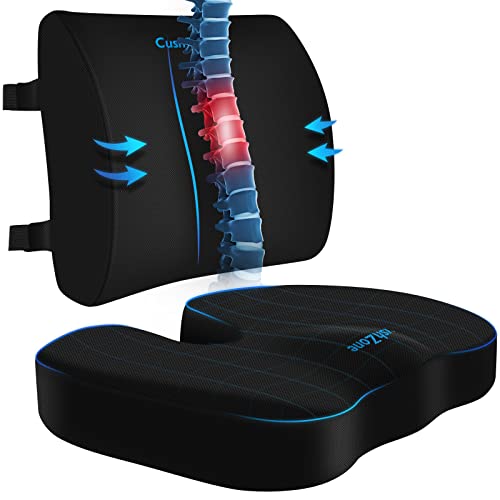
CushZone Ergonomic Seat Cushion & Lumbar Support Pillow – Memory Foam for Sciatica Pain Relief & Posture Correction, Non-Slip Chair Cushions for Office Chair/Car/Wheelchair/Travel (Black)
【Comfortable Sitting】The dimensions of the chair cushion are 18.1" x 14.2" x 3.2" and the dimensions of the…
As an affiliate, we earn on qualifying purchases.
As an affiliate, we earn on qualifying purchases.

Libernovo StepSync Office Foot Rest for Under Desk at Work, Black
Relieve Leg Fatigue: 10° ergonomic tilt promotes circulation, ideal for long hours at your desk.
As an affiliate, we earn on qualifying purchases.
As an affiliate, we earn on qualifying purchases.