Your office chair considerably affects your circulation more than you might think. If it’s poorly adjusted, it can constrict blood flow around your thighs and lower back, leading to swelling, varicose veins, or fatigue. Proper support, like adjusting seat height, lumbar support, and armrests, keeps blood flowing smoothly. Moving and taking breaks also help. Keep these tips in mind, and you’ll discover how simple adjustments can boost your circulation and comfort throughout the day.

Get comfort and recovery gear delivered free with Prime
- Fast, free delivery on millions of items
- Prime Video, Amazon Music and more included
- Member-only deals all year
Key Takeaways
- Poor chair alignment can restrict blood flow around thighs and lower back, leading to circulation issues.
- Proper ergonomic adjustments like seat height and lumbar support promote healthy blood circulation.
- Static sitting reduces circulation efficiency; regular movement and repositioning enhance blood flow.
- Incorrect armrest and tilt positions can increase muscle tension, impairing circulation.
- Good posture and ergonomic design help maintain natural blood flow during prolonged sitting.
Many people underestimate how much their office chair influences their circulation throughout the workday. The way you sit, the adjustments you make, and even the chair’s design directly impact your blood flow dynamics. If your chair isn’t properly aligned or supportive, you may notice discomfort, numbness, or fatigue more quickly than you expect. Making ergonomic adjustments isn’t just about comfort; it’s about optimizing blood circulation and preventing long-term health issues.
Proper office chair adjustments are vital for maintaining healthy blood flow and preventing discomfort during work.
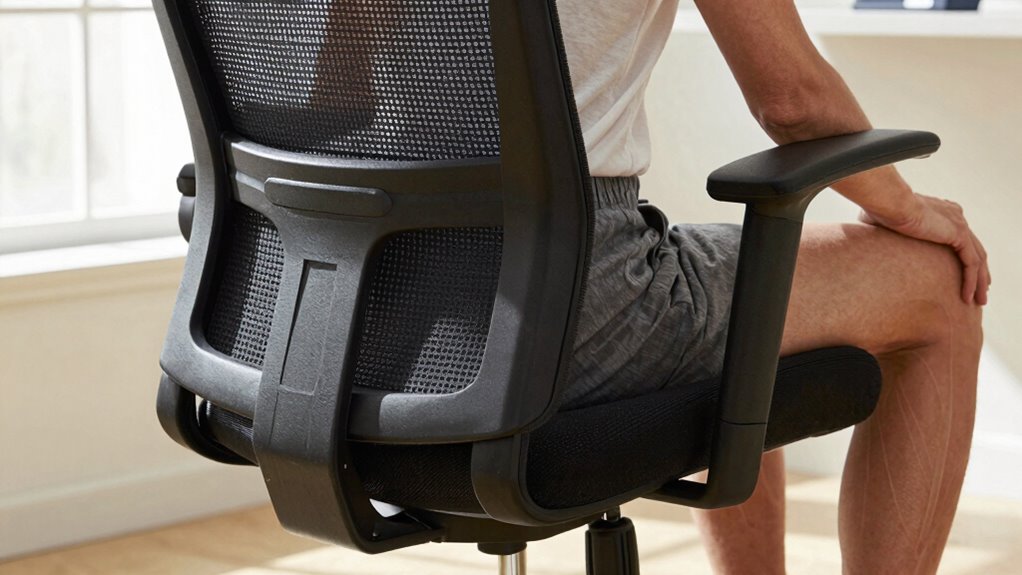
When you sit in a poorly adjusted chair, it can constrict blood vessels, especially around your thighs and lower back. This constriction hampers blood flow, leading to decreased oxygen and nutrient delivery to your muscles and tissues. Over time, this can cause swelling, varicose veins, or even chronic circulation problems. Conversely, a chair that supports proper blood flow helps keep your limbs energized and reduces the risk of clot formation or soreness. That’s why paying attention to ergonomic adjustments is essential. Adjust your seat height so your feet rest flat on the floor, with knees at a 90-degree angle. Ensure your hips are level or slightly higher than your knees to promote healthy blood flow. Use the lumbar support to maintain the natural curve of your lower back, preventing slouching that can impair circulation and cause muscle tension.
Adjusting your armrests correctly allows your shoulders to relax, avoiding unnecessary tension that might influence blood flow in your neck and arms. If your chair has tilt or recline features, use them to shift your position periodically. This helps prevent stagnation and encourages movement, which is critical for maintaining healthy blood flow dynamics. Remember, staying static in one position for long periods reduces circulation efficiency. Small movements, like shifting your weight or stretching your legs, can considerably improve blood flow, so incorporate regular breaks to stand or walk around. Additionally, understanding the importance of ergonomic design can help you choose a chair that better supports your circulation needs. Recognizing the significance of posture in maintaining healthy blood flow can also make a substantial difference in your overall comfort. Improving blood flow through ergonomic awareness can significantly reduce the risk of discomfort and long-term health issues related to poor circulation. Proper adjustments to your chair can also prevent unnecessary strain on your muscles and joints, further supporting circulation and overall well-being.
Ultimately, your office chair plays a vital role in your overall health during long work hours. Proper ergonomic adjustments ensure that your blood flow remains steady and natural, reducing fatigue and discomfort. It’s not just about comfort; it’s about supporting your body’s blood flow dynamics. When you pay attention to these details, you’ll notice increased comfort, better focus, and fewer circulation-related ailments over time. Keep your chair properly adjusted, move regularly, and prioritize your circulation—your body will thank you.
Products Worth Considering

Bowflex SelectTech 840 Adjustable Kettlebell

BowFlex Results Series SelectTech Adjustable Dumbbells (Pair)

BowFlex Results Series SelectTech 552 Adjustable Dumbbell
As an affiliate, we earn on qualifying purchases.
Frequently Asked Questions
Can a Chair’s Material Impact Circulation?
Yes, your chair’s material can impact circulation. Breathable fabrics promote airflow, preventing sweat and reducing pressure points that can restrict blood flow. Ergonomic cushions improve support and help distribute your weight evenly, which also aids circulation. Choosing a chair with breathable fabrics and added cushions guarantees better blood flow, reduces discomfort, and keeps you more comfortable and alert during long hours at your desk.
How Often Should I Adjust My Chair for Better Circulation?
You should adjust your chair every 30 to 60 minutes to promote better circulation. Focus on maintaining an ergonomic posture by adjusting the seat height so your feet rest flat on the floor, and your knees are at a 90-degree angle. Regular adjustments prevent numbness and discomfort, ensuring blood flows freely. Small, frequent changes help you stay comfortable and support healthy circulation throughout your workday.
Do Armrests Affect Blood Flow in the Legs?
Armrests don’t directly affect blood flow in your legs, but armrest comfort and height can influence your overall posture. If armrests are too high or low, you might slump or strain, which can reduce circulation. Adjusting the armrest height to support your arms comfortably helps maintain good posture, preventing unnecessary pressure on your legs and improving circulation overall. Properly positioned armrests contribute to better comfort and health during long sitting periods.
Is Standing Periodically Better Than Sitting for Circulation?
Standing periodically is generally better for circulation than sitting continuously. Studies show standing can increase blood flow by up to 15%, reducing the risk of varicose veins and swelling. By practicing posture awareness and making ergonomic adjustments, you can optimize your health. Regularly switching between sitting and standing encourages better circulation, keeps your muscles active, and helps prevent stiffness or discomfort. Just be sure to stand with proper alignment for maximum benefit.
Can Poor Circulation Cause Long-Term Health Issues From Office Chairs?
Poor circulation from your office chair can cause long-term health issues, like blood clots or nerve compression. Sitting too long in an unsupportive chair slows blood flow, increasing the risk of clots or nerve issues over time. To prevent this, take regular breaks, stretch, and choose an ergonomic chair. Staying active helps maintain healthy circulation, reducing your chances of developing serious health problems.
Conclusion
Remember, your office chair is like the steering wheel of your day—if it’s not right, your circulation suffers, dragging your energy down like a slow-moving river. Choosing a chair that supports your body properly keeps your blood flowing freely, preventing discomfort and fatigue. Don’t let a poor seat be the anchor that drags you down; instead, steer towards comfort and support for a healthier, more productive workday. Your body will thank you for it.