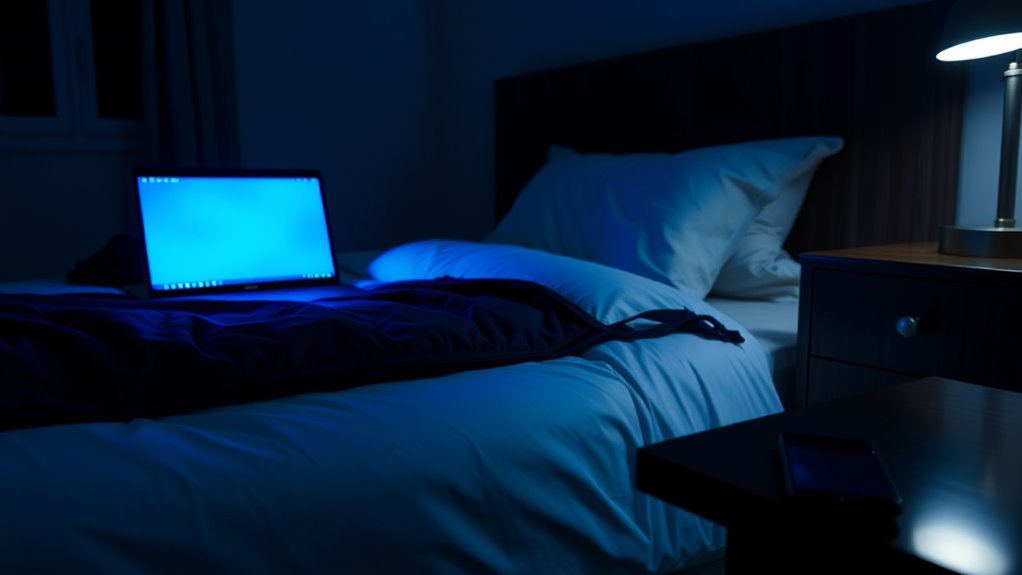

Late-night work exposes you to blue light, which signals your brain that it’s daytime. This suppresses melatonin, making it harder to fall asleep and reducing sleep quality over time. It can also shift your circadian rhythm, leaving you groggy and less refreshed in the morning. By understanding how blue light affects sleep, you can take simple steps to minimize its impact. Keep exploring to discover effective strategies that help protect your rest.
Key Takeaways
- Late-night work increases blue light exposure, which suppresses melatonin and delays sleep onset.
- Blue light from screens shifts circadian rhythms later, making waking up refreshed more difficult.
- Using blue light filters or glasses can mitigate the sleep-disrupting effects of late-night screen time.
- Creating a sleep-friendly environment and establishing a relaxing pre-sleep routine help counteract blue light impact.
- Chronic exposure to blue light from late-night work may lead to sleep disruption and associated health risks.
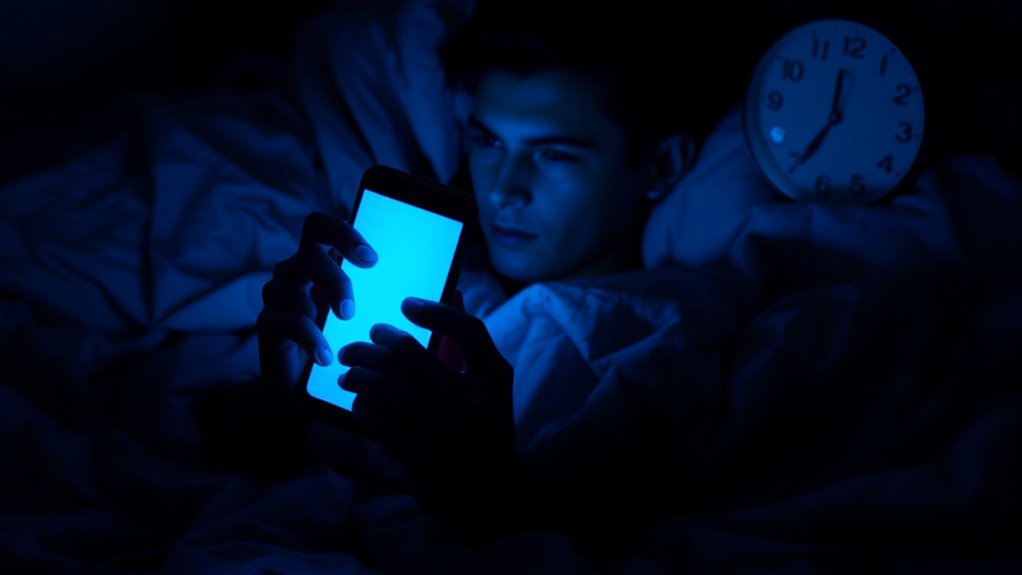
Many people don’t realize that exposure to blue light, especially before bedtime, can profoundly disrupt your sleep. Blue light exposure from screens—smartphones, tablets, computers, and even LED lights—signals your brain that it’s daytime, suppressing the production of melatonin, the hormone that helps you feel sleepy. When you’re glued to your device late into the night, this interference can delay your sleep onset, making it harder to fall asleep quickly and stay asleep through the night. Over time, frequent blue light exposure before bed may lead to reduced sleep quality, leaving you feeling tired and groggy during the day.
Blue light before bed can delay sleep and reduce sleep quality, leaving you tired during the day.
Understanding the connection between blue light and sleep disruption is vital if you want to improve your rest. The circadian rhythm, your internal body clock, relies heavily on light cues to regulate sleep-wake cycles. Blue light, with its short wavelength and high energy, is particularly effective at tricking your brain into thinking it’s still daytime. When your exposure to blue light is prolonged or occurs close to bedtime, it can shift your circadian rhythm, pushing your sleep schedule later and making it harder to wake up refreshed. This misalignment not only affects your ability to fall asleep but also reduces the overall quality of your sleep, impacting your mood, memory, and immune health.
To minimize the effects of blue light exposure on your sleep, it’s best to establish a nighttime routine that limits screen time an hour or two before bed. Using blue light filters on your devices or wearing specialized glasses that block blue light can also help. Creating a sleep-friendly environment—dim lighting, cool room temperature, and a relaxing pre-sleep routine—signals to your body that it’s time to wind down. Remember, consistent sleep schedules are key; even if you work late, try to maintain a regular bedtime to help your circadian rhythm stay aligned. Additionally, reducing screen time before bed can significantly improve sleep quality.
If late-night work is unavoidable, consider strategies to reduce blue light exposure, like taking short breaks from screens or using apps that adjust screen color temperature. Prioritizing your sleep is essential, because chronic sleep disruption from blue light exposure can have serious health consequences, including increased risk for cardiovascular disease, obesity, and mental health issues. By being mindful of your blue light habits and making simple adjustments, you can protect your sleep and ensure you wake up feeling rested and refreshed.
Top picks for "blue light sleep"
Open Amazon search results for this keyword.
As an affiliate, we earn on qualifying purchases.
Frequently Asked Questions
Can Blue Light Exposure Improve Alertness During Late-Night Work?
Yes, blue light exposure can improve alertness during late-night work. It suppresses melatonin production, helping you stay awake and focused. However, this can cause circadian disruption, making it harder to sleep later. To balance alertness and rest, limit blue light exposure before sleep, or use blue light filters. This way, you stay alert when needed without considerably affecting your sleep schedule.
Are There Specific Devices That Emit Less Blue Light?
Yes, some devices emit less blue light, helping you protect your sleep. Look for screens with adjustable brightness settings to reduce blue light exposure during late-night use. Additionally, red light therapy devices emit minimal blue light, making them a good alternative for nighttime activities. By choosing devices with these features, you can minimize blue light impact and support better sleep, even when working late.
How Does Blue Light Affect Different Age Groups’ Sleep?
You might notice that blue light impacts different age groups’ sleep due to age-related sleep patterns and developmental blue light effects. For children and teens, blue light can delay sleep onset and reduce melatonin production more profoundly, disrupting their growth and learning. Adults and seniors, with evolving sleep needs, may experience similar disruptions, but the effects can be less severe. Reducing blue light exposure before bed helps improve sleep across all ages.
Is Blue Light Exposure Linked to Long-Term Health Issues?
They say, “An ounce of prevention is worth a pound of cure.” Blue light exposure is linked to long-term health issues, including circadian disruption and eye health problems. Constant exposure can interfere with your body’s internal clock, leading to sleep issues and potential eye strain. To protect yourself, limit screen time before bed and consider blue light filters. Taking these steps helps safeguard your health now and in the future.
Can Blue Light Glasses Fully Prevent Sleep Disruption?
Blue light glasses can help reduce sleep disruption by blocking or filtering blue light from screens. However, they can’t fully prevent sleep problems if other habits, like irregular sleep schedules or caffeine intake, persist. Wearing blue light glasses improves your chances of restful sleep, but for complete results, combine them with good sleep hygiene. Remember, consistency is key to minimizing blue light’s impact on your rest.
Conclusion
So, next time you find yourself burning the midnight oil, remember that blue light is like a thief stealing your sleep’s peace. It suppresses melatonin and keeps you restless, turning your night into a battle you can’t win. To protect your rest, try dimming screens before bed or using blue light filters. Your sleep is the foundation of your well-being—don’t let blue light rob you of the restful night you deserve.