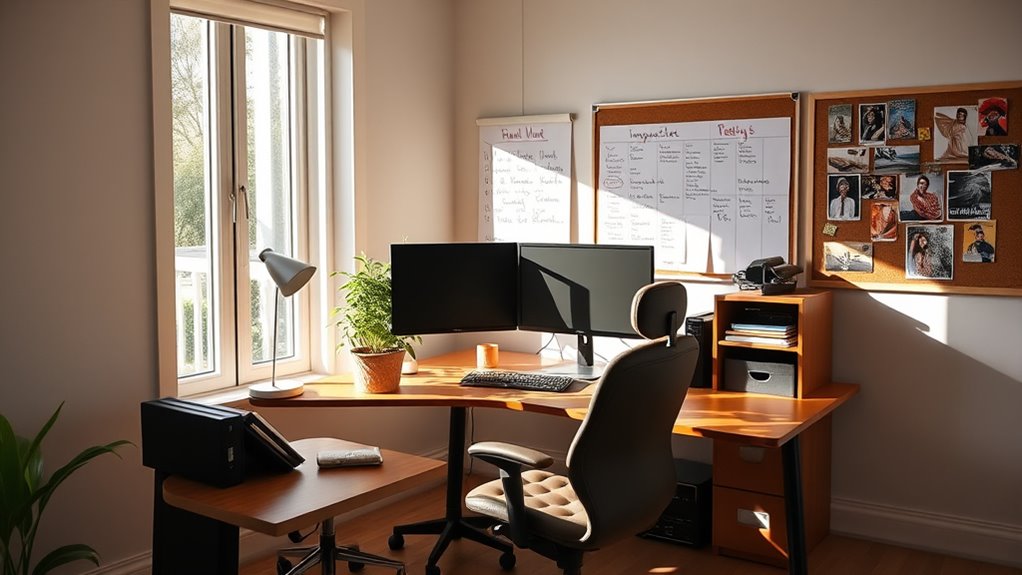

To establish your workspace for long workdays, position your desk near windows to maximize natural light, which boosts mood and reduces eye strain. Use adjustable task lighting to avoid glare and make certain your screens are at eye level, preventing neck and eye fatigue. Keep screens free from reflections and guarantee proper ergonomics with supportive accessories. Good lighting and ergonomic setup work together to keep you comfortable and focused, and you’ll discover more tips to optimize your workspace ahead.
Key Takeaways
- Position your desk near windows to maximize natural light and reduce reliance on artificial lighting.
- Use adjustable task lighting to provide focused, soft illumination without glare.
- Ensure screens are at eye level and properly positioned to minimize glare and eye strain.
- Incorporate ergonomic accessories, like monitor stands, to support good posture alongside optimal lighting.
- Balance lighting to create a comfortable environment that reduces fatigue and enhances productivity during long work hours.
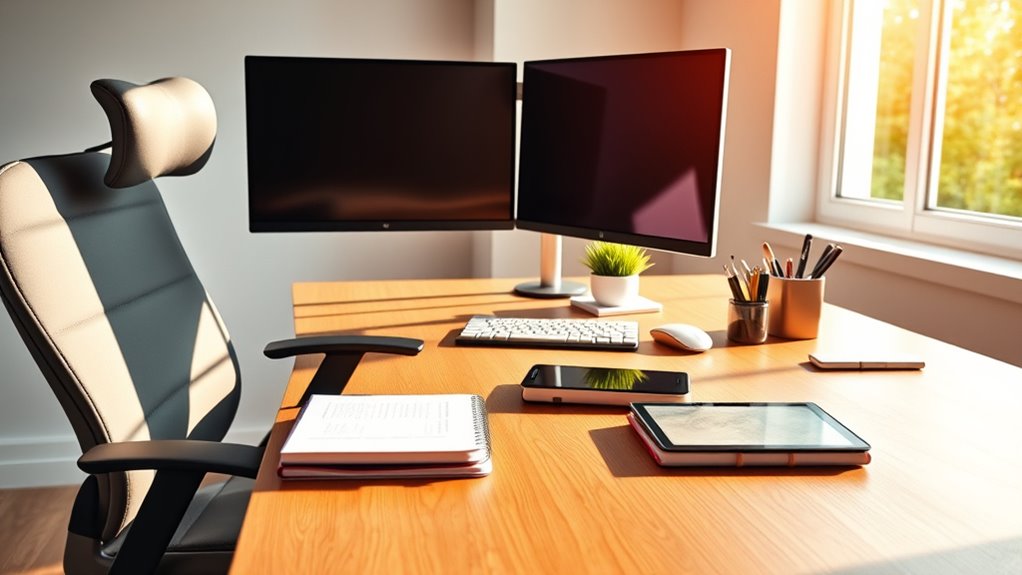
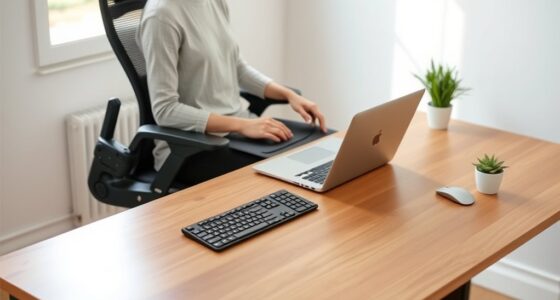
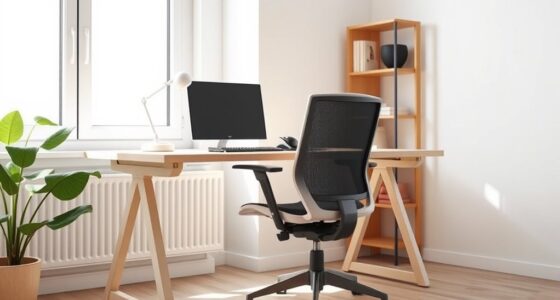
Poor lighting can cause eye strain, headaches, and fatigue, especially when you’re spending hours at a time in front of screens. To combat this, you need to maximize natural light if possible, positioning your desk near windows to benefit from daylight. When natural light isn’t enough, supplement with task lighting—adjustable desk lamps with soft, diffused light—so you can illuminate your workspace without glare. Avoid harsh fluorescent lights or overly bright bulbs that strain your eyes. Good lighting not only reduces eye fatigue but also helps keep your circadian rhythms in check, improving your mood and alertness throughout the day. Additionally, incorporating AI-powered lighting solutions can optimize brightness and color temperature based on the time of day to enhance focus and comfort. Creating a workspace that promotes lighting optimization involves more than just adding lamps. It’s about ensuring your screens are positioned correctly to minimize glare, which can be achieved by adjusting monitor height and angle. Using anti-glare screen protectors or matte screens can also make a difference. Combine this with ergonomic accessories, like monitor stands, so your screens are at eye level, reducing neck strain and encouraging better posture. When your lighting and ergonomics are aligned, your workspace becomes a haven for sustained productivity.
Frequently Asked Questions
How Can I Reduce Eye Strain During Long Work Sessions?
To reduce eye strain during long work sessions, wear blue light glasses to minimize screen glare and fatigue. Take regular breaks to perform eye exercises, like focusing on distant objects or blinking frequently, which helps keep your eyes moist and relaxed. Adjust your screen brightness to match ambient lighting, and guarantee your workspace is well-lit. These habits protect your eyes and keep you comfortable during extended periods of screen time.
What Are the Best Ergonomic Accessories for Extended Workdays?
To make your long workdays more comfortable, prioritize ergonomic accessories like an ergonomic mouse and an adjustable keyboard. These tools gently support your natural movements, reducing strain and fatigue. An ergonomic mouse fits your hand comfortably, while an adjustable keyboard lets you find the perfect typing angle. Incorporate these accessories into your workspace, and you’ll notice increased comfort and productivity, making extended work hours feel a lot more manageable.
How Do I Manage Noise Levels in a Busy Workspace?
To manage noise levels in a busy workspace, try using soundproofing solutions like acoustic panels or desk dividers to reduce ambient sound. Additionally, invest in noise-canceling headphones to block out distractions and help you focus. Keep communication clear by setting boundaries with colleagues, and consider white noise machines if necessary. These steps create a quieter environment, boosting your productivity and comfort throughout long workdays.
What Lighting Options Prevent Fatigue During Long Hours?
To prevent fatigue during long hours, you should maximize natural light in your workspace, as it boosts alertness and mood. Complement this with adjustable fixtures, so you can customize lighting levels throughout the day. Use bright, diffuse light to reduce eye strain, and avoid harsh, direct bulbs. This combination keeps you energized and comfortable, helping maintain focus during extended work sessions.
How Can I Stay Motivated Working in the Same Space All Day?
Think of your workspace as a garden that needs daily tending. To stay motivated, establish motivational rituals like short breaks or quick stretches. Personalize your space with inspiring photos or plants, making it uniquely yours. These small acts help break monotony, fueling your energy and focus. By nurturing your workspace, you turn it into a vibrant environment where your enthusiasm can flourish all day long.
Conclusion
Now, picture yourself in a cozy, well-organized space where sunlight streams through the window, and everything you need is within arm’s reach. As you settle into your comfortable chair, the clutter melts away, and focus sharpens like the tip of a pencil. With your perfect setup, long workdays become more manageable, even enjoyable. Keep that inviting workspace tidy and inspiring—your productivity will flourish, and each day will feel a little easier to conquer.