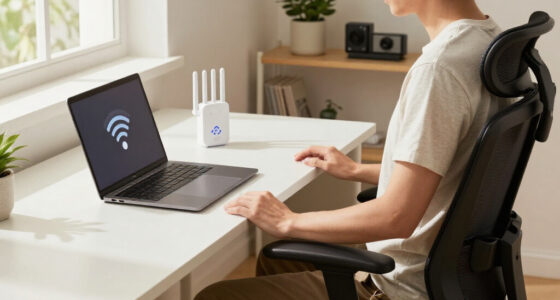
When comparing a laptop and a desktop for ergonomics, consider how each supports your posture. Laptops are portable but often require accessories like stands and external keyboards to prevent neck and wrist strain. Desktops offer more flexibility for adjusting monitors, keyboards, and chairs for a comfortable setup, reducing long-term discomfort. Want to discover how to optimize either workstation for health and productivity? Keep exploring to find practical tips tailored to your needs.

Get comfort and recovery gear delivered free with Prime
- Fast, free delivery on millions of items
- Prime Video, Amazon Music and more included
- Member-only deals all year
Key Takeaways
- Desktops offer customizable ergonomic setups with adjustable monitors, keyboards, and chairs for optimal posture.
- Laptops are portable but may require accessories like stands and external keyboards to improve ergonomics.
- Fixed desktop arrangements facilitate better eye level monitor positioning and reduce neck strain.
- Portable laptops can cause hunching or awkward angles without ergonomic accessories.
- Both setups benefit from ergonomic tools, but desktops generally provide easier long-term ergonomic customization.
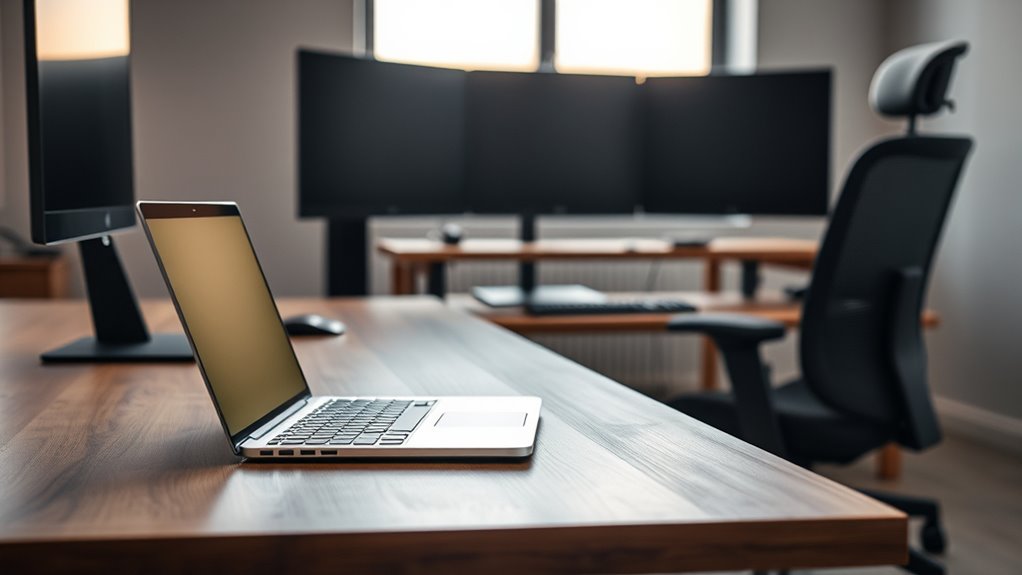
When choosing between a laptop and a desktop, understanding their key differences can help you make the best decision for your needs. One vital aspect to consider is how each setup impacts your comfort and ergonomics, which directly affects your productivity and health. Laptops are inherently portable, making them ideal if you need to work in different locations. However, their compact design can pose challenges for ergonomic positioning, especially when used without proper accessories. You might find yourself hunched over or stretching awkwardly to see the screen or reach the keyboard. To counter this, portable accessories like portable laptop stands and foldable external keyboards can elevate your device to a more comfortable height. These accessories not only improve your posture but also help reduce strain on your neck and wrists. Ergonomic accessories, such as external mice, wrist rests, and adjustable laptop stands, allow you to customize your workspace, making extended use more comfortable. Incorporating these tools into your setup ensures you maintain proper ergonomics, even on the go. Additionally, understanding the importance of air quality and proper ventilation can further enhance your workspace comfort and health.
Desktops, on the other hand, generally offer a more ergonomic workspace by design. Since they are stationary, you can set up your monitor at eye level and position your keyboard and mouse to suit your body’s natural angles. This setup reduces strain on your neck, shoulders, and wrists, especially if you invest in ergonomic accessories like adjustable monitor arms, ergonomic keyboards, and supportive chairs. With a fixed setup, it’s easier to create a dedicated, comfortable workspace that promotes good posture for long hours of work or gaming. While desktops lack portability, they allow for more extensive customization, giving you the opportunity to select ergonomic accessories that best fit your needs. This ensures that your workspace supports your health and productivity over time.
Frequently Asked Questions
How Can I Improve Ergonomics When Using a Laptop on the Go?
When using your laptop on the go, you can improve ergonomics by creating a portable workspace that supports good posture. Use a portable stand or foldable laptop riser to elevate the screen to eye level, reducing neck strain. Pair this with an external keyboard and mouse for better wrist positioning. Follow ergonomic travel tips like taking regular breaks, stretching, and maintaining a neutral wrist position to stay comfortable and prevent fatigue.
What Ergonomic Accessories Are Recommended for Desktop Setups?
For your desktop setup, ergonomic accessories make a big difference. You should consider a quality adjustable monitor stand to keep your screen at eye level, a supportive ergonomic keyboard and mouse to reduce strain, and an adjustable chair with lumbar support for comfort. A footrest can also improve posture, and wrist supports help prevent repetitive strain injuries. These accessories help you create a healthier, more comfortable workspace.
Are There Health Risks Specific to Prolonged Laptop Use?
Prolonged laptop use can lead to posture concerns, like neck and back pain, and eye strain from extended screen time. You might slump or crane your neck if your setup isn’t ergonomic, increasing discomfort over time. To reduce these risks, take regular breaks, adjust your screen height, and use an external keyboard and mouse. Staying mindful of your posture helps prevent long-term health issues caused by continuous laptop use.
How Does Monitor Height Impact Ergonomic Comfort?
Proper monitor alignment is vital for ergonomic comfort, as it helps you avoid eye strain. You should position your monitor so that the top of the screen is at or just below eye level, allowing you to look straight ahead. This reduces neck and eye strain, making your work more comfortable. Ensuring correct monitor height supports good posture and prevents fatigue during long periods of use.
Can Adjustable Desks Benefit Both Laptop and Desktop Users?
An adjustable desk benefits everyone, offering a game-changing level of ergonomic flexibility. You can easily switch between sitting and standing, preventing discomfort and boosting productivity. With adjustable desk benefits, both laptop and desktop users find it easier to customize their workspace to fit their needs. This flexibility helps reduce strain, improve posture, and makes your workspace truly adaptable, turning your daily work routine into a comfortable, health-conscious experience.
Conclusion
Choosing between a laptop and a desktop is like selecting the right pair of shoes—you want comfort, support, and the right fit. A laptop offers mobility but can strain your body if not set up properly. A desktop provides stability but limits movement. Think of your workspace as your stage—set it up thoughtfully, so your ergonomic needs take center stage. Ultimately, find what works best for you to keep your performance smooth and pain-free.
Fall Picks
fall essentials
As an affiliate, we earn on qualifying purchases.