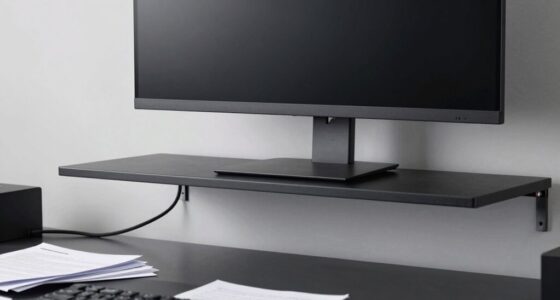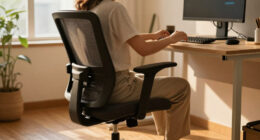
If you’re a short user, the most important feature to check is the desk’s minimum height; it should be around 25 inches or less to keep your elbows at a 90-degree angle while standing comfortably. Make sure the adjustment mechanism is smooth, quiet, and reliable so you can switch effortlessly between sitting and standing. A sturdy frame and ergonomic design help prevent strain during long work sessions. Keep exploring to find out more tips for setting up the ideal workspace.

Get comfort and recovery gear delivered free with Prime
- Fast, free delivery on millions of items
- Prime Video, Amazon Music and more included
- Member-only deals all year
Key Takeaways
- Ensure the desk’s minimum height is around 25 inches or less for comfortable use by short users.
- Verify smooth, noise-free adjustment mechanisms for reliable and effortless height changes.
- Confirm the desk’s stability and sturdy build to prevent wobbling during adjustments.
- Check maximum height to accommodate taller standing positions comfortably.
- Use ergonomic accessories like adjustable monitor arms to maintain proper eye level and posture.

If you’re short and looking for a standing desk that fits comfortably, understanding the right specifications is essential. The most critical factor is the desk height adjustment range. As a shorter user, you need a desk that can lower enough to keep your elbows at a 90-degree angle and your monitor at eye level without straining. Look for desks with a minimum height of around 25 inches or less, ensuring it can go lower than standard models. This way, you won’t have to compromise your posture or resort to makeshift solutions like stacking books. Proper desk height adjustment allows you to switch seamlessly between sitting and standing without discomfort, reducing the risk of neck and shoulder strain. Additionally, verifying the adjustment mechanism ensures smooth and reliable height changes over time. Beyond the height range, focus on the stability and build quality of the desk. An overly wobbly or flimsy desk can make it difficult to work efficiently and may cause frustration. A sturdy frame and reliable motorized or manual adjustment mechanisms are worth investing in. When adjusting the height, smooth, quiet movements are a bonus—they mean you can change positions frequently without disturbance or noise. Also, check the maximum height to ensure it’s sufficient for taller standing positions when needed, but prioritize the minimum height for your comfort. Considering the ergonomic design of the desk can further enhance comfort and support during long work sessions. Proper ergonomic setup is crucial for preventing strain, especially for shorter users who might otherwise struggle to find a perfect setup with standard desks. Incorporating ergonomic accessories can help optimize your workspace and reduce fatigue, making your setup more adaptable to your unique needs. Using adjustable accessories like monitor arms can help achieve the ideal eye level regardless of desk height, further improving your ergonomic setup. ergonomic accessories are especially important if the desk’s surface height doesn’t perfectly match your ergonomic needs. An adjustable monitor arm, for example, allows you to set your monitor at eye level regardless of your desk height, minimizing neck strain. Ergonomic accessories make it easier to maintain a neutral, healthy posture throughout your workday, which is especially fundamental for shorter users who might otherwise struggle to find a perfect setup with standard desks.
Products Worth Considering

Withings BPM Vision Blood Pressure Monitor

BowFlex Results Series 552 SelectTech Adjustable Dumbbell

BowFlex Results Series SelectTech Adjustable Dumbbells, Pair
As an affiliate, we earn on qualifying purchases.
Frequently Asked Questions
Can a Standing Desk Be Adjusted for Very Low Height Settings?
Yes, a standing desk can be adjusted for very low height settings, but you need to guarantee it offers reliable height adjustment options. Check that the desk’s height adjustment range suits your needs and that it remains stable at the lowest setting. A stable desk prevents wobbling or tipping, especially when you’re working at a lower height. Prioritize desks with smooth adjustment mechanisms and solid stability features for the best experience.
Do All Standing Desks Support Ergonomic Accessories for Short Users?
Think of ergonomic accessories as your trusted tools, but not all standing desks are built to support them for short user compatibility. Some desks may lack the adjustability or stability needed for accessories like keyboard trays or monitor arms suited for shorter individuals. You’ll want to choose a desk with customizable height options and sturdy support to guarantee your ergonomic setup truly works for you, keeping comfort and health at the forefront.
How Stable Are Desks With Lower Height Adjustments?
Desks with lower height adjustments can be quite stable if designed well. Look for models with sturdy frames and a solid base, as these features improve desk stability during height adjustments. When you change the height, guarantee the mechanism smoothly locks into place without wobbling. Proper stability is essential for safety and comfort, especially if you frequently adjust the desk height. Prioritize desks with positive user reviews on stability to find the best fit.
Are There Specific Brands Best Suited for Short Users?
Think of choosing a standing desk like finding the perfect dance partner—height compatibility is key. Brands like Fully and Uplift are known for their adjustable ranges, making them ideal for short users. They offer reliable stability and smooth height adjustments, ensuring you won’t feel out of step. For short users, these brands’ customizable options make them top choices, helping you stand comfortably and confidently throughout your day.
What Is the Minimum Height a Standing Desk Can Reliably Reach?
The minimum height a standing desk can reliably reach varies, but most adjustable desks go down to about 24 inches. When choosing, focus on height adjustment range and desk stability at lower settings. You want a desk that stays steady and doesn’t wobble when fully lowered. Make sure the desk’s lowest height fits your stature comfortably and that it maintains stability during use, especially at the minimum setting.
Conclusion
In the end, choosing the right standing desk is all about your height and comfort. For example, imagine Sarah, who’s 5’2”, struggling with a desk that’s too high. Once she found a model with adjustable height and a comfortable keyboard tray, her posture improved instantly. By prioritizing specs like height range and ergonomic features, you can find a desk that fits perfectly, helping you stay productive and pain-free all day long.