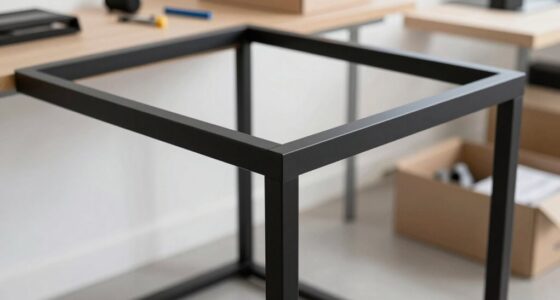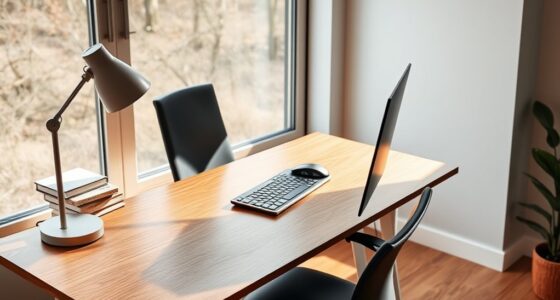
To create a balanced sit-stand schedule, aim to stand for 30 to 60 minutes every 2 to 3 hours during your workday. For example, try standing mid-morning and in the afternoon. Listen to your body and adjust based on comfort, adding breaks if needed. Using ergonomic accessories like height-adjustable desks and anti-fatigue mats can make shifts smoother. If you want to find out how to fine-tune your schedule, keep exploring these helpful tips.
Key Takeaways
- Aim for 30 to 60 minutes of standing every 2 to 3 hours during the workday.
- Distribute standing intervals evenly, such as mid-morning and afternoon, to promote movement.
- Adjust standing duration based on personal comfort and fatigue levels to prevent discomfort.
- Use ergonomic accessories like adjustable desks and anti-fatigue mats to facilitate safe standing.
- Incorporate regular breaks and gradual increases in standing time for long-term health benefits.
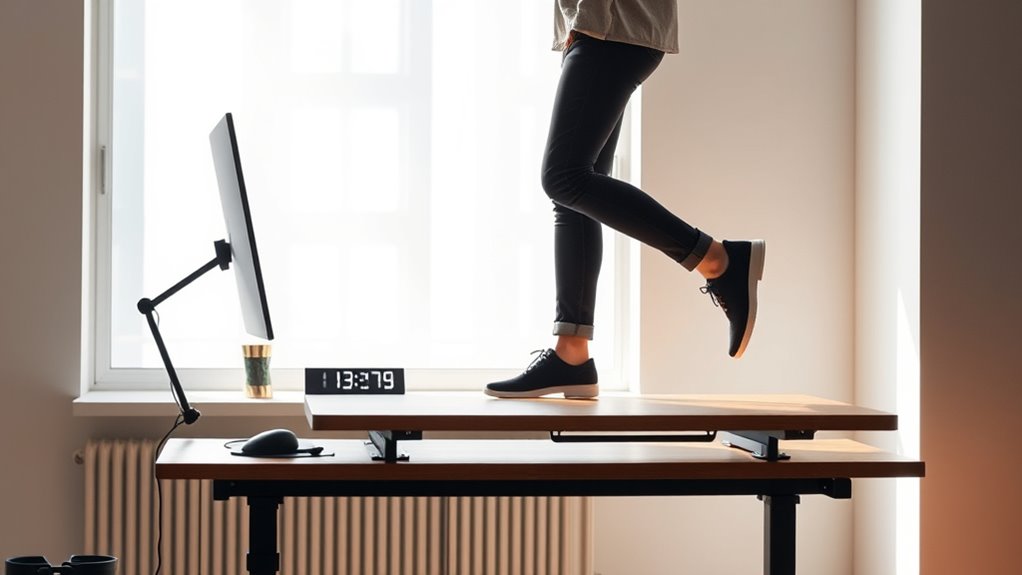
Implementing a sit-stand schedule can considerably boost your productivity and overall health. When you alternate between sitting and standing throughout the workday, you not only reduce the physical strain caused by prolonged sitting but also improve your focus and energy levels. To make the most of this approach, it’s essential to understand how long to stand versus sit each day. Typically, the goal is to break up long periods of sitting with frequent intervals of standing, which helps prevent discomfort and supports your overall well-being.
Alternating sitting and standing boosts health and focus throughout the workday.
A good starting point is to aim for about 30 to 60 minutes of standing every 2 to 3 hours. For example, if you work an 8-hour day, you might stand for 30 minutes around mid-morning, take a break, then stand again for another 30 minutes in the afternoon. This pattern helps distribute the physical activity evenly, preventing fatigue and reducing the risk of musculoskeletal issues. Remember, the key is to listen to your body—if you start feeling discomfort or fatigue, adjust your standing intervals accordingly.
To facilitate these transitions comfortably and safely, ergonomic accessories are invaluable. Investing in a height-adjustable desk allows you to switch seamlessly between sitting and standing. Additionally, ergonomic accessories like anti-fatigue mats make standing more comfortable, while monitor stands or adjustable arms ensure your screen stays at eye level, maintaining proper posture. These tools help you maintain proper alignment, reduce strain on your neck and back, and make standing more sustainable during longer periods.
The health benefits of a well-structured sit-stand schedule are numerous. Regularly changing positions reduces the risk of chronic conditions such as obesity, cardiovascular disease, and type 2 diabetes. It also alleviates common complaints like lower back pain, neck strain, and poor circulation. Standing encourages movement, which boosts blood flow and can even improve your mood and mental clarity. By integrating standing into your daily routine with the help of ergonomic accessories, you foster habits that support long-term health and productivity.
Ultimately, finding the right balance between sitting and standing depends on your individual needs and comfort. Start with manageable intervals, use ergonomic accessories to support proper posture, and gradually increase your standing time as your body adapts. This approach not only makes your workday more dynamic but also promotes a healthier lifestyle. With consistent effort, you’ll experience tangible health benefits and a noticeable boost in your daily productivity.

ErGear 48 X 24 Inch Height Adjustable Electric Standing Desk, Black
- Electric Height Adjustable Standing Desk for Comfortable Work…
- Powerful Motor with Memory Presets – Equipped with…
- Exceptional Stability Steel Frame – Built with a…
As an affiliate, we earn on qualifying purchases.
As an affiliate, we earn on qualifying purchases.
Frequently Asked Questions
Can a Sit-Stand Schedule Improve Mental Focus?
Yes, a sit-stand schedule can improve your mental focus by providing ergonomic benefits that reduce discomfort and fatigue. Alternating between sitting and standing boosts your blood flow and oxygen delivery to the brain, supporting cognitive enhancement. When you switch positions regularly, you stay more alert and engaged, which helps you concentrate better on tasks. Overall, incorporating a sit-stand routine can lead to clearer thinking and increased productivity throughout your day.
How Do I Customize My Schedule for My Job?
Your schedule is like a tailor-made suit—customized to fit your needs. To personalize it, assess your work tasks and energy cycles, then incorporate ergonomic adjustments for comfort. Use scheduling flexibility to alternate between sitting and standing based on your workload, making sure to listen to your body’s signals. Adjust your sit-stand intervals regularly to stay comfortable and productive, creating a routine that works seamlessly with your job demands.
Are There Any Health Risks With Excessive Standing?
Standing excessively can lead to health risks like muscle fatigue and varicose veins. When you stand too long without breaks, your muscles tire, and blood flow may be restricted, increasing vein pressure. To avoid these issues, alternate between sitting and standing, take regular breaks, and wear compression stockings if needed. Staying mindful of your posture and movement helps protect your health while enjoying the benefits of a sit-stand routine.
What Equipment Is Best for a Sit-Stand Desk?
You’ll want ergonomic accessories like adjustable keyboard trays and monitor arms to maximize comfort. For desk height adjustment, a sturdy, motorized or manual sit-stand desk is best, allowing seamless shifts between sitting and standing. Studies show using proper equipment can boost productivity by 10%. Choose a desk with smooth height adjustment and accessories that promote proper posture, helping you avoid strain and stay comfortable throughout your workday.
How Early Should I Start Transitioning to a Sit-Stand Routine?
You should start shifting to a sit-stand routine gradually, ideally within the first week of using ergonomic accessories. Begin by standing for 15-30 minutes every hour, then slowly increase as your body adapts. Remember to incorporate posture tips like keeping your feet flat and your monitor at eye level. This gradual change helps prevent discomfort and promotes better ergonomics, making the switch sustainable and comfortable.

FEATOL Anti Fatigue Mat for Standing, 9/10 Extra Thick Ergonomic Standing Desk Mat, Comfort Memory Foam Standing Mat at Home,Office All Day (20" x 32", Black, 1PC)
- Anti Fatigue Design: Reduces stress on feet, knees, and back
- Ergonomic Thickness: 9/10 inch high-density memory foam for comfort
- Durable & Easy to Clean: PU leather surface resists stains, tears, and deformation
As an affiliate, we earn on qualifying purchases.
As an affiliate, we earn on qualifying purchases.
Conclusion
Incorporate your sit-stand schedule seamlessly, striking a satisfying balance between sitting and standing. Stay consistent, switch schedules smoothly, and savor the benefits of better health and boosted productivity. Remember, small shifts in your day can make a significant difference, so stay steadfast, stay spirited, and keep your routine reliable. By blending balance and movement, you’ll build a better, brighter, and healthier day — one stand and sit at a time.

ErGear Single Monitor Arm, Fully Adjustable Monitor Mount for 13–34 Inch Screens, Fast Install Computer Monitor Stand with Tool-Free VESA Mount, Cable Management, Holds 19.8 lbs, Max VESA 100x100mm
- Compatibility: Fits 13–34 inch monitors up to 19.8 lbs
- VESA Compatibility: Supports 75x75mm and 100x100mm patterns
- Durable Construction: Tested over 20,000 cycles for longevity
As an affiliate, we earn on qualifying purchases.
As an affiliate, we earn on qualifying purchases.

MOSISO Wrist Rest Support for Mouse Pad&Keyboard Set, Antique Green
- Keyboard Wrist Rest Size: 17.32 x 3.15 inches
- Mouse Pad Wrist Support Size: 9.65 x 8.66 inches
- Coaster Diameter: 3.9 inches
As an affiliate, we earn on qualifying purchases.
As an affiliate, we earn on qualifying purchases.