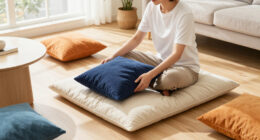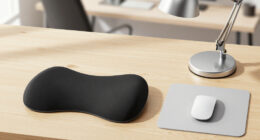
After a tough sitting day, start by correcting your posture—stand up, pull your shoulders back, and imagine a string lifting your head. Adjust your workspace so your monitor is eye level and support your lower back. Incorporate quick movement breaks, stretch tight areas like hips, hamstrings, and shoulders, and practice deep breathing to boost circulation. Stay hydrated and take short walks to help your body recover fast. Keep going for more tips to feel better quickly.
Key Takeaways
- Correct your posture regularly to relieve strain on the spine, shoulders, and neck.
- Adjust your workspace ergonomically: support your lower back and position your monitor at eye level.
- Incorporate stretching and movement exercises targeting tight muscles to reduce stiffness and improve flexibility.
- Practice deep breathing to enhance circulation, reduce stress, and promote muscle oxygenation.
- Stay hydrated and take short walking breaks to boost blood flow and support recovery after prolonged sitting.
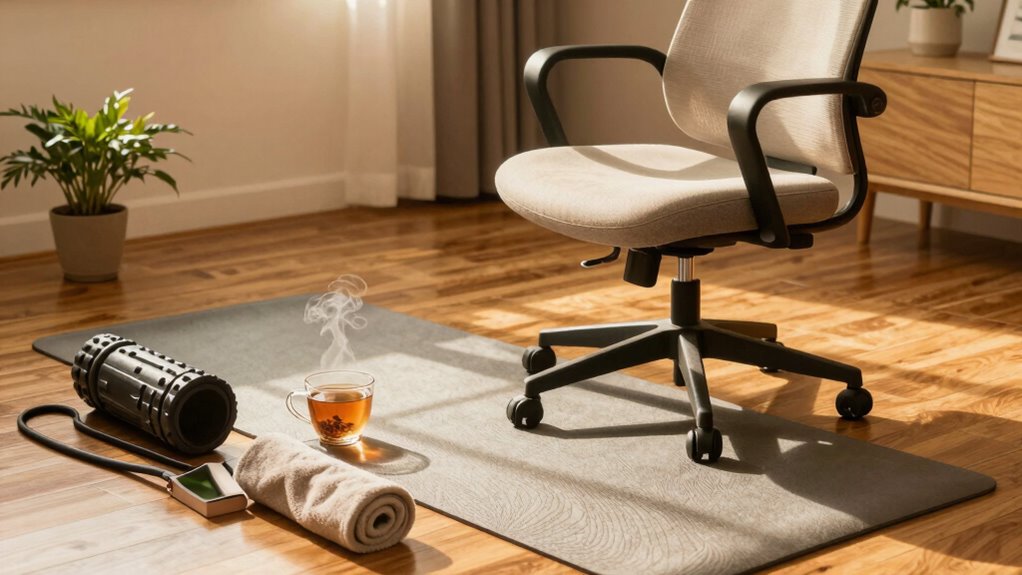
After a long sitting day, your body needs intentional recovery to prevent stiffness and promote circulation. Sitting for hours can take a toll on your muscles, joints, and posture, making it essential to focus on techniques that restore comfort and alignment. Sitting for extended periods can also impact your energy levels and mental clarity, emphasizing the importance of restorative practices. One of the most effective ways to start your recovery is by addressing your posture. Posture correction isn’t just about standing tall; it’s about realigning your spine, shoulders, and neck to reduce strain and prevent long-term discomfort. Take a moment to stand up and evaluate how you’re sitting. If your shoulders are hunched forward or your head is jutting out, gently pull your shoulders back and imagine a string pulling your head upward. This simple act can immediately relieve tension and reset your alignment.
Gently pull your shoulders back and imagine a string lifting your head to realign and relieve tension.
Next, consider ergonomic adjustments in your workspace. Small changes to your chair, desk, and monitor height can make a big difference. Ensure your feet are flat on the floor, your knees are at a 90-degree angle, and your lower back is supported. Adjust your chair to keep your hips slightly above your knees, encouraging proper lumbar support. Position your computer screen at eye level to avoid craning your neck downward or upward. These ergonomic adjustments help maintain correct posture throughout your sitting periods and make it easier for your body to recover after a demanding sitting day. Incorporating posture correction techniques into your routine can further enhance your alignment and comfort. Additionally, understanding how regional flavors influence ergonomic design can help tailor your workspace to support natural movement. Paying attention to these ergonomic principles can significantly reduce the risk of discomfort and injury. Recognizing the importance of muscle balance can also guide you in choosing effective stretches and strengthening exercises.
Once you’ve corrected your posture and optimized your workspace, focus on movement. Gentle stretching exercises target tight muscles that have become stiff from prolonged sitting. Focus on stretching your hip flexors, hamstrings, chest, and shoulders. These areas tend to tighten when you sit for hours and can lead to discomfort or misalignment if left unaddressed. Incorporating dynamic movement routines can help prevent stiffness and improve circulation. Incorporate some deep breathing exercises to promote circulation—inhale deeply through your nose, hold for a few seconds, then exhale slowly through your mouth. This not only helps oxygenate your muscles but also calms your nervous system.
Finally, don’t forget the importance of hydration and active recovery. Drinking plenty of water supports circulation and helps flush out toxins accumulated during a sedentary day. If possible, take short walks or stand periodically to keep blood flowing. Even a quick five-minute walk around your space can make a noticeable difference. By combining posture correction, ergonomic adjustments, movement, and hydration, you create a comprehensive recovery routine that helps your body bounce back faster from a brutal sitting day. Consistency is key—making these habits a part of your daily routine can prevent discomfort and improve your overall well-being.

Marsail Ergonomic Office Chair: Office Desk Chair with High Back Mesh and Adjustable Lumbar Support Rolling Work Swivel Task Chairs with Wheel 3D Armrests and Headrest
- Fully Adjustable Headrest: 2D adjustable for personalized support
- Reclining Backrest: Adjusts from 90° to 120°
- 3D Adjustable Armrests: Customizable for comfort
As an affiliate, we earn on qualifying purchases.
As an affiliate, we earn on qualifying purchases.
Frequently Asked Questions
How Long Does Full Recovery Typically Take After a Brutal Sitting Day?
Full recovery after a brutal sitting day usually takes about 1 to 3 days, depending on your activity level and how well you implement posture correction and ergonomic adjustments. During this time, focus on stretching, taking regular breaks, and strengthening your core. By consciously correcting your posture and optimizing your workspace ergonomics, you can speed up recovery and prevent future discomfort. Consistency is key to long-term relief and better spinal health.
Can Specific Stretches Prevent Soreness Before Long Sitting Sessions?
Yes, specific stretches can help prevent soreness before long sitting sessions. Focus on stretches that improve your seating posture, like hip flexor, hamstring, and lower back stretches. Using ergonomic accessories, such as supportive cushions or adjustable chairs, also promotes better posture. Regularly incorporating these stretches and ergonomic tools into your routine can reduce muscle tension and soreness, making long sitting periods more comfortable and less damaging.
Are There Any Foods That Aid in Faster Muscle Recovery Post-Sitting?
Imagine you’re in a medieval tavern—your muscles need fuel to recover. Foods rich in protein, like lean meats, eggs, or dairy, are your muscle foods, aiding faster recovery. Recovery snacks like nuts, Greek yogurt, or protein bars deliver quick nourishment after long sitting. These choices help reduce soreness, repair tissues, and get you back to feeling your best fast. Keep these foods handy for peak muscle recovery.
Is It Better to Rest or Stay Active After a Long Sitting Day?
Staying active after a long sitting day is better for you. It helps improve circulation and reduces stiffness. Incorporate ergonomic solutions and workplace adjustments, like stretching or short walks, to counteract the effects of prolonged sitting. Avoid remaining sedentary; instead, move regularly to prevent discomfort and promote recovery. These small changes can make a significant difference in how you feel and help you recover faster.
What Signs Indicate a More Serious Injury From Prolonged Sitting?
If your pain is a wildfire spreading, it’s a sign to see a healthcare professional. Persistent numbness, weakness, or tingling in your limbs, along with sharp or stabbing pain, indicate a more serious injury. These symptoms may require posture correction and ergonomic adjustments to prevent further damage. Don’t ignore these signs—prioritize your health by seeking expert advice and making necessary changes to avoid long-term issues.

BoYata Monitor Stand, Adjustable Height Metal Desktop Riser, Black
- Adjustable Height: Twist knob for height customization
- Ergonomic Design: Promotes comfortable eye and neck level
- High Weight Capacity: Supports up to 33.06 lbs with stability
As an affiliate, we earn on qualifying purchases.
As an affiliate, we earn on qualifying purchases.
Conclusion
Even if your sitting day felt brutal, remember that your body is resilient. This recovery routine isn’t about perfection but progress. It’s easy to dismiss a tough day, but taking just a few minutes to stretch and move can make all the difference. Don’t let fatigue or frustration hold you back—your body deserves kindness. Embrace these small steps, and trust that each effort brings you closer to feeling better and stronger tomorrow.
As an affiliate, we earn on qualifying purchases.
As an affiliate, we earn on qualifying purchases.