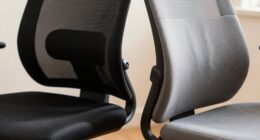
You might not realize it, but the most overlooked seat edge detail is its shape and edge design. When edges are sharp, sloped, or unpadded, they cut into your thighs and restrict circulation, causing your legs to go numb over time. Properly rounded, beveled, or cushioned edges help distribute pressure evenly and prevent discomfort. Ignoring this small detail can lead to long-term health issues. Keep going to discover how to optimize your seating for lasting comfort.
Key Takeaways
- Many desk workers overlook the seat edge’s shape, causing pressure points on thighs that lead to numbness.
- Sloped or sharp seat edges restrict blood flow, resulting in tingling and discomfort over time.
- Ignoring rounded or beveled edges can increase pressure and reduce circulation in the legs.
- Properly designed edges distribute weight evenly, preventing numbness during long sitting periods.
- Failing to consider seat edge ergonomics often leads to leg discomfort that worsens with extended desk work.
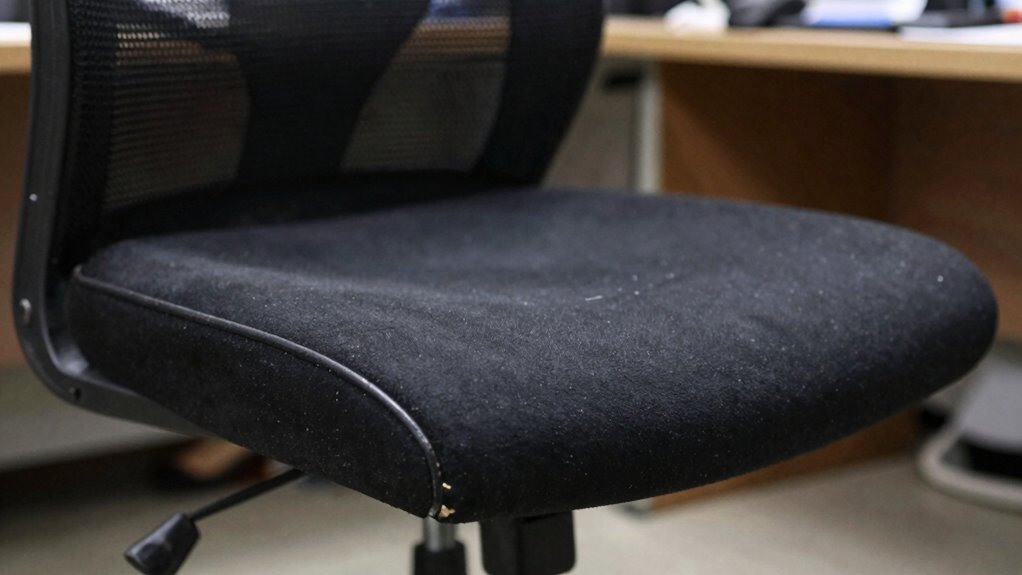
Many desk workers overlook the importance of the seat edge detail, even though it plays a crucial role in maintaining comfort and preventing strain. When you spend hours at your desk, the way your chair’s seat edge interacts with your legs and thighs can markedly impact your overall comfort. A poorly designed seat edge can cause pressure points, restrict circulation, and lead to numbness or discomfort after just a short period. That’s where ergonomic chair design comes into play, especially the thoughtful integration of features like a rounded, beveled, or cushioned seat edge. These details are often subtle but make a big difference in how your body responds during long work sessions.
A well-designed seat edge enhances comfort by reducing pressure points and improving circulation during long work hours.
If your chair’s seat edge isn’t properly designed, you might find yourself shifting constantly or feeling pins and needles in your legs. The goal of good ergonomic chair design is to distribute your weight evenly, reducing pressure on sensitive areas like your thighs and knees. An ideal seat edge gently slopes away from your body, preventing the edges from digging into your legs and cutting off circulation. This simple detail is often overlooked because it seems minor, but it directly influences your comfort and productivity. Proper design considerations can significantly enhance your sitting experience and help prevent discomfort. Additionally, paying attention to these details can contribute to long-term health benefits by reducing strain and promoting better circulation. Ensuring the right ergonomic features are incorporated can prevent issues before they develop. Recognizing how design details affect circulation can help you choose a better chair for prolonged use.
Alongside the seat edge, lumbar support features are equally essential for your overall posture. When your chair provides adequate lumbar support, it encourages you to sit upright, minimizing strain on your lower back and shoulders. Proper lumbar support also helps keep your spine aligned, reducing the likelihood of developing discomfort or long-term issues. When combined with a well-designed seat edge, the ergonomic chair ensures your entire lower body is supported comfortably. You won’t have to adjust your position constantly or deal with numb legs that make concentration impossible.
You might not realize it now, but neglecting these small details can lead to bigger problems down the line. Numbness, tingling, or discomfort in your legs are signs that your seating setup isn’t supporting your body properly. Investing in a chair with carefully considered ergonomic features, including a thoughtfully designed seat edge and robust lumbar support, helps you maintain focus and comfort throughout the day. It’s not just about luxury; it’s about preventing pain and fatigue that can affect your work and health. Paying attention to ergonomic design can make a significant difference in your daily comfort and overall well-being.

QLTPLUS Office Desk Chair for Long Hours & Lower Back Pain Relief – 4“ Thick Molded Foam Cushion, Enhanced Lumbar Support, Padded Flip-up Armrests, New Year Workspace Upgrade, Black
【Start the New Year with Better Posture】 Designed for those who sit most of the day, this ergonomic…
As an affiliate, we earn on qualifying purchases.
As an affiliate, we earn on qualifying purchases.
Frequently Asked Questions
How Can I Prevent Numbness Without Changing My Chair?
To prevent numbness without changing your chair, focus on improving your posture awareness and using ergonomic accessories. Adjust your sitting position so your hips are level, and your feet are flat on the ground. Use a footrest if needed. Consider an ergonomic cushion or seat pad to reduce pressure on your thighs and hips. Regularly stand and stretch to encourage circulation, helping prevent numbness and discomfort.
Are There Specific Seat Edge Materials That Reduce Numbness?
Yes, choosing ergonomic cushioning and soft edge materials can help reduce numbness. Look for seats with rounded, padded, or foam-edged designs that distribute pressure evenly. Materials like memory foam, gel-infused padding, or silicone provide gentle support and prevent sharp pressure points. Prioritize seats with smooth, contoured edges that align comfortably with your thighs, promoting better circulation, reducing numbness, and making your sitting experience more comfortable throughout the day.
How Often Should I Adjust My Sitting Position During Work?
You should adjust your sitting position every 30 to 60 minutes to prevent numbness and discomfort. Use ergonomic footrests to keep your feet supported and maintain proper posture. Incorporate lumbar support options to reduce strain on your back. Regular adjustments help improve circulation, minimize pressure on your legs, and keep you comfortable throughout the workday. Taking these small steps boosts productivity and overall well-being.
Can Seat Edge Modifications Improve Circulation?
Yes, seat edge modifications can improve circulation. Using ergonomic cushions can help you sit with better posture, reducing pressure on your thighs and hips. Adjusting armrests properly ensures your legs aren’t compressed or crossed, promoting better blood flow. These modifications prevent numbness and discomfort, making your workday more comfortable. Incorporate ergonomic cushions and adjustable armrests into your setup for maximum circulation and overall ergonomic support.
What Signs Indicate My Seat Edge Is Causing Health Issues?
Did you know 70% of desk workers report discomfort from poorly designed seat edges? If you notice numbness, tingling, or persistent soreness in your legs or hips, your seat edge may be causing health issues. Check if your ergonomic cushions or seat padding aren’t providing enough support, leading to pressure points. These signs indicate it’s time to adjust your seat or consider a different cushion to improve circulation and comfort.

SweetSlubr Seat Cushion for Tailbone Pain Relief, Office Chair Cushion, Memory Foam Large Chair Cushion with Non-Slip Cover for Soft Support at Office Chair, Car Seat, Airplane Black/Large
Superior Comfort: Crafted with high-quality memory foam,cushion seat provides exceptional comfort for extended periods of sitting, relieving pressure…
As an affiliate, we earn on qualifying purchases.
As an affiliate, we earn on qualifying purchases.
Conclusion
Don’t neglect the seat edge, dear desk dweller. Diligently discover and determine the delicate details that dictate your comfort. By balancing your body and bearing in mind the minor modifications, you’ll banish numbness and boost your blissful breaks. Remember, small shifts make a significant difference—so stay savvy, stay seated smartly, and savor a seat that’s snug, supportive, and stress-free. Your body will thank you for it!
SweetSlubr Seat Cushion for Tailbone Pain Relief, Office Chair Cushion, Memory Foam Large Chair Cushion with Non-Slip Cover for Soft Support at Office Chair, Car Seat, Airplane Black/Large
Superior Comfort: Crafted with high-quality memory foam,cushion seat provides exceptional comfort for extended periods of sitting, relieving pressure…
As an affiliate, we earn on qualifying purchases.
As an affiliate, we earn on qualifying purchases.

TRALT Office Chair Ergonomic Desk Chair, 330 LBS Home Mesh Office Desk Chairs with Wheels, Comfortable Gaming Chair, High Back Office Chair for Long Hours (Black)
Classic Lumbar Support Ergonomic Design: Contours to the natural curve of the lumbar spine. The split lumbar support…
As an affiliate, we earn on qualifying purchases.
As an affiliate, we earn on qualifying purchases.