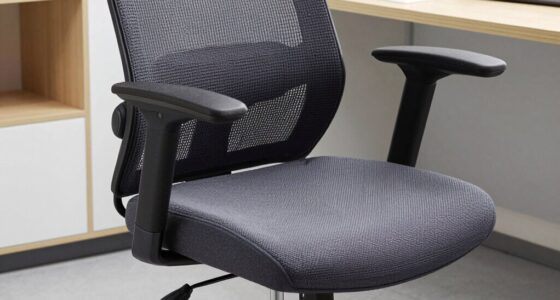
Sitting without a backrest can be safe and even beneficial if you maintain proper posture and engage your core muscles. Sit with your head, shoulders, and hips aligned, and keep your feet flat on the ground. Engage your core before sitting down and adjust your position regularly to prevent strain. With mindful practice and good technique, you can strengthen your posture. Keep going, and you’ll discover how to do it safely and effectively.

Get comfort and recovery gear delivered free with Prime
- Fast, free delivery on millions of items
- Prime Video, Amazon Music and more included
- Member-only deals all year
Key Takeaways
- Engage your core muscles before sitting to support your spine and maintain proper alignment.
- Lower onto the seat with controlled movements, keeping your back straight and shoulders relaxed.
- Keep feet flat on the ground, hips at a comfortable height, and avoid crossing your legs.
- Regularly monitor and adjust your posture to prevent fatigue and discomfort during unsupported sitting.
- Strengthen your core through exercises like planks and abdominal workouts to improve stability and safety.

Sitting without a backrest can be comfortable and even beneficial if you know how to maintain proper posture. When you’re not leaning against a support, your body relies more heavily on your muscles to keep you upright. This means that developing good posture awareness is essential. You need to be mindful of how you position your head, shoulders, and hips to prevent strain or discomfort. Instead of slouching or leaning forward, aim to keep your ears aligned with your shoulders and your hips directly under your torso. This alignment helps distribute your weight evenly and reduces unnecessary stress on your spine.
Building core strength plays a pivotal role in supporting proper posture while sitting without a backrest. Your core muscles—those around your abdomen, lower back, and pelvis—act as your body’s natural stabilizers. When these muscles are strong, they enable you to maintain an upright position without relying on external support. Incorporating core exercises into your routine, like planks or abdominal workouts, can considerably improve your ability to sit comfortably and safely without a backrest. Remember, core strength isn’t just about visible abs; it’s about creating a solid foundation that keeps your entire upper body aligned.
To sit safely without a backrest, start by engaging your core muscles before sitting down. As you lower yourself onto the chair or surface, tighten your abdominal muscles slightly, as if preparing for a gentle punch to your stomach. Once seated, keep your feet flat on the ground, shoulder-width apart, and distribute your weight evenly across your hips. Avoid crossing your legs or leaning to one side. Instead, maintain a slight curve in your lower back—sometimes called a neutral spine—by gently tucking your pelvis forward. This helps prevent slouching and supports your lumbar region.
It’s important to be aware of how you’re sitting throughout your time without a backrest. Regularly check your posture and adjust as needed. If you start to feel fatigue or discomfort, take a moment to stand, stretch, or engage your core muscles again. Over time, as your core becomes stronger and your posture awareness improves, sitting without a backrest can become more natural and less taxing. Just remember, the key is posture awareness and mindfulness. With proper technique, sitting without a backrest isn’t inherently unsafe; it can actually enhance your posture, strengthen your core, and promote better overall back health.
ergonomic office chair without backrest
As an affiliate, we earn on qualifying purchases.
As an affiliate, we earn on qualifying purchases.
Frequently Asked Questions
Can Sitting Without a Backrest Improve Posture Long-Term?
Sitting without a backrest can improve your posture alignment and strengthen muscle engagement over time. As you rely on core and back muscles to maintain balance, your posture naturally becomes better. However, it’s important to start gradually to avoid strain. If done correctly, this practice can lead to long-term posture benefits, but listen to your body and make sure you don’t overexert yourself to prevent discomfort or injury.
Are There Specific Exercises to Strengthen Core Muscles for This Practice?
Yes, you can strengthen your core muscles with specific exercises like planks, bridges, and leg raises that promote core activation. Incorporate balance exercises such as single-leg stands or stability ball workouts to enhance stability. Regularly practicing these moves helps you develop better core strength, making it easier and safer to sit without a backrest. Focus on controlled movements and proper form for ideal results and reduced injury risk.
How Often Should I Practice Sitting Without a Backrest?
You should practice sitting without a backrest a few times a week, gradually increasing duration to build strength and stability. This habit offers ergonomic benefits by improving posture and core engagement. During your sessions, focus on breathing techniques to stay relaxed and centered. Consistent practice helps you adapt safely, but listen to your body and avoid overdoing it to prevent strain or discomfort.
Does Sitting Without a Backrest Help Reduce Back Pain?
Sitting without a backrest is like fine-tuning your body’s engine; it can help reduce back pain if you make ergonomic adjustments. By actively engaging your core and maintaining proper spinal alignment, you support your back naturally. This practice encourages better posture and strengthens muscles, which may lessen discomfort over time. Just remember, listen to your body and ease into it gradually to avoid strain or injury.
Are There Age Restrictions for Practicing Sitting Without a Backrest?
Age considerations matter when practicing sitting without a backrest. Younger individuals with strong core muscles generally find it safer and more beneficial, while older adults or those with back issues should exercise caution. Always prioritize safety precautions by starting slowly, maintaining good posture, and listening to your body. If you experience discomfort or pain, discontinue immediately and consult a healthcare professional to ensure it’s appropriate for your age and health condition.
core strengthening exercise equipment
As an affiliate, we earn on qualifying purchases.
As an affiliate, we earn on qualifying purchases.
Conclusion
Sitting without a backrest might seem risky, but if you maintain proper posture and engage your core, it can be safe and even beneficial. Think of your body as a natural support system—your muscles are designed to hold you upright. While it’s not for everyone, with mindful alignment and regular practice, sitting without a backrest can strengthen your back and improve balance. Just listen to your body and stop if you feel discomfort.
As an affiliate, we earn on qualifying purchases.
stability ball for core workouts
As an affiliate, we earn on qualifying purchases.
As an affiliate, we earn on qualifying purchases.
Halloween Picks
halloween
As an affiliate, we earn on qualifying purchases.