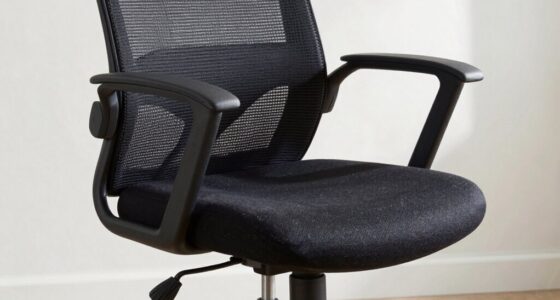
To avoid sitting posture mistakes, make sure you’re not slouching or leaning forward for long periods, and avoid crossing your legs for too long. Keep your back supported with an ergonomic chair, and position your monitor at eye level to prevent neck strain. Move regularly to promote circulation and adjust your workspace for better alignment. If you want tips to improve your sitting habits, keep exploring these simple strategies for better comfort and health.
Key Takeaways
- Avoid slouching and leaning forward; sit upright with your back supported.
- Refrain from crossing legs for long periods; keep feet flat on the floor or footrest.
- Use ergonomic accessories like lumbar supports and monitor stands to maintain proper alignment.
- Incorporate posture awareness exercises such as shoulder rolls and chin tucks throughout the day.
- Regularly adjust your workstation and change positions to prevent stiffness and promote good posture.

Many people unknowingly adopt sitting postures that can lead to discomfort and long-term health issues. Slouching, leaning forward, or sitting with your legs crossed for hours might seem harmless, but over time, these habits can cause back pain, neck strain, and poor circulation. The good news is that small adjustments can make a big difference. Incorporating ergonomic accessories into your workspace can help support better posture and reduce strain. For example, an adjustable chair with lumbar support encourages proper spinal alignment, while a sit-stand desk allows you to change positions throughout the day, preventing stiffness and fatigue. Using ergonomic accessories isn’t just about comfort; it’s about actively reducing the risk of developing chronic issues caused by poor sitting habits.
Equally important are posture awareness exercises, which train your body to maintain better alignment naturally. These exercises focus on strengthening the muscles responsible for good posture, such as your core, back, and neck muscles. By regularly practicing posture awareness exercises, you become more conscious of how you sit and can correct bad habits before they become ingrained. Simple movements like shoulder rolls, chin tucks, and seated spinal twists can be done at your desk to alleviate tension and reinforce proper posture. Over time, these exercises help develop muscle memory, making it easier to sit correctly without thinking about it constantly. Additionally, integrating machine learning advancements can help develop personalized posture correction programs that adapt to your specific needs over time.
To start improving your sitting posture, begin by evaluating your current habits. Pay attention to how you position yourself when working or relaxing. Are your shoulders rounded? Is your lower back unsupported? Once you identify these habits, introduce ergonomic accessories that encourage better alignment. For instance, a footrest can help keep your legs at a 90-degree angle, reducing pressure on your lower back and hips. Meanwhile, a monitor stand ensures your screen is at eye level, preventing neck strain. Pairing these adjustments with posture awareness exercises strengthens your ability to sit correctly throughout the day. Remember, consistency is key—small, frequent adjustments will have a lasting impact on your overall comfort and health.
Top picks for "sitt posture mistak"
Open Amazon search results for this keyword.
As an affiliate, we earn on qualifying purchases.
Frequently Asked Questions
How Can I Tell if My Sitting Posture Is Correct?
You can tell if your sitting posture is correct by paying attention to your comfort and alignment. Keep your back straight, shoulders relaxed, and feet flat on the ground. Use ergonomic accessories like adjustable chairs and footrests to support proper posture. Practice posture awareness throughout the day; if you notice pain or discomfort, it’s a sign your posture needs adjusting. Regularly check in with yourself to maintain good alignment.
What Are the Long-Term Health Risks of Poor Posture?
Poor posture can lead to long-term health issues like spinal misalignment and increased muscle strain. Over time, this may cause chronic back, neck, and shoulder pain, and even nerve problems. Maintaining proper spinal alignment reduces these risks, helping you avoid discomfort and injury. Regularly correcting your posture now can safeguard your musculoskeletal health, ensuring you stay comfortable and active well into the future.
Are There Specific Exercises to Improve Sitting Posture?
Yes, you can improve your sitting posture with targeted exercises. Focus on core strengthening to support your spine and incorporate stretching routines for tight muscles. Try planks or bridges to boost core stability, and stretch your chest and hip flexors regularly. These exercises help realign your body, reduce discomfort, and promote better posture over time. Consistency is key—make them part of your daily routine for lasting benefits.
How Often Should I Change My Sitting Position?
You should change your sitting position every 30 to 60 minutes. Research shows that staying in one position for too long can cause discomfort and strain. To prevent this, adjust your chair regularly and take short breaks to stand or stretch. Proper chair adjustments help maintain good posture, and changing your sitting duration reduces the risk of aches and injuries, keeping you more comfortable and focused throughout the day.
Can Ergonomic Chairs Completely Prevent Posture Problems?
Ergonomic chairs substantially reduce posture problems, but they can’t completely prevent them. Their ergonomic design encourages proper alignment and supports good posture, helping you stay comfortable longer. However, maintaining posture awareness is essential—no chair alone can fix poor habits. You should combine the right ergonomic chair with regular movement, stretches, and mindful sitting to truly protect your health and prevent discomfort.
Conclusion
Poor sitting posture might seem harmless, but it can lead to lasting discomfort and health issues. Yet, by making small adjustments, you can transform your daily routine into a healthier habit. Think of your posture as the foundation of your well-being—neglect it, and problems build up silently. So, don’t wait for pain to remind you; take control now. Fix your sitting habits today, and enjoy a more comfortable, pain-free tomorrow.