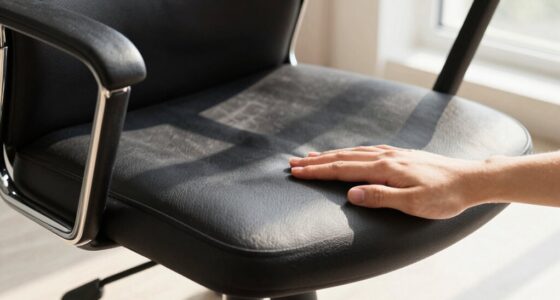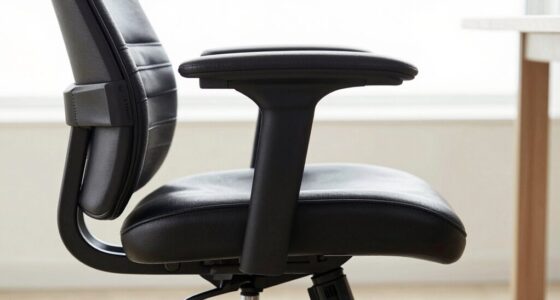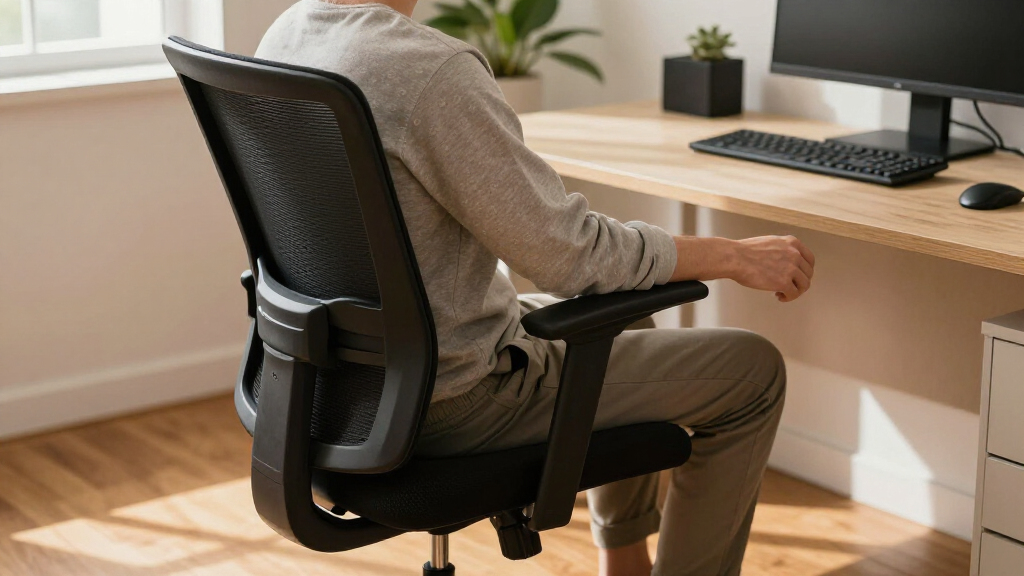

People comparing the Herman Miller Aeron and Steelcase Leap are usually deciding whether they want a breathable, structured mesh chair or a more adaptable upholstered chair for long workdays. Both are premium options built for regular office use, but they feel different: the Aeron’s mesh keeps air moving and supports you with a firm, defined surface, while the Leap’s padded seat and adjustable back accommodate more body shapes and changes in posture.

Get comfort and recovery gear delivered free with Prime
- Fast, free delivery on millions of items
- Prime Video, Amazon Music and more included
- Member-only deals all year

ELABEST X100 Ergonomic Mesh Office Chair with Footrest
- ✔ Lumbar support: 3D adjustable; 1.6 in depth, 2 in height, 15° rotation
- ✔ Armrests: 5D adjustable and flip-up
- ✔ Headrest: 3D adjustable; 28 cm

Monhey Ergonomic Mesh Office Chair with Lumbar Support, Adjustable Height and Flip-Up Arms, Khaki
- ✔ Brand and model: Monhey 6969SB
- ✔ Color: Khaki
- ✔ Back material: Breathable mesh

CYKOV Ergonomic Mesh Office Chair with Footrest
- ✔ Brand and model: CYKOV CY59B
- ✔ Back material: Breathable mesh
- ✔ Recline: 90°–135°
The difference matters most if you sit for hours, shift position often, or run warm. The Aeron is a stronger fit for people who like a firm seat and can select the right size; the Leap is easier to recommend to mixed users and people who want more control over seat depth and back support. Neither chair can diagnose or treat pain, and comfort remains personal, so buyers should try the chair or check return terms when possible.
At a Glance
| Criteria | Herman Miller Aeron | Steelcase Leap | Winner |
|---|---|---|---|
| Fit range | Three sizes; sizing matters for proper fit | One main size with adjustable seat depth and flexible fit | B |
| Seat feel and airflow | Firm, breathable 8Z Pellicle mesh | Padded upholstered seat; warmer than mesh for some users | A |
| Adjustability | Adjustable arms, tilt, and optional PostureFit SL support | Seat depth, arm position, recline tension, and lower-back firmness adjust | B |
| Back support | Responsive suspension with a more defined, upright feel | Flexible back follows posture changes | B |
| Durability and warranty | Premium build; warranty terms depend on market and model | Premium build; warranty terms depend on market and model | Tie |
| Value | Worth the premium for mesh comfort and a good size match | Strong value if its broader adjustability fits your needs | Depends |
ELABEST X100 Ergonomic Mesh Office Chair with Footrest
The ELABEST X100 is our top choice for buyers who want to tune a chair around their posture instead of making do with a few basic controls. Its lumbar support adjusts in three dimensions, including depth, height and rotation, while the 5D flip-up armrests and 3D headrest provide further ways to position upper-body support. That breadth gives it an edge over the Monhey, whose adjustments are more focused on lumbar support and recline.For desk use, the X100’s breathable mesh and three-stage reclining mechanism combine airflow with more than a single lean-back setting. The extendable footrest adds a way to change position during a break, though a footrest does not make the chair’s other fit adjustments less important. Its stated 300-pound capacity, BIFMA certification and five-year warranty offer concrete specification points that are absent or less clear for the competing listings.The tradeoff is complexity. Five-dimensional arms and three-dimensional lumbar and headrest adjustments create plenty of choices, but they may take time to set up well. Buyers who want a simple chair they can configure quickly may prefer the Monhey. We would choose the X100 when fine-tuning support is the priority and skip it if all those controls feel like unnecessary setup.
Pros:
- Three-dimensional lumbar support adjusts for height, depth and rotation.
- Five-dimensional flip-up armrests and a three-dimensional headrest allow detailed positioning.
- Breathable mesh, three-stage recline and an extendable two-position footrest support varied sitting sessions.
- Lists BIFMA certification, a 300-pound capacity and a five-year warranty.
Cons:
- The many adjustment options may take time to configure to personal preference.
- The supplied details do not give a numeric recline range for comparison with the Monhey and CYKOV.
Best for: Buyers who want multiple ways to adjust lumbar, arm and headrest support for a dedicated home-office setup.
Not ideal for: People who prefer a basic adjustment layout or want a clearly stated recline angle before purchasing.
Bottom line: Choose the X100 for the lineup’s broadest stated ergonomic adjustments, provided you are willing to spend time dialing them in.
“Choose the X100 for the lineup’s broadest stated ergonomic adjustments, provided you are willing to spend time dialing them in.”
Monhey Ergonomic Mesh Office Chair with Lumbar Support, Adjustable Height and Flip-Up Arms, Khaki
The Monhey is the simplest office-first pick in this group. It pairs a breathable mesh back with adjustable lumbar support, a padded seat and flip-up arms, giving buyers the core fit and airflow features without the X100’s many adjustment dimensions. That makes it a sensible option if we want a desk chair that can be set up without a long sequence of fine-tuning.Its recline locks between 90° and 125°, a useful distinction from chairs that merely tilt without a stated lock range. The CYKOV leans farther, reaching 135°, and adds a footrest and headrest; those extras are more appealing for lounging, while the Monhey keeps the emphasis on a compact set of work and occasional-recline features. Quiet rolling wheels and a 360° swivel base also support ordinary movement around a desk.The biggest caution is the listing’s inconsistent capacity: one description says 330 pounds, while product information says 300 pounds. We cannot resolve that difference from the supplied details, so buyers should confirm the limit before purchase. It also lists no headrest or footrest, so people seeking leg support or a place to rest their head during a recline should look to CYKOV or ELABEST instead.
Pros:
- Breathable mesh back and padded seat combine airflow with cushioning.
- Adjustable lumbar support and height help tailor the basic seated setup.
- Recline locks from 90° to 125° for controlled leaning back.
- Flip-up arms, 360° swivel and quiet rolling wheels suit everyday desk movement.
Cons:
- The stated capacity conflicts between 300 and 330 pounds; confirm with the seller.
- No headrest or footrest is listed, unlike both competing chairs.
Best for: Buyers seeking mesh airflow, adjustable lumbar support and a defined locking recline without a more involved control set.
Not ideal for: Anyone who needs a verified weight limit, an adjustable headrest or an integrated footrest.
Bottom line: Pick the Monhey for a more straightforward mesh chair with adjustable lumbar support, after verifying its conflicting capacity information.
“Pick the Monhey for a more straightforward mesh chair with adjustable lumbar support, after verifying its conflicting capacity information.”
CYKOV Ergonomic Mesh Office Chair with Footrest
The CYKOV stands out when a work chair also needs to support reclining breaks. Its back reclines from 90° to 135°, and a retractable footrest lets us extend our legs without moving to another seat. An adjustable headrest and two-way lumbar support add positioning options, while the mesh back helps keep the design breathable. Compared with the Monhey, CYKOV offers more support for leaning back; compared with the ELABEST, it specifies fewer dimensions for adjusting its lumbar support and arms.For someone who shifts between computer work, gaming and rest, the included clothes hanger and adjustable armrests add practical convenience. The headrest is specified as adjustable by 4.72 inches with 60° of swivel, and the lumbar support adjusts in both height and depth. A five-year structural warranty is also stated, matching the ELABEST’s listed warranty duration.There is a material specification uncertainty: the title and description say 350 pounds, but the specification field says 300 pounds. We would verify the correct capacity before relying on it. The chair’s footrest and longer recline are useful for changing posture during breaks, but buyers focused on a primarily upright office setup may get more value from the Monhey’s simpler approach or the X100’s broader adjustment range.
Pros:
- Reclines from 90° to 135° and includes a retractable footrest.
- Adjustable headrest and two-way lumbar support allow basic fit changes.
- Breathable mesh back and adjustable armrests suit extended mixed-use sessions.
- Includes a clothes hanger and a five-year structural warranty.
Cons:
- Capacity is inconsistent across the supplied details: 300 pounds in specifications and 350 pounds in the title and description.
- The supplied details specify fewer adjustment dimensions than the ELABEST X100.
Best for: People who divide their chair time between desk work and reclining breaks and want an integrated footrest.
Not ideal for: Buyers who prioritize a clearly verified capacity or need highly granular arm and lumbar adjustments for desk posture.
Bottom line: Choose CYKOV when an integrated footrest and deeper recline matter more than the X100’s finer adjustment range, and verify capacity first.
“Choose CYKOV when an integrated footrest and deeper recline matter more than the X100’s finer adjustment range, and verify capacity first.”
As an Amazon Associate we earn from qualifying purchases.
Key Differences
The most meaningful distinction is how each chair manages contact and movement. Aeron’s mesh supports the body through a firm, suspended surface and allows more airflow than a padded seat. Its three sizes give buyers a choice tailored to body dimensions, but getting that choice right matters: a poor size match can make the frame or seat edge distracting. Leap has a padded seat and a back designed to flex with changing posture. Seat-depth adjustment gives it an advantage for people whose leg length does not suit a fixed seat.
Leap is the more adaptable all-rounder, while Aeron is the more distinctive specialist. Leap offers more adjustment over seat depth and lower-back firmness, which can help when a chair is shared or the user changes position. Aeron may suit someone who values a cool, firm seat and knows which size fits. Paying the Aeron premium makes sense for those preferences, not simply because it is recognizable; Leap is the safer starting point for buyers who want flexibility.
Detailed Comparison
Fit range (Steelcase Leap wins — moderate)
The Aeron comes in three sizes, which can provide a closer match when the buyer chooses correctly. Leap relies on one principal size but adjusts seat depth, making it more forgiving across leg lengths and easier to share. Leap wins by a moderate margin for broad household or office use; Aeron can be the better fit when its sizing chart points clearly to one size.
Seat feel and airflow (Herman Miller Aeron wins — moderate)
Aeron’s mesh is cooler and firmer, a major advantage for warm rooms or people who dislike cushion heat. Leap’s padded seat feels more familiar and forgiving to users who prefer upholstery, though it may retain more warmth. Aeron wins by a moderate margin for airflow; this is a preference-based tradeoff rather than a universal comfort result.
Adjustability (Steelcase Leap wins — moderate)
Both chairs allow meaningful adjustments, but Leap gives users more control over seat depth and lower-back firmness. Aeron adjusts tilt and arm positions, with PostureFit SL available on applicable configurations, yet its seat geometry is less adaptable. Leap wins by a moderate margin for users who need to tune several dimensions or share a chair.
Back support (Steelcase Leap wins — moderate)
Leap’s flexible back responds as the user reclines and changes posture, and the firmness control helps tailor lumbar support. Aeron provides a more structured, suspended feel that some users find steady, but it is less accommodating of varied postures. Leap wins by a minor to moderate margin for movement; Aeron may suit people who prefer a consistent upright sensation.
Durability and warranty (minor difference)
Both are established premium chairs made for sustained office use, and both are sold with substantial warranties in many markets. Coverage differs by region, configuration, and purchase channel, so check local terms before comparing headline years. There is no clear universal winner; authorized purchase and the specific warranty matter more than brand reputation alone.
Value (moderate difference)
Neither chair is an economical purchase. Leap offers more adjustment and broad fit at a high price, making it the stronger value for users who benefit from those features. Aeron earns its premium for buyers who specifically want breathable mesh, its firm feel, and a well-matched size. The value winner depends on which distinction improves daily comfort.
Herman Miller Aeron: Pros and Cons
Pros:
- Breathable mesh suits warm rooms and long sitting sessions
- Three size options can provide a close body fit
- Firm, distinctive support without a padded seat
Cons:
- Mesh firmness is not comfortable for everyone
- Choosing the wrong size can undermine fit
- Less seat-depth and back-firmness adjustment than Leap
Steelcase Leap: Pros and Cons
Pros:
- Seat-depth adjustment accommodates different leg lengths
- Flexible back and adjustable firmness suit posture changes
- More adaptable choice for shared use
Cons:
- Upholstery can feel warmer than mesh
- Padded seat may not suit people who prefer a firm suspended surface
- Still a premium-priced chair
Who Should Choose What
Choose Herman Miller Aeron if:
- You want airflow and a firm mesh seat
- You have checked the sizing guidance and know which Aeron size fits
- You prefer a structured, upright sitting feel
Choose Steelcase Leap if:
- You want seat-depth adjustment or need to share the chair
- You shift posture and want a back that flexes with you
- You prefer upholstered padding and a wider range of adjustments
Skip both if: Neither price fits your budget, or you cannot try either chair and have specific comfort needs that require an in-person fit check.
Value for Money
Paying more for the Aeron is worthwhile when breathable mesh, its firm feel, and the correct size are priorities. Those features are tangible during a long day, but they do not make it a better fit for every body. Leap often represents better value for people who need seat-depth adjustment, share a workstation, or change posture regularly, because its extra controls address everyday fit differences. Compare current local prices, configuration, return policy, and warranty before buying; a discount on a poorly fitting configuration is still poor value.
Final Verdict
For most buyers seeking one premium chair that can accommodate varied users and sitting habits, choose the Steelcase Leap. Its adjustable seat depth and flexible back make it easier to tune and more forgiving when fit preferences are uncertain. Choose the Herman Miller Aeron if you specifically want a cooler, firmer mesh seat and have confirmed the right size. The deciding factor is the seat experience: airflow and structured support favor Aeron, while adaptability and changing posture favor Leap.
Frequently Asked Questions
Is the Aeron or Leap better for sitting all day?
Neither is universally better. Aeron’s airflow can help in a warm workspace, while Leap’s seat-depth and back adjustments can make it easier to tailor for extended use. Fit and personal comfort matter more than the chair’s reputation.
Which chair is better for a shared desk?
Leap is generally easier to share because its seat depth and back firmness can be adjusted for different users. Aeron can also work well if users fit the same size and prefer its firm mesh feel.
Is the Aeron worth paying more for?
It can be worth the extra cost if you specifically value breathable mesh, a firm seat, and a correctly matched size. If your priority is broader adjustment or a padded seat, Leap may deliver more useful value.
Should I buy either chair without trying it?
Try one if possible, especially if you have strong seat or back comfort preferences. If that is not practical, check size guidance, return conditions, and warranty coverage before ordering.
Fall Picks
fall essentials
As an affiliate, we earn on qualifying purchases.