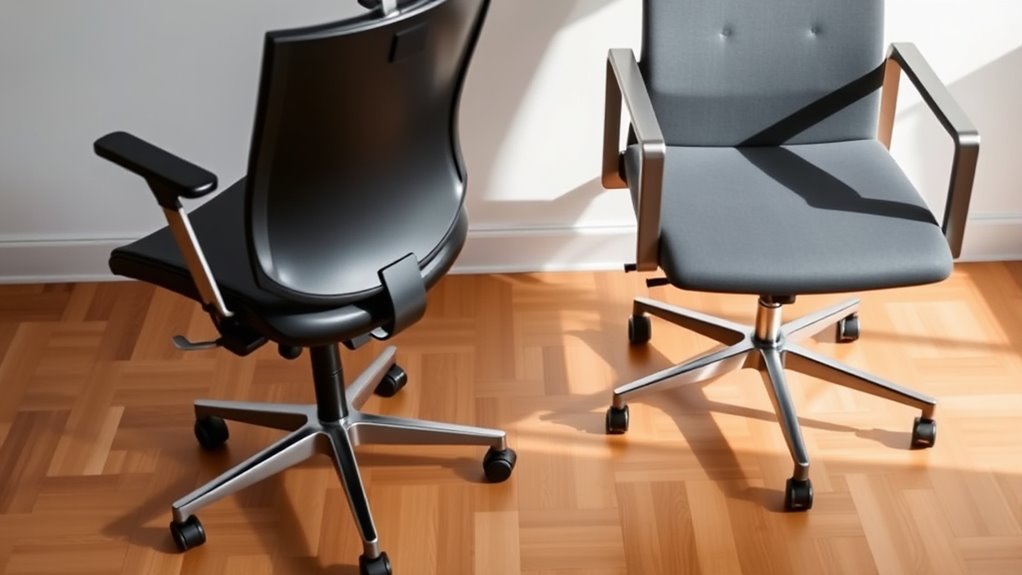

If you’re deciding between adjustable and fixed-height chairs, choosing adjustable ones usually offers better ergonomic benefits by allowing you to customize seat height, tilt, and lumbar support for ideal comfort. This helps promote good posture, reduce strain, and prevent discomfort over time. Fixed-height chairs are simpler and often more affordable but limit your ability to adapt to your body’s needs. To discover which option suits your workspace and health best, explore further insights below.

Get comfort and recovery gear delivered free with Prime
- Fast, free delivery on millions of items
- Prime Video, Amazon Music and more included
- Member-only deals all year
Key Takeaways
- Adjustable chairs promote better posture and long-term comfort by allowing customization to individual body needs.
- Fixed-height chairs offer simplicity, stability, and affordability but lack ergonomic flexibility.
- Adjustable chairs support health benefits like proper foot positioning and spinal alignment, reducing musculoskeletal risks.
- Fixed-height chairs may be suitable for users with standard needs or minimalist preferences, but may cause discomfort if poorly matched.
- Choosing between them depends on ergonomic priorities, aesthetic preferences, and budget considerations.
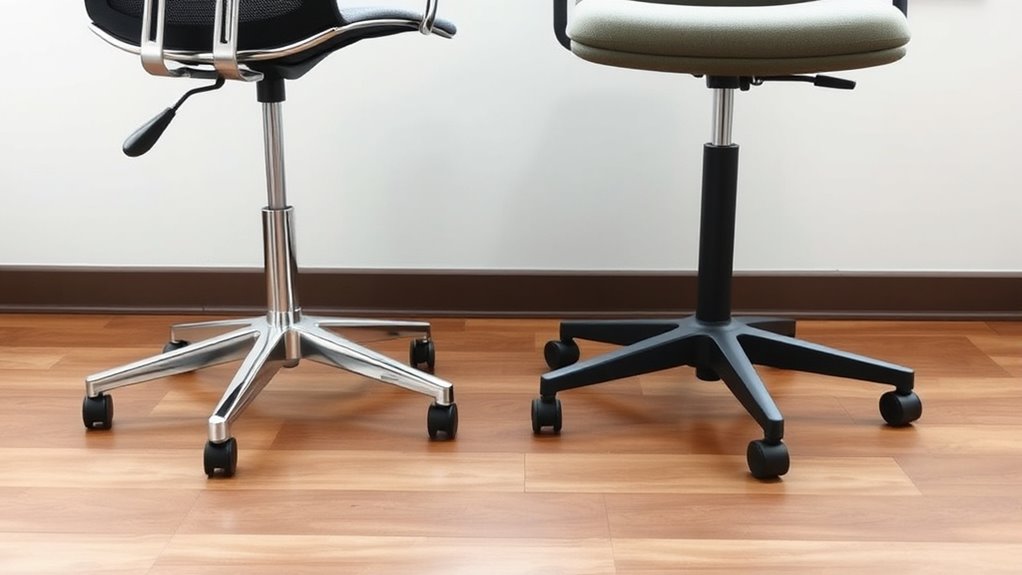
When choosing a chair for your workspace or home, understanding the differences between adjustable and fixed-height chairs can make a significant impact on comfort and ergonomics. Adjustable chairs give you the flexibility to modify seat height, tilt, and sometimes lumbar support, allowing you to tailor your sitting position to your body’s needs. This customization can lead to improved ergonomic benefits, such as reducing strain on your neck, back, and wrists. Proper alignment helps prevent discomfort and long-term musculoskeletal issues, especially if you spend hours at your desk. On the other hand, fixed-height chairs have a set height that doesn’t change, often providing a stable and consistent seating experience. They tend to be simpler and sometimes more affordable, but they offer less opportunity to optimize your posture.
The ergonomic advantages of adjustable chairs are compelling. When you can adjust the seat height, you guarantee your feet rest flat on the floor, with knees at a 90-degree angle, fostering better circulation and reducing pressure on your lower back. The ability to tilt or lock the chair in different positions helps you find a natural posture that minimizes fatigue. Plus, adjustable lumbar support can be positioned precisely where your back needs it most, promoting spinal health. An additional benefit is that adjustable chairs can accommodate multiple users, making them versatile for shared workspaces or offices. Fixed-height chairs, while sometimes designed with comfort in mind, don’t allow these adjustments. This can lead to awkward postures, especially if the chair isn’t perfectly suited to your height or desk setup. Over time, poor ergonomics can cause discomfort or even injury, making adjustability a vital feature for many users.
Aesthetic appeal also plays a role in your choice. Adjustable chairs often look modern and sleek, with design elements that highlight their versatility. Many models feature clean lines and contemporary materials that blend well with various decor styles. Fixed-height chairs might have a more traditional or minimalist look, which can seamlessly fit into certain spaces, especially if you prefer a classic aesthetic. Ultimately, the decision hinges on your priorities. If ergonomic benefits and long-term comfort matter most, an adjustable chair is usually the better choice. It not only supports better posture but also offers a more customized and visually appealing option that can adapt as your needs evolve. Conversely, if you prefer simplicity and a straightforward design, a fixed-height chair might suit your space, but it’s worth considering whether it provides enough support for your daily use.
ergonomic adjustable office chair
As an affiliate, we earn on qualifying purchases.
As an affiliate, we earn on qualifying purchases.
Frequently Asked Questions
Which Chair Type Is More Cost-Effective Long-Term?
You’ll find that adjustable-height chairs are more cost-effective long-term because, despite a higher initial price, they offer better ergonomics, reducing health costs over time. A cost comparison shows they adapt to your needs, helping avoid future expenses from discomfort or injury. Fixed-height chairs may be cheaper upfront but can lead to discomfort, especially with price fluctuations, making them less ideal for long-term savings and comfort.
Can Adjustable Chairs Cause Discomfort Over Time?
Adjustable chairs can cause discomfort if you neglect ergonomic adjustments. If you don’t set the seat height, lumbar support, or armrests properly, you might experience strain or soreness over time. However, when you customize your chair for comfort consistency, you’ll enjoy ergonomic benefits and better posture. Keep adjusting and aligning your chair to your body’s needs, and you’ll prevent discomfort and promote long-term comfort and health.
Are Fixed-Height Chairs Suitable for Ergonomic Needs?
Fixed-height chairs can be suitable for ergonomic needs if they are designed with proper lumbar support and seat comfort. However, their fixed height limitations mean they may not accommodate all body types or desk heights, potentially causing discomfort over time. You should look for fixed chairs with adjustable features like tilt and lumbar support to maximize ergonomic benefits, but adjustable chairs generally offer more personalized comfort for long-term use.
How Do Chair Types Impact Spinal Health?
Sure, your chair’s type might be secretly plotting against your spinal health. Fixed-height chairs can cause poor posture alignment, leading to back pain. Meanwhile, adjustable chairs offer better ergonomic support, enabling you to fine-tune for ideal posture. By choosing the right chair, you actively protect your spine, reducing discomfort and long-term injury risk. Remember, your back deserves more than just a seat — it needs proper support!
What Maintenance Is Required for Each Chair Type?
You should regularly check and tighten any bolts or screws to prevent wear and tear, especially on adjustable parts. For ergonomic adjustments, adjust the height, armrests, and lumbar support to maintain comfort and reduce strain. Keep the chair clean and inspect for signs of damage or looseness. With proper maintenance, your chair stays functional longer and continues supporting your posture effectively.
As an affiliate, we earn on qualifying purchases.
Conclusion
When choosing between adjustable and fixed-height chairs, consider your comfort and needs. Did you know that 65% of office workers report improved posture and comfort with adjustable chairs? This shows how flexibility can boost your productivity and health. Ultimately, adjustable chairs give you the control to customize your seat, helping prevent discomfort over long periods. So, if you want a chair that adapts to you, go for adjustable—you’ll notice the difference every day.
As an affiliate, we earn on qualifying purchases.
As an affiliate, we earn on qualifying purchases.
Halloween Picks
halloween
As an affiliate, we earn on qualifying purchases.